Blog
Art Deco Bedroom Furniture: A Complete Styling Guide


A homeowner in Dyer or Crown Point may want a bedroom with more personality, but not a room that feels dark, formal, or staged for a photograph. That tension is exactly where Art Deco bedroom furniture works best. Its geometric profiles, polished surfaces, and rich materials bring a sense of occasion, while the right upholstery, lighting, and mattress keep the room comfortable enough for ordinary Northwest Indiana life.
The strongest approach for 2026 isn't a complete glamour makeover. It's a carefully edited room with one memorable focal point, useful storage, comfortable bedding, and finishes that feel connected rather than excessive. With thoughtful proportions and quality construction, Art Deco can feel personal, restful, and lasting instead of theatrical.
Why Art Deco Bedroom Furniture Still Captivates Homeowners
A couple updating a primary bedroom often starts with a familiar wish: the room should feel special at night, but still feel calm on a busy morning. A glossy dresser may look beautiful, yet too many reflective surfaces can make the space feel cold. A bold headboard can create the luxury they want, but an oversized one may crowd the bed and compete with the windows.
Art Deco offers a useful middle ground. The style brings symmetry, confident geometry, and carefully placed glamour without requiring every item to carry a dramatic pattern. A scalloped headboard can become the room's focal point, while quiet nightstands, soft bedding, and warm wood keep the atmosphere approachable.
That balance explains why the style still attracts homeowners. Art Deco emerged from a design language associated with modernity and luxury, but its most successful bedroom applications rely on discipline. The furniture looks intentional because the shapes are clear, the materials contrast, and the layout has visual order.
The livable version of glamour
A modern bedroom shouldn't feel like a museum exhibit. It needs practical drawers, a comfortable mattress, clear walking paths, and finishes that can handle daily use. One curved headboard, a pair of matching nightstands, or a stepped dresser may be enough to establish the character.
The shift toward softer, more livable Deco favors warmer woods, matte brass, sculptural curves, muted colors, and layered comfort rather than a room filled with shine. That approach also gives homeowners more freedom to add personal artwork, reading lamps, and useful storage without losing the design direction.
Practical rule: Choose one hero piece first. Let the supporting furniture make that piece look deliberate, not crowded.
For families in Dyer, Crown Point, St. John, Schererville, and Munster, the appeal is straightforward. Art Deco bedroom furniture can make a private retreat feel polished while still fitting the practical standards expected from a well-made bedroom. The room should invite rest first, and display its glamour second.
Understanding the Art Deco Design Movement
Art Deco bedroom furniture grew from the broader movement that began in Paris in the 1920s and reached an international audience at the 1925 Exposition Internationale des Arts Décoratifs et Industriels Modernes. The movement remained influential through roughly 1939, and many design histories place its rise within the 1919 to 1939 period, the interwar years when designers embraced modern materials, simplified forms, and visual confidence. DecoLish's history of Art Deco furniture places that timeline in context.
The period matters because surviving bedroom furniture often combines two design attitudes. Earlier pieces may emphasize lavish veneers and hand-finished luxury, while later examples introduce chrome, aluminum, Bakelite, and mirror surfaces. The result is a style that can look both richly decorative and distinctly industrial.

The visual vocabulary to recognize
Art Deco is easier to identify when the furniture's decoration is considered alongside its structure. Zigzags, chevrons, sunbursts, stepped edges, axial symmetry, and sleek profiles are common signals. These details appear on headboards, dressers, chests, and nightstands, where they create a strong sense of order rather than random ornament. This overview of Art Deco furniture history identifies the movement's geometric vocabulary and its French origins.
Stepped forms often recall skyscraper architecture. A dresser may rise in layered planes, or a headboard may frame the bed with a central peak and balanced sides. Those shapes help distinguish Art Deco from earlier furniture that depends more heavily on flowing curves, carved decoration, or historical references. Upuply's discussion of Art Deco interiors connects the style's stepped forms, symmetry, and sleek profiles with architectural influence.
For homeowners comparing contemporary and traditional design styles, Art Deco sits in an interesting position. It has historical roots, yet its clean geometry can work comfortably with modern bedding, contemporary lighting, and restrained room layouts.
Why the history improves buying decisions
Understanding the movement helps shoppers avoid pieces that are merely shiny. A genuine Deco-inspired design should show consistency in its lines, proportion, and material choices. A single metallic handle doesn't make a dresser Art Deco if the body lacks symmetry or the profile feels unrelated to the style.
Museums and design institutions also treat Art Deco furniture as a major design category. The V&A describes the postwar embrace of glamour and luxury in 1920s furniture, while the Bröhan Museum recognizes Art Deco furniture as an important international collection focus. The V&A's Art Deco home guide provides useful historical context for the movement's importance.
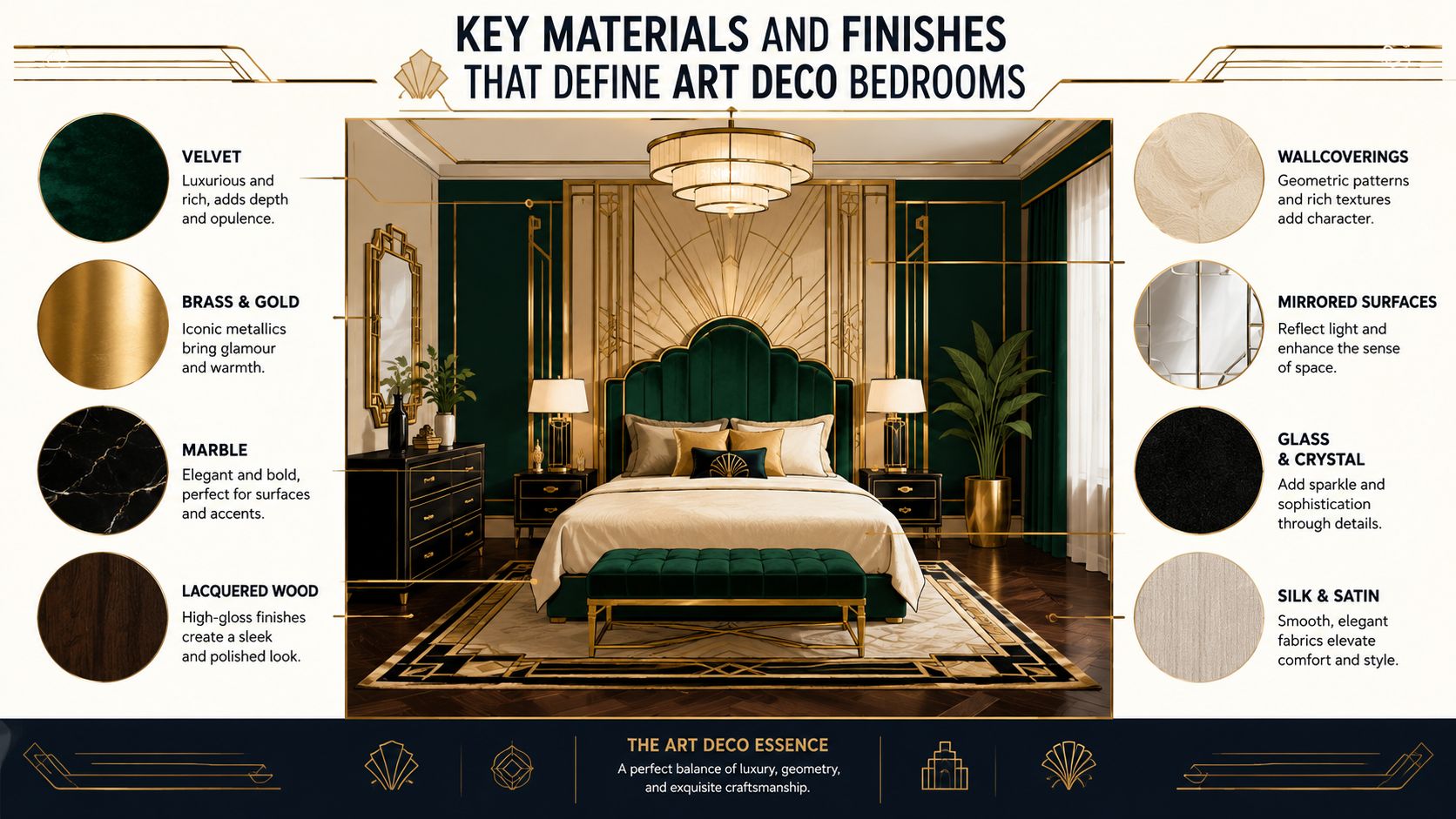
Key Materials and Finishes That Define Art Deco Bedrooms
Art Deco bedroom furniture depends on contrast. Dark or visually dominant wood gains definition beside chrome, brass, glass, or mirror. A polished surface catches light along a stepped edge, making the geometry appear sharper and giving the furniture a more architectural presence.
Common wood choices include walnut, ebony, mahogany, ash, and maple. These materials can appear as solid components, veneers, or decorative inlays. The right choice depends on the desired mood. Walnut and mahogany create warmth and depth, while ebony-like finishes produce a stronger, more dramatic contrast.
Reflective details need a purpose
Chrome and polished metal aren't just decorative additions. They outline drawer fronts, frame mirrors, and draw attention to the crisp edges that make Deco furniture recognizable. Brass creates a warmer note, especially when used in a matte or satin finish rather than a highly reflective treatment.
Mirror and glass can enlarge the visual presence of a piece, but they need restraint in a real bedroom. A mirrored drawer front may work beautifully on a dresser, while mirrored nightstands on both sides of the bed could make the room feel overly bright or busy. Guidance on using metal accents in furniture can help homeowners decide where reflective details add structure rather than clutter.
Finish quality changes the entire impression
High-gloss lacquer and polished veneer increase reflectivity. That extra sheen makes geometric patterns appear more precise and helps the furniture read as architectural instead of soft or upholstered. It also means surface care matters. Fingerprints, dust, and scratches show more readily on a glossy finish than on a low-sheen surface.
A practical material review should cover:
- Wood selection: Look for a finish that complements the room's flooring and trim instead of competing with them.
- Edge treatment: Crisp edges should feel intentional and secure, particularly on drawer fronts and stepped profiles.
- Hardware: Handles should operate smoothly and support the furniture's visual language.
- Surface balance: Pair one glossy element with quieter fabrics, natural textures, or matte hardware.
Quality construction matters because these materials do more than create appearance. Well-made joinery, stable drawer boxes, sound hardware, and durable finishes help a bedroom piece remain useful as tastes change. For buyers seeking American-made construction or solid wood craftsmanship, material choices should be discussed alongside the way the furniture is built.
Styling Your Art Deco Bedroom for Modern Living
The easiest way to make Art Deco feel current is to stop treating every surface as an opportunity for drama. A livable room needs hierarchy. One feature should lead, two or three supporting elements should reinforce it, and everything else should make the bedroom easier to use.
Start with one strong focal point
A scalloped or curved headboard is an excellent starting point because it establishes the room's shape without requiring a full matching set. A stepped dresser or sunburst accent can also serve as the anchor, but the bed usually deserves priority because it defines the room's scale.
Keep the supporting pieces simpler. Matching nightstands create symmetry, while a restrained dresser prevents the wall opposite the bed from becoming visually heavy. The goal isn't perfect historical reproduction. It's a room where the Deco cues feel connected.
Build a quieter palette
Muted neutrals, warm taupe, soft cream, charcoal, deep green, and dusty blue give the furniture room to stand out. Richer colors can appear in a bench, accent chair, or pillow rather than across every wall and textile.
Natural textures keep polished furniture from feeling cold. Linen-look bedding, woven throws, wool-like rugs, and restrained wood grain bring softness without erasing the style. A small amount of plush texture can add comfort, and a guide to handmade faux fur bedroom decor offers ideas for using tactile accents without turning the room into a costume.
For a more detailed color decision, homeowners can consult an expert guide to the perfect color palette. The practical rule is simple: choose a dominant neutral, a supporting color, and one controlled accent.
Arrange for calm movement
Place the bed on the strongest uninterrupted wall when possible. Keep the nightstands visually balanced, and leave enough room for drawers and doors to open fully. A dramatic piece loses its appeal if the layout forces people to walk around it or squeeze past the bed.
Lighting should support the furniture's geometry. Bedside lamps with clean silhouettes can emphasize symmetry, while a ceiling fixture or wall light can bring out brass, chrome, or mirror details. Warm light usually makes dark wood and upholstered surfaces feel more inviting than harsh, cool illumination.
A calm Deco bedroom has contrast, but it also has breathing room. The empty space around a beautiful piece is part of the design.
Finally, protect comfort. The bedroom should include a mattress selected for healthy, restorative sleep, not just an attractive frame. A helpful mattress guide and an in-person comfort test can make the difference between a room that looks finished and one that supports genuine rest.
Choosing Between Vintage, Reproduction, and Modern Deco-Inspired Pieces
The right choice depends on the homeowner's priorities. Vintage furniture offers history and character, but its condition, dimensions, and previous repairs require close inspection. Reproduction furniture can provide a coordinated look and current usability, while modern Deco-inspired pieces often adapt the vocabulary to contemporary proportions and daily routines.
A buyer should inspect more than the surface. Drawer alignment, hardware movement, veneer condition, finish consistency, and structural stability all matter. A beautiful silhouette can't compensate for a piece that doesn't function well.
| Factor | Vintage | Reproduction | Modern Deco-Inspired |
|---|---|---|---|
| Character | Historical marks and original details | Period-inspired appearance with fresh construction | Clean interpretation suited to current rooms |
| Fit | Existing dimensions may limit placement | Available sizes may be more predictable | Often designed around contemporary bedroom layouts |
| Condition | Requires careful inspection and possible restoration | New finish and hardware can simplify ownership | Usually built for present-day use |
| Customization | Limited to restoration choices | May offer selected finish options | Often provides broader finish, fabric, or size choices |
| Best for | Collectors and history-minded buyers | Shoppers seeking a coordinated period look | Homeowners wanting Deco cues without visual excess |
Vintage rewards patience
Authentic vintage furniture can bring a depth that new construction can't duplicate. The grain, patina, and small signs of hand finishing may be part of its appeal. However, buyers should confirm that the piece suits modern storage needs and that the finish can be cared for without compromising its character.
Reproduction offers coordination
A reproduction set may be the practical answer when matching nightstands, a dresser, and a bed matters. Buyers should still look for strong construction and proportion. Reproduction doesn't automatically mean low quality, and modern construction doesn't automatically guarantee durability.
Modern interpretations suit real life
Modern Deco-inspired furniture is often the best fit for homeowners who want the style without a heavy historical look. Cleaner layouts, curved profiles, selective brass, chrome, marble, fluting, and velvet can preserve the spirit while reducing visual excess.
A mixed room can be more convincing than a complete suite. Homeowners considering how to mix furniture styles can pair one Deco-inspired bed with quieter wood storage, contemporary lamps, and an uncomplicated rug. That combination feels collected rather than copied.
The Case for Custom and Amish-Made Art Deco Furniture
Custom furniture makes the most sense when the bedroom has a difficult wall, an unusual ceiling, limited clearance, or a very specific storage need. A homeowner shouldn't have to accept a headboard that blocks a window or a dresser that leaves awkward dead space. Design it your way means choosing proportions, wood tones, hardware, and finish details around the room rather than forcing the room around a standard piece.
Custom ordering also helps unify old and new. A modern Deco-inspired bed may need nightstands with a particular drawer height, or an existing dresser may call for a companion chest in a compatible finish. A made-to-order approach lets those decisions happen deliberately.
Solid wood brings practical confidence
Amish furniture appeals to buyers who value craftsmanship, solid wood, and heirloom potential. The material has a visual weight that suits Art Deco, particularly when paired with a refined finish and straightforward geometric detailing. A solid wood piece can also feel substantial in daily use, from opening drawers at bedtime to storing linens through changing seasons.
The key is to distinguish craftsmanship from decoration. A decorative motif may attract attention, but construction determines whether the furniture remains dependable. Buyers should ask about the wood species, finish, joinery, hardware, and care requirements before placing an order. This explanation of Amish furniture offers helpful background for shoppers evaluating that category.
Local guidance improves the result
A family-owned retailer can help translate inspiration into a workable order. Groen's Fine Furniture offers custom furniture services, Amish solid wood options, bedroom furniture, mattresses, and interior design guidance through its Dyer and Crown Point showrooms. The same planning conversation can address the bed, storage, lighting scale, mattress comfort, delivery access, and the room's overall palette.
Custom ordering isn't limited to bedrooms. Canadel's custom dining program supports made-to-order tables and chairs, which reflects the broader value of working with a retailer that can coordinate multiple rooms. The important point is control. Bespoke choices let a homeowner create a bedroom that feels personal rather than assembled from unrelated pieces.
Caring for Your Art Deco Furniture and Planning Your Budget
Art Deco finishes reward regular, gentle care. Glossy lacquer, polished veneer, mirror, chrome, and brass each show their best qualities when dust and fingerprints are removed without aggressive products. A soft, clean cloth is the sensible starting point, followed by the care instructions supplied for the specific finish.
Protect the surfaces
Keep liquids away from wood and wipe spills promptly. Avoid abrasive pads, harsh cleaners, and unapproved waxes, especially on high-gloss surfaces where fine scratches can change the way light reflects. For metal accents, use a product appropriate to the finish and test it in an inconspicuous area first.
Use coasters, trays, and felt protection beneath objects that move. Direct sunlight can affect some finishes and fabrics, so window treatments may help reduce exposure. Handles and drawer fronts deserve attention because they receive the most frequent contact.
Budget by impact
A full room doesn't need to arrive at once. A sensible purchasing order is:
- Mattress and foundation: Prioritize healthy, comfortable sleep and use a helpful mattress guide to compare options.
- Bed or headboard: Establish the room's main Art Deco gesture.
- Nightstands: Add symmetry and everyday function.
- Dresser or chest: Choose storage that solves a real need.
- Accent pieces: Add a bench, mirror, lighting, or decorative textile only after the essentials work.
This sequence protects the budget from being consumed by accessories before the room functions properly. It also allows a homeowner to evaluate the finish and scale of each major purchase before adding another strong element.
Special Financing is available, subject to credit approval, which can provide additional buying power when a quality bed, mattress, or custom piece needs to fit a household budget. Honest pricing and clear guidance matter more than chasing the lowest initial figure, especially for furniture expected to serve a bedroom for years.
Visit Groen's Fine Furniture to Explore Your Art Deco Options
A bedroom plan becomes much easier to judge in person. A homeowner can stand beside a dresser, open the drawers, examine the relationship between wood and metal, and sit on a bench to consider scale. Those details are difficult to assess from a screen, particularly when the room depends on finish quality and proportion.
A showroom visit also gives shoppers a chance to test mattress comfort rather than choosing by appearance alone. Serta and Beautyrest mattresses are available among the sleep options, and the team can use its helpful mattress guide to keep the conversation centered on rest, support, and wellness.
For homeowners in Northwest Indiana, the Dyer and Crown Point locations provide access to bedroom furniture, custom-order services, Amish solid wood craftsmanship, Flexsteel durability, Bassett style, and interior design support. White-Glove Delivery can help move the project from selection to installation, while Special Financing, subject to credit approval, can help fit a well-planned purchase into the household budget.
Groen's Fine Furniture has served NWI families since 1983 through multigenerational ownership and five-star service. That local relationship matters when a homeowner needs help selecting a finish, coordinating pieces, arranging delivery, or making a long-term furniture decision.
The best Art Deco bedroom isn't the most decorated room. It's the one where a carefully chosen focal piece, useful storage, a comfortable mattress, and durable materials work together every night.
Visit Groen's Fine Furniture in Dyer or Crown Point to explore custom Art Deco bedroom furniture, Amish solid wood options, mattresses, and White-Glove Delivery. Ask the family team about Special Financing, subject to credit approval, and schedule a showroom visit to test drive the comfort before creating a bedroom that feels elegant, practical, and distinctly yours.