Custom Furniture Design: Your Complete Guide


A dining table that blocks the walkway, a sofa that overwhelms the living room, or a bedroom piece that won't make the turn up an older staircase can make furnishing a home in Dyer, Crown Point, or anywhere in Northwest Indiana feel more complicated than it should. Stock furniture offers speed, but it also asks homeowners to adapt their rooms, routines, and expectations around fixed dimensions.
Custom furniture design takes the opposite approach. The room comes first, followed by the way the household lives, the materials that make sense, and the level of craftsmanship worth paying for. For families considering Canadel dining, Amish solid wood, or a made-to-order upholstered piece, the right question isn't just whether custom costs more. It's whether the piece solves a problem that a ready-made option can't.
Why Custom Furniture Design Makes Sense for Your Home
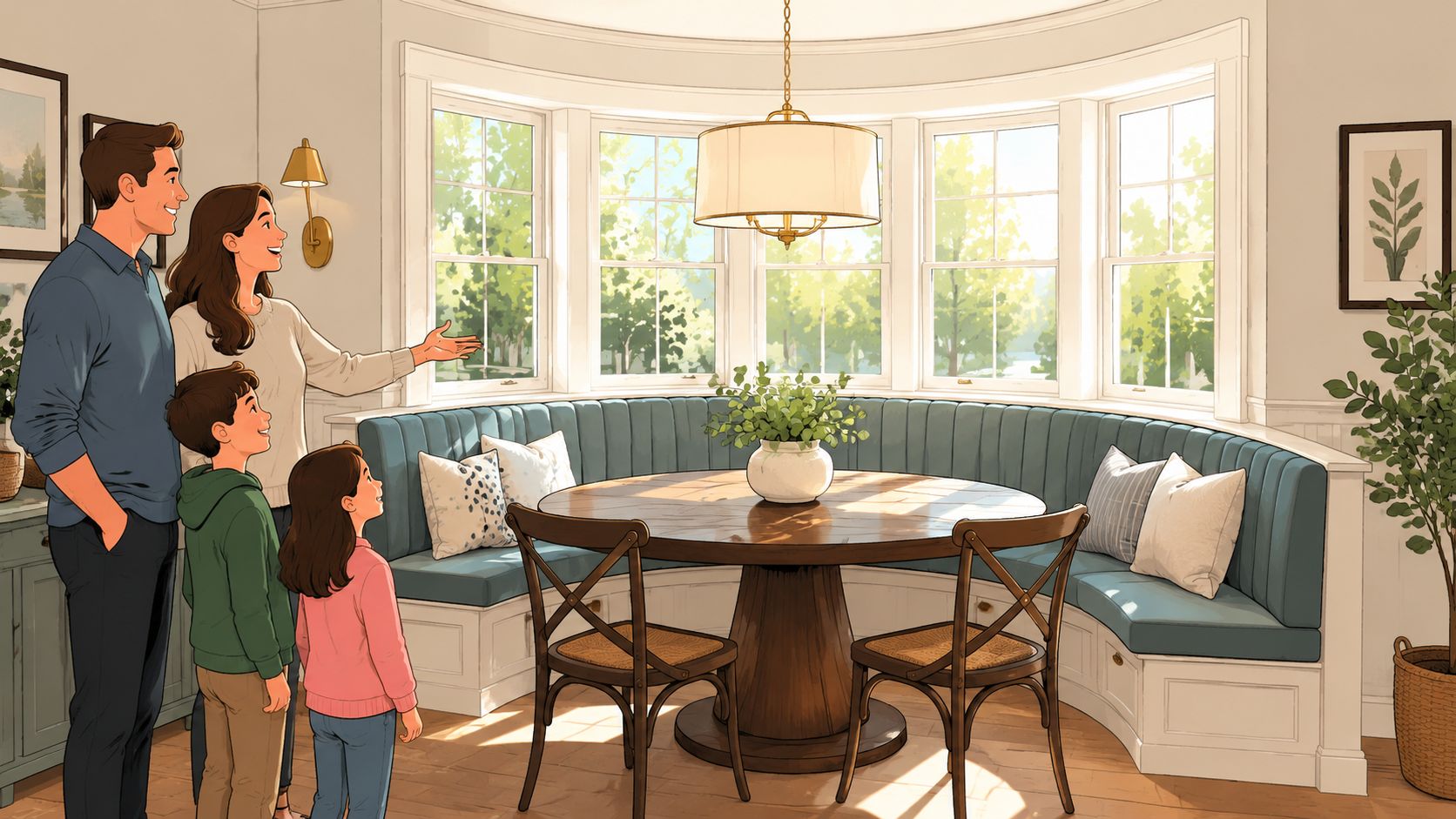
A Crown Point family once faced a familiar problem. Their dining room had a deep bay window that made the space feel inviting, but every stock table they tried either blocked the walkway or left an awkward gap between the chairs and the wall. The family didn't need a showpiece for occasional entertaining. They needed a dependable gathering spot for weekday meals, homework, and holidays.
A made-to-order table with the right shape and proportions could work around the window instead of fighting it. That's the practical value of custom furniture design. It treats furniture as part of the room's architecture and the family's daily routine.
Custom work makes the most sense when a home has:
- Unusual dimensions: Narrow rooms, deep alcoves, bay windows, and challenging corners can make standard furniture feel forced.
- Integrated storage needs: A built-in bench, media cabinet, or dining hutch can use space that would otherwise sit empty.
- Matching requirements: New wood can be selected and finished to coordinate with existing floors, trim, cabinetry, or family pieces.
- Difficult access points: Older NWI homes may have non-standard doorways, tight stair turns, or rooms that are easier to furnish in carefully planned sections.
- Specific comfort needs: Seat height, depth, arm placement, and cushion firmness can be adjusted instead of accepted as fixed.
The broader market reflects this shift toward personalization. The global customized furniture market was valued at USD 39.55 billion in 2025 and is projected to reach USD 110.12 billion by 2034, with a 12.05% CAGR from 2026 to 2034. Asia Pacific held the largest regional share at 38.4% in 2025, according to Straits Research's customized furniture market analysis. Those figures point to a category that has moved beyond occasional luxury commissions and into mainstream furnishing decisions.
Ready-made furniture still wins when the dimensions work, the style is right, and the household needs the piece quickly. Custom wins when poor fit would create years of inconvenience, when durability matters, or when the room has one problem that no showroom floor model can solve. The important decisions involve process, specifications, cost, and delivery, not the word “bespoke.”
How the Custom Design Process Actually Works
A custom order shouldn't feel mysterious. A good showroom makes the sequence clear, identifies the decisions that matter, and confirms measurements before production begins.
Start with the room and the routine
The first visit should be a conversation, not a rushed product pitch. A designer needs to understand whether a dining table will host children, work projects, or formal dinners, whether a sofa will handle pets and daily lounging, and which pathways must remain open.
The room assessment covers dimensions, doorways, stair turns, windows, outlets, nearby furniture, and visual relationships with flooring or trim. Measurements matter, but so does use. A narrow chair that looks elegant may frustrate a taller household, while a deep sofa may consume too much practical floor space.
Choose the structure, style, and materials
Once the requirements are clear, buyers review configurations, dimensions, wood species, finishes, upholstery, cushion styles, arm shapes, backs, legs, and hardware. Canadel's custom dining program is useful for households that want to coordinate table and chairs rather than settle for a mismatched set. Amish Furniture offers another route for buyers prioritizing solid wood construction and made-to-order craftsmanship.
This is the point where visual samples matter. Fabric swatches reveal texture and scale. Finish boards show how stain behaves on actual wood. A digital image can suggest a direction, but it can't replace seeing and touching the materials.

Approve the design before production
A sketch or render gives the buyer a chance to assess proportions. Revisions should happen before the final approval, not after the workshop starts. The final review should confirm every dimension, finish, fabric, hardware choice, and delivery requirement.
Practical rule: If a detail affects comfort, clearance, cleaning, or access through the home, it belongs in the approval conversation.
Production follows approval, with the workshop building the piece and the showroom coordinating quality inspection. Canadian-made Canadel dining orders and solid wood Amish-built pieces may require realistic patience because material selection, finishing, and craftsmanship take time. A promised date should be treated as a planning target, not an excuse to skip careful specifications.
A showroom consultation can also be compared with the broader stages described in this browse design build process overview, particularly the emphasis on defining requirements before work begins. Buyers who want a more detailed starting point can review Groen's custom-order guidance before visiting.
The last step is scheduled delivery and placement. A professional team brings the piece inside, checks the finish against the approved sample, positions it in the intended room, and addresses access concerns rather than leaving the buyer with a freight carton at the curb.
Materials, Finishes, and Sizing Choices That Matter
A species name doesn't tell the whole construction story. Kiln-dried lumber, joinery, finish quality, and proper sizing usually matter more than choosing maple over oak because one sounds more premium.
Interior furniture wood should generally be kiln-dried to about 10% to 12% moisture content, while furniture and cabinet applications in controlled indoor conditions commonly target about 7% to 9%. Keeping wood near its in-use equilibrium moisture content helps reduce seasonal shrinkage, swelling, joint stress, and visible cracking, as explained in this furniture ergonomics and design reference guide.
| Category | Common Options | Best For | Watch Out For |
|---|---|---|---|
| Wood construction | Solid maple, oak, cherry, engineered cores, veneer | Heirloom tables, cabinetry, coordinated interiors | Species alone doesn't guarantee stable construction |
| Finish | Stained, painted, low-sheen, high-gloss | Matching existing rooms or creating contrast | Dark finishes can reveal dust and surface marks |
| Upholstery | Performance fabric, standard fabric, leather | Families, pets, formal rooms, frequent lounging | Texture, cleaning needs, and seating feel vary |
| Cushion fill | High-resilience foam, foam wrapped in down | Structured support or softer comfort | Plush cushions need regular attention |
| Protection | Durable topcoats and protective finishes | Dining surfaces and busy living rooms | No finish eliminates the need for care |
Stained wood preserves visible grain and often integrates well with existing flooring. Painted furniture provides stronger color control and can bridge traditional and contemporary rooms. Low-sheen finishes tend to look relaxed and forgiving, while high-gloss surfaces create a sharper effect and demand more careful upkeep.
Upholstery should follow the household, not a showroom trend. A performance weave suits a busy family room, while leather may appeal to buyers who want a material that changes character over time. Cushion fill deserves a real test. High-resilience foam wrapped in down can balance support with softness, but different households prefer different levels of sink and rebound.
Sizing is where custom becomes especially practical. Common expert ranges place dining and work chair seat height at roughly 430 to 480 millimeters, seat depth at 380 to 460 millimeters, and armrests at about 178 to 203 millimeters above the seat, according to the Furniture Design Toolkit. Those dimensions affect thigh pressure, lower-back support, and how easily a person stands.
Before approving a table, the buyer should check chair clearance, walking paths, door swings, and the space needed when chairs are pulled out. For wood finish guidance that focuses on matching and maintaining a cohesive interior, Groen's custom wood finish resource offers a useful reference.
What Really Drives the Cost of Custom Pieces
Custom furniture pricing reflects labor, decisions, and problem-solving more than a simple increase in size. The expensive part often isn't the board or fabric itself. It's the skilled work required to shape, join, upholster, finish, inspect, and adjust a piece that isn't being produced from one fixed template.
Handcrafted construction, dovetail joinery, bench-made upholstery, curved aprons, hand-carved details, and complex finishing all require more labor. A straight rectangular table with a straightforward stain is easier to plan than a piece with curved forms, a multi-step color match, or unusual joinery.
Material grade matters too. Kiln-dried hardwood usually represents a different construction decision from an engineered core with veneer. Full-grain leather carries different material and finishing considerations from bonded upholstery. Neither choice is automatically right for every room, but buyers should understand what they're paying for.
| Choice | Standard Option | Custom Upgrade | Why It Costs More |
|---|---|---|---|
| Upholstery | Durable fabric | Selected leather or specialized performance textile | Material handling, cutting, and finishing can require more care |
| Wood construction | Veneer over an engineered core | Solid wood with tailored dimensions | Material selection and construction demand more skilled labor |
| Dimensions | Standard proportions | Fully bespoke height, depth, width, or shape | The workshop must adjust plans and production steps |
| Finish | Established stain or paint | Multi-step stain, hand-rubbed lacquer, or custom match | Additional preparation, application, and inspection |
| Form | Straight lines | Curves, shaped aprons, or carved details | Complex forms take more layout and fabrication time |
Oversized upholstered pieces can require more fabric yardage. Longer production timelines can also reserve workshop capacity while the order moves through construction and finishing. Those factors don't represent a luxury tax. They represent the work required to solve a specific room, comfort, or longevity problem.
A buyer who only compares the final sticker may miss the value of correct dimensions, durable construction, and service after delivery. The better question is whether the upgrade prevents a costly mistake, supports daily comfort, or creates a piece that remains useful as the household changes. Why furniture purchases are high-consideration decisions provides helpful context for evaluating the decision beyond impulse and appearance.
Custom pricing should be judged against the problem solved, not against the least expensive object that fills the same general category.
The honest approach is to set priorities before choosing details. Spend first on fit, structural quality, and comfort. Add decorative complexity only when it contributes to the room's character and the household's long-term satisfaction.
Why Buying Custom Locally Beats Buying Online
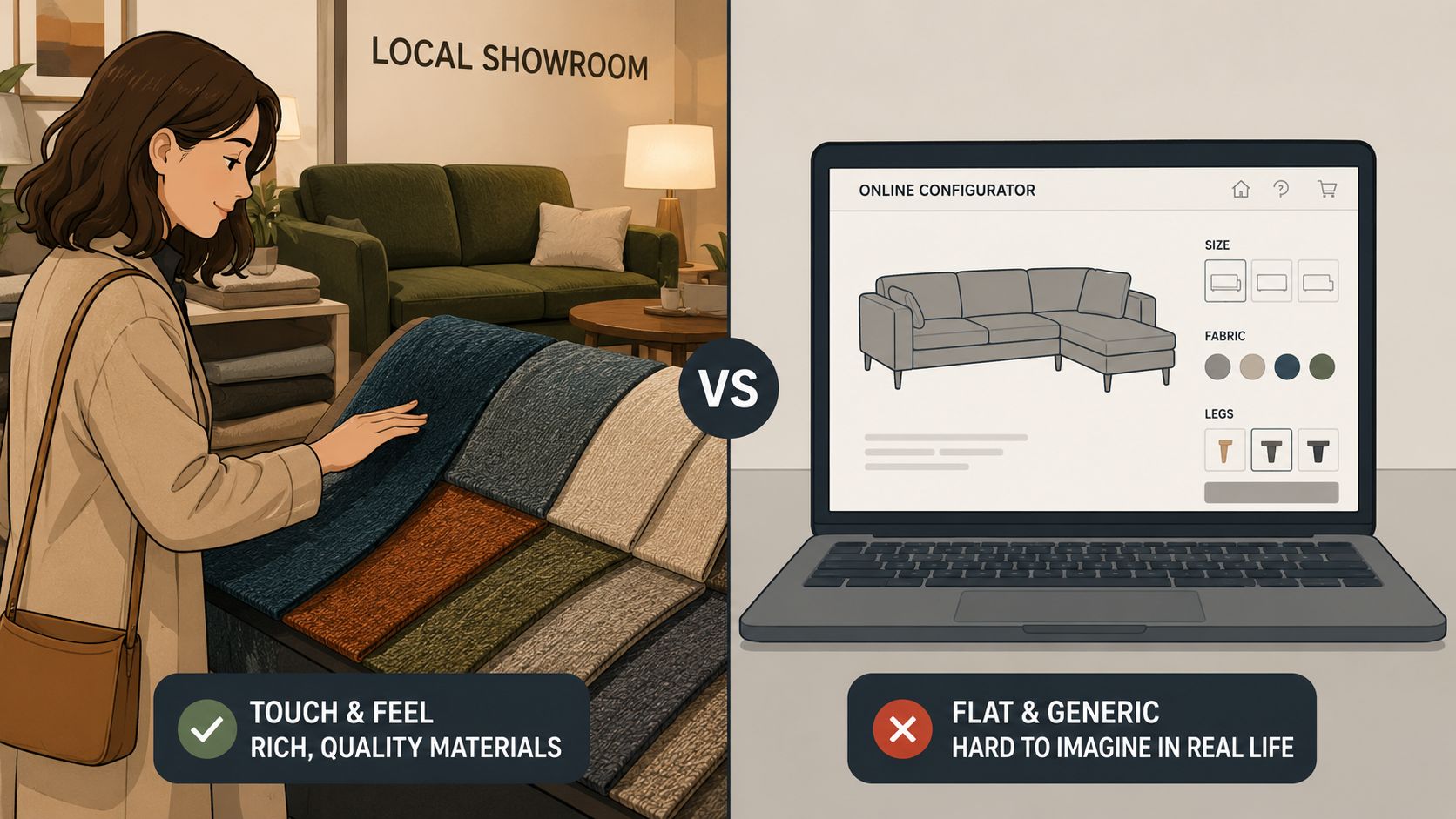
An online configurator can display options efficiently. It can't tell whether a fabric looks too cool against a Crown Point wall, whether a chair feels supportive after ten minutes, or whether a finished table will fit through a tight stair turn in an older NWI home.
A local showroom gives buyers physical evidence. Fabric swatches can be held beside paint, flooring, and window light. Finish samples can be viewed without relying on backlit images. Wood grain, sheen, texture, cushion firmness, and arm height become tangible decisions rather than guesses.
Service starts before the order
A family-owned showroom can ask questions that an online form often misses. How does the household enter the room? Which seats get used most? Does the table need to support everyday meals or formal gatherings? Would a standard chair create pressure behind the knees?
Groen's Fine Furniture is a family-owned retailer serving Northwest Indiana since 1983, with showrooms in Dyer and Crown Point. Its multigenerational ownership and five-star service model are relevant because custom furniture needs an accountable point of contact before, during, and after production.
Delivery protects the purchase
White-Glove Delivery changes the final experience. A trained crew brings the furniture inside, handles placement, sets up the piece, and removes packaging. That matters for solid wood tables, large sectionals, and bedroom pieces that require careful positioning.
Local service also has practical value after delivery. If an approved finish needs attention, a warranty question appears, or upholstery eventually needs repair, the showroom remains a reachable partner. An online order may look simpler at checkout, but the local route protects the investment through inspection, coordination, and accountability.
Custom furniture stores can help buyers understand what to ask about before ordering, including material samples, delivery responsibilities, revisions, warranty handling, and service access. That preparation is more useful than chasing the lowest apparent starting price.
The same principle applies to comfort purchases. A Flexsteel sofa, Bassett chair, Canadel dining chair, or mattress from Serta or Beautyrest should be tested in person when possible. The right piece is the one that works for the body and the room, not merely the one that photographs well.
Financing a Custom Order Without Stress

A custom order should solve a room problem without creating a household cash-flow problem. Special Financing can provide buying power when the right piece is clear, but it is not a reason to stretch beyond a comfortable budget. Set the project scope first, read the terms, and choose a payment that fits regular expenses.
The process is straightforward. Apply, review the available program and term if approved, read the agreement, and make the scheduled payments. A promotional offer may provide no interest if the balance is paid within its stated period, but terms vary. Approval is required, and the written agreement controls the outcome.
Build the budget before choosing upgrades
Begin with the furniture that fixes the room's main limitation. A single dining set may be the priority, while a complete bedroom suite creates a larger project. Ask the showroom team to separate required specifications from decorative additions. That distinction keeps financing tied to fit and longevity instead of turning every available upgrade into part of the order.
Review these points before signing:
- Total project amount: Include the furniture, upgrades, delivery, and accessories under consideration.
- Payment schedule: Confirm the number of payments, due dates, and whether automatic payments are available.
- Promotional terms: Read what happens if a balance remains after the promotional period or if a payment is late.
- Approval conditions: Special Financing requires credit approval and is not guaranteed for every applicant.
- Budget cushion: Leave room for practical add-ons or delivery-related needs instead of planning to the exact limit.
A plain-language review should answer the questions a buyer would ask before deciding whether to apply for project financing. The goal is to make every obligation visible before the custom order is placed, including the payment timing and what happens if the balance is not cleared under promotional terms.
Groen's furniture financing options can help eligible buyers review available plans. Ask the team to show the written terms, explain the timing, and connect the approved amount to the furniture the household needs.
Financing fits when the furniture is needed, the specifications are settled, and payments leave room for ordinary expenses. Ready-made furniture is the smarter choice when the design is still changing, income is uncertain, or the order is growing only because available credit makes extra upgrades possible.
Bringing Your Custom Piece Home and Making It Last
Delivery day deserves the same attention as the design appointment. Before the crew arrives, clear the route from the entrance to the final room, remove fragile décor, secure pets, and identify doors or railings that may need temporary adjustment. A careful delivery plan prevents avoidable damage and gives the crew room to place the furniture properly.
The approved finish sample should stay available for inspection. Buyers should look for consistent color, expected grain character, clean seams, stable hardware, and any details specified in the final order. Small natural variations in solid wood can be part of the material's character, but a concern should be raised before the crew leaves.
Care should match the material
Solid wood responds to its environment, especially in homes with basements, heating cycles, humidity changes, and four-season weather. Stable indoor conditions help reduce the stress caused by repeated moisture movement. Amish heirloom pieces deserve particular care because their long-term value depends on protecting the wood and finish, not just wiping the surface when it looks dusty.
A practical maintenance routine includes:
- Dust gently: Use a soft, clean cloth and avoid abrasive pads.
- Control moisture: Keep spills from sitting on wood or entering joints.
- Use protection: Place suitable mats, coasters, and pads under objects that could mark a surface.
- Follow finish guidance: Use the care products recommended for the selected finish rather than applying a generic polish.
- Maintain upholstery: Vacuum fabric carefully, rotate or adjust cushions as appropriate, and address spills promptly.
- Watch the room: Keep furniture away from direct heat sources and conditions that create extreme swings.
Canadel dining surfaces should receive the protective care recommended for their specific finish. Upholstered pieces may eventually need professional cleaning, repair, or reupholstery. A showroom should be contacted when a finish needs touch-up, a joint develops movement, a cushion loses its shape, or fabric damage exceeds what household care can handle.
Custom is worth choosing when the room has a real fit problem, the household needs specific comfort, or long-term construction matters more than immediate availability. A well-chosen stock piece is smarter when its dimensions work, the finish coordinates, and the family doesn't need unusual specifications. The best purchase is not automatically custom. It's the piece that serves the room directly.
A mattress deserves the same practical judgment. Buyers in Dyer, Crown Point, St. John, Schererville, and Munster can use a helpful mattress guide and test sleep products in person, focusing on rest, support, and health rather than specifications alone.
Visit Groen's Fine Furniture in Dyer or Crown Point to review Canadel custom dining, Amish solid wood, Flexsteel and Bassett upholstery, and mattress options from Serta and Beautyrest. The family-owned team can help measure the room, compare materials, explain Special Financing subject to credit approval, and arrange White-Glove Delivery so the finished piece fits the home from the first day.