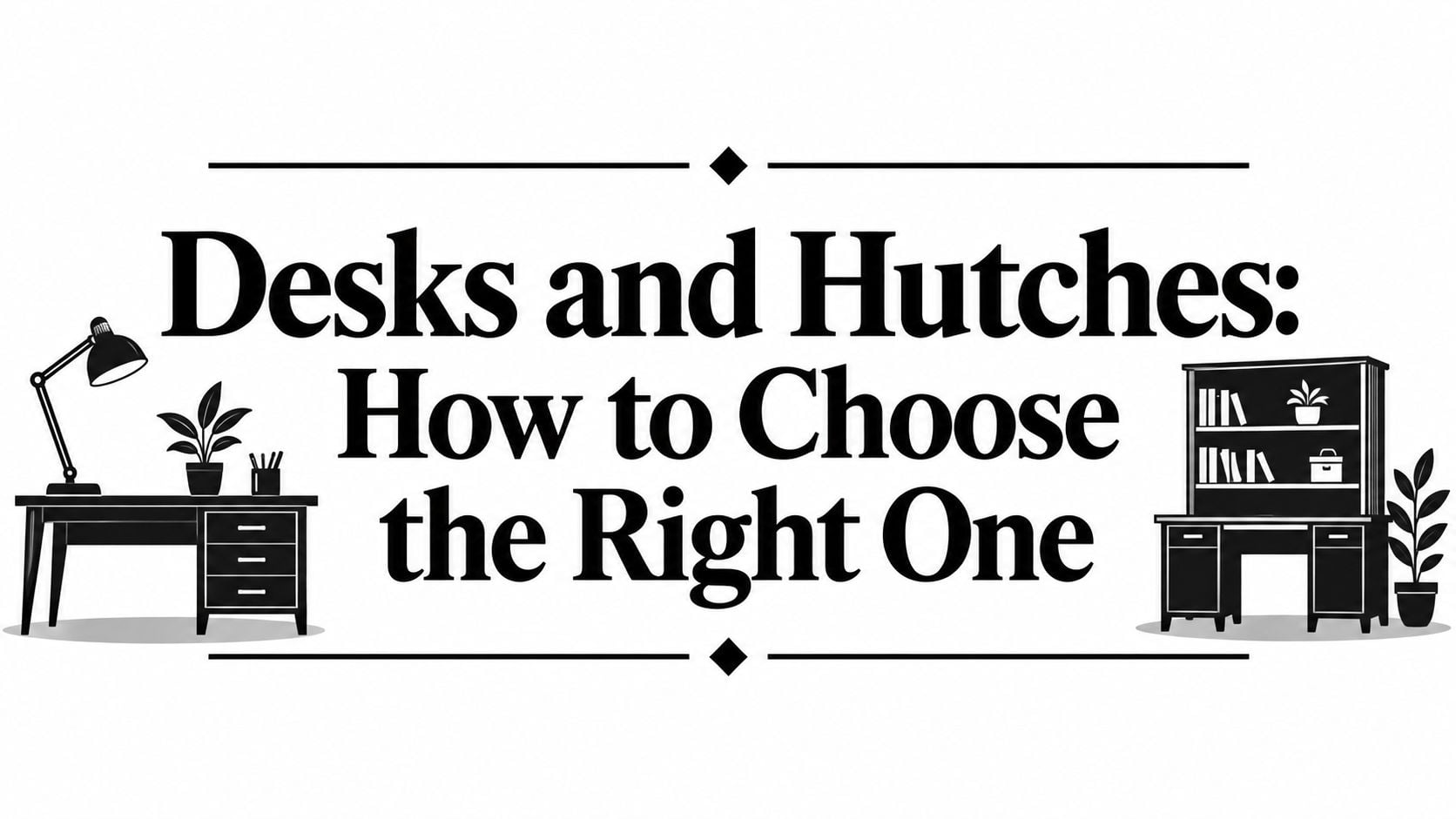
Desks and Hutches: How to Choose the Right One

The dining table clears at 8:40 in the morning so a laptop can take over, then clears again at five so plates can land. The printer sits on a bedroom dresser because there's nowhere else for it. Bills go into a shoe box nobody wants to open.
That's what a home office looks like in most houses around Dyer and Crown Point. Not a room with a door, but a corner that changes jobs three times a day.
A desk and a hutch handle that arrangement better than almost any other furniture pairing, but only when the two halves are fitted to each other and to the room. Judged on style alone, plenty of handsome sets fail the job.
Desk and Hutch Types and How a Hutch Adds Storage
A desk in a shared room has to earn its footprint twice: first as a place to work, then as furniture that lets the room return to its other purpose. A 2025 Cardiff University report on working from home found that 45% of surveyed UK homeworkers had a dedicated home office, while 27% worked in spaces intended for other purposes, such as a kitchen or dining room. The report also found that 22% used a workstation in the corner of a room and 6% shared an office with another household member. For any shared room, a hutch can add storage without claiming more floor space.
A hutch pairs a lower cabinet or desk with shelves or cupboards above. The recorded history of the hutch as a furniture form) describes the form's longstanding role in rooms used for several purposes. The same principle suits a home office that shares space with dining or family life: keep supplies close, and leave more of the floor open.
The Four Types, Side by Side
Choose the desk type by its main daily task before comparing finishes. The hutch and desk need to work together: the desktop serves the task, while the upper storage keeps secondary items organized.
| Type | Best For | Storage Style | Space It Suits |
|---|---|---|---|
| Writing desk with hutch | Letter writing, bills, reading and light study | Small cubbies, letter slots and display shelves | Bedrooms, nooks and sitting rooms |
| Executive desk | Managers and home professionals who need a large, formal work surface | Deep drawers, file pedestals and enclosed cabinets | Dedicated offices and dens |
| Computer desk with hutch | Monitor, keyboard, printer and cable management | Open shelves above the monitor and drawers for supplies | Home offices and shared family rooms |
| Storage hutch (desk-style) | Organizing paperwork, electronics and collectibles | Cupboards, shelves and file drawers at several heights | Hallways, dining rooms and guest rooms |
The writing desk with hutch suits a bedroom corner or small nook. It gives bills and letters a defined home without taking over the room.
An executive desk earns its larger footprint when the daily workload needs a broad surface and room for paper files. In a guest room used as an office only occasionally, that size can crowd the other furniture.
The computer desk with hutch keeps frequently used items close. Open shelves can hold chargers, notebooks and a printer, while cable routing at the back helps contain cords.
A storage hutch set up desk-style handles household paperwork, electronics and collectibles. Choose one when the room needs closed cupboards as well as open shelves.
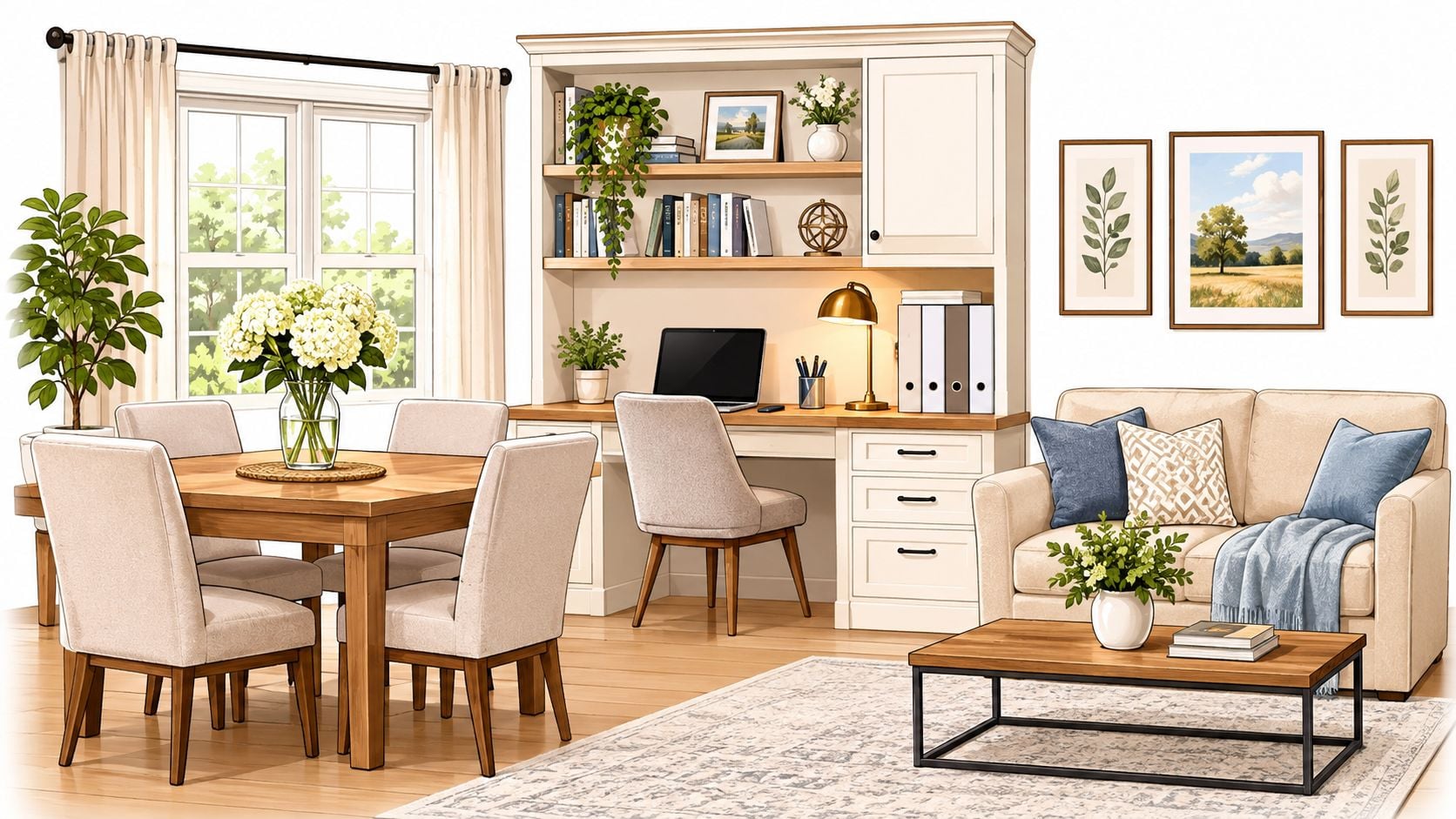
What the Hutch Part Actually Adds
The hutch combines the desk's work surface and drawers with storage above it. That vertical space can keep supplies off the desktop and reduce the need for additional storage furniture.
In a bedroom corner, a writing desk with a low hutch keeps paperwork off the floor and bed. In a dining room, the same setup can hold a laptop and printer during the day, then serving pieces and candles when the work is done.
A hutch table once served a related purpose: its top pivoted upward to form the back of a chair or settee, allowing the dining surface to be put away, according to the history of the hutch). The design has changed, but the practical idea remains: make one footprint serve more than one need.
For a desk that doubles as a craft station, give small tools and offcuts a contained place. The approach in this guide to organise vinyl offcuts and tools also works in a hutch: group small items in labeled bins on lower shelves, keep the worktop available for the machine, and use the upper shelves for display.
A taller hutch adds storage, but it also adds height and weight. Choose one that suits the items you'll use regularly; a top shelf that stays untouched brings little practical value.
The test that settles it: name the task you do most at the desk, choose the type built for it, then check that desk and hutch function together in the room.
Sizing Your Desk Footprint and Knee Clearance
A desk and hutch need to fit as one system. Check the desktop's usable depth, the space beneath it for your legs, and the room needed to pull out the chair. The OSHA guidance on computer workstation desks recommends placing the monitor directly in front of the user and at least 20 inches (50 cm) from the eyes. A hutch can reduce usable desktop depth, so measure from the front edge to the underside of the lowest shelf.
The Measurements That Matter
Use the clearance figures in OSHA's workstation guidance as a starting point. Check each measurement against the desk's drawers, base and hutch.
| Measurement | Recommended Value | Why It Matters |
|---|---|---|
| Knee clearance depth | At least 17.6 inches | Gives the legs room beneath the desk |
| Foot clearance depth | At least 24 inches | Leaves space to reposition the feet |
| Clearance width | Roughly 20 inches | Provides room for the knees |
| Under-desk height clearance | 20 to 28 inches | Helps keep thighs and feet clear |
| Monitor distance from eyes | At least 20 inches (50 cm) | Keeps the screen at the recommended distance |
Limited depth can make you lean toward the screen. Tight knee or foot space can make it harder to shift position comfortably, especially during a long work session.
Measure the desk and chair together, with the chair pulled out far enough to use. Then check the route to the door and mark the hutch's full wall footprint. Confirm it won't cover a window or outlet, or block the light you need at the desk.
Bring the room measurements, and the chair's width and height, when you shop. A chair's arms can affect the usable space beneath the desk, while the hutch's depth and lowest shelf affect the work surface. Follow this guide to measure furniture before you shop.
A virtual floor plan can help you compare arrangements before moving furniture. Try low-pressure alternatives to The Sims to place a desk and hutch and check the walkway.
Ergonomic Heights for Monitors, Keyboards and Chairs
A fixed desk height sets the ceiling for everyone who uses it, and the hutch shelf height sets the second limit. Get those two wrong and no chair adjustment rescues the setup.
The most common error is placing the monitor on the highest hutch shelf because it looks better up there. A screen positioned too high forces the head to tilt backward, and the neck and shoulder muscles do the holding. The OSHA guidance on monitor and workstation positioning recommends the top of the monitor at or below eye level, with the center of the screen roughly 15 to 20 degrees below horizontal eye level.
Targets for Seated and Standing Work
| Element | Target Range | Placement Guidance |
|---|---|---|
| Keyboard height, seated | 22 to 30 inches | Keep the keyboard approximately level with the elbows |
| Keyboard height, standing | 36 to 46.5 inches | Choose an adjustable surface for standing sessions |
| Top of monitor | At or below eye level | Avoid tilting the head back |
| Center of screen | About 15 to 20 degrees below horizontal eye level | Keeps the neck relaxed during long sessions |
Those keyboard figures come from OSHA's purchasing guide for computer workstations, which also calls for frequently used items, including the keyboard, mouse and monitor, to sit directly in front of the user. A hutch that limits those positions is a hutch that limits the whole household.
The three-step fit test: sit in your own chair and note where the keyboard lands relative to your elbows, set the monitor so its top sits at or below eye level, then reach for the top shelf and ask whether anything you use daily lives up there.
Reach matters more for shorter users than most product pages admit. A desk that can't drop to a comfortable low position, or a shelf that needs a stretch, discourages good posture. Movement and posture changes do more for a long session than standing alone.
Consider the multigenerational case. A teenager, a parent and a grandparent sharing one desk will need three different keyboard heights and three monitor positions. A height-adjustable surface plus a monitor arm covers all three. A fixed writing desk with a tall hutch covers one, and the other two users adapt, usually badly. For more on the numbers behind comfortable work surfaces, see this guide to the office desk height standard, and if you're fine-tuning an existing setup, these desk setup tips for long sessions are worth a read before you buy anything new.
Materials and Finishes That Hold Up to Daily Use
Material decides whether a desk survives three kids, a dog and a decade of homework. Appearance decides nothing, which is why the showroom question should be about construction, not color.
What Each Build Does Well
| Material | Durability | Care Needs | Best Fit |
|---|---|---|---|
| Solid wood (Amish-built) | Excellent and refinishable | Dusting and occasional refinishing | Heirloom pieces and long-term family use |
| Hardwood veneer on solid core | Very good and stable | Avoid standing water and direct heat | Traditional styling at moderate weight |
| Engineered wood with laminate | Good for light to medium loads | Wipe clean and avoid moisture | Compact computer desks and bedrooms |
| Metal frame and hardware | Strong structural support | Check fasteners periodically | Modern desks and hutch brackets |
Solid wood is the piece you hand down. Built to your measurements, it can be sanded and refinished decades later when the finish dulls, which is more than can be said for a particleboard top that swells the first time a water glass sweats on it.
Hardwood veneer on a solid core gives a stable, traditional surface that handles moderate loads without the seasonal movement of a wide solid plank. It's the sensible middle of the market for a piece that will live in a dining room.
Engineered wood with laminate earns its place in a child's bedroom or a compact computer desk. Wipe it down and it looks the same for years. Let a plant saucer sit on it for a weekend and the edge tells the story.
Metal belongs where structure matters, in frames, legs and the brackets that tie a hutch to a desk. Check those fasteners once a year, especially in a house that moves furniture around.
Brand matters less than construction, but it tells you what to expect. Flexsteel is known for durability, Bassett for style across case goods, and pairing a desk with matching pieces from the same family keeps the finish consistent as the room evolves. On finish, a warm cherry or natural oak hides wear differently than a painted surface, and a matte top shows fewer fingerprints than gloss after a week of family use.
Two questions get to the truth in any showroom: what exactly is the work surface made of, and how is the hutch attached to the desk?
That second answer matters most. A hutch bolted through the desk back with steel brackets behaves very differently from one resting in two dado slots. For the long version on species and hardness, this guide to choosing the right hardwood for longevity and style is a solid primer before you compare finishes.
How to Anchor and Load a Hutch Safely at Home
A desk and hutch can look stable against a wall and still tip if a child climbs it. Treat the desk, hutch, wall connection, and stored items as one system: anchor the unit, keep weight low, and check for movement.
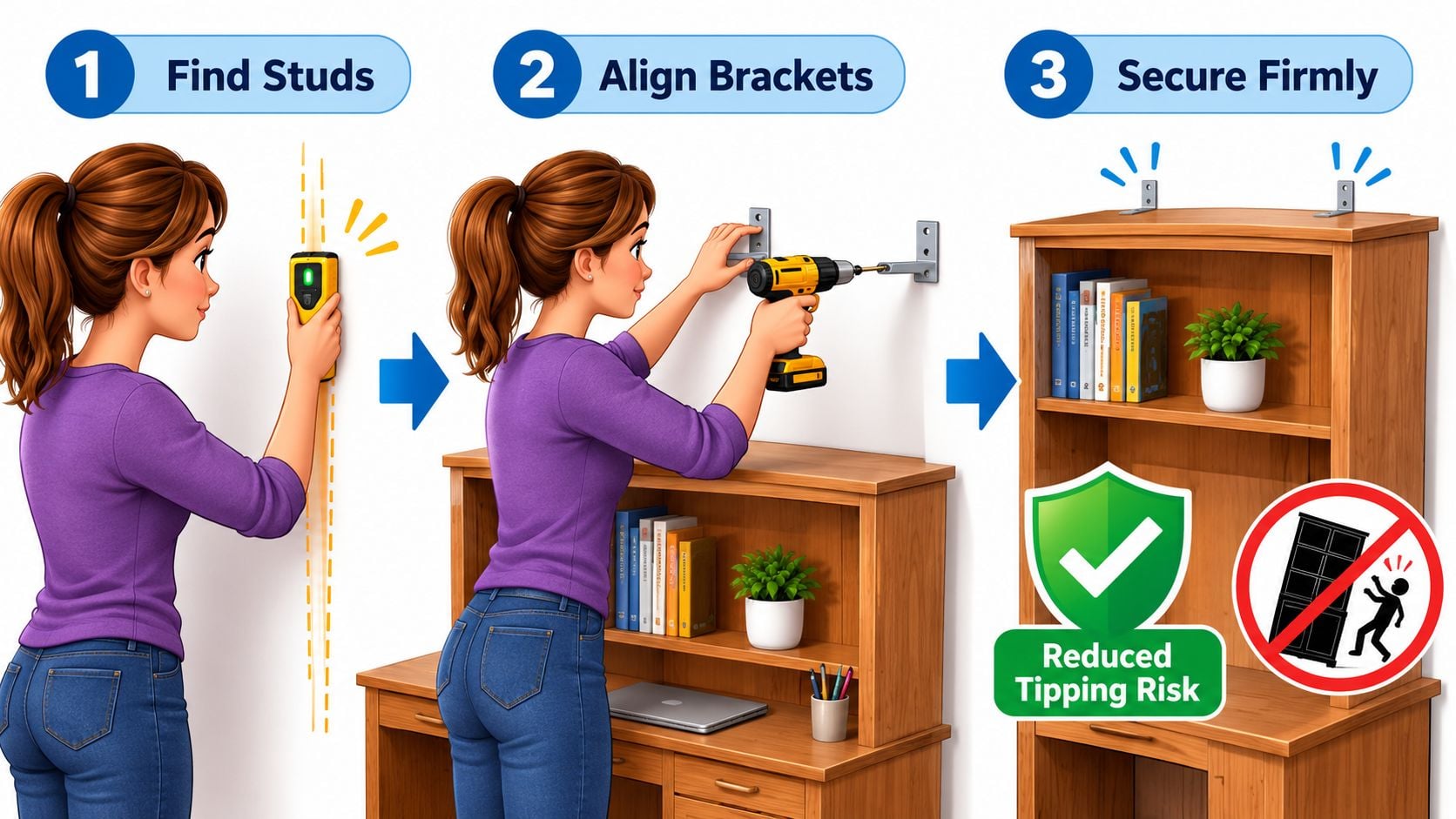
The CPSC Anchor It campaign update recommends anchoring tall furniture to the wall, storing heavier items low, and keeping tempting items such as toys and remotes out of high storage. Follow those principles as you set up the hutch:
- Locate wall studs before drilling. Mark each stud with painter's tape. Drywall anchors alone are not a reliable attachment for a loaded hutch.
- Use the supplied anti-tip hardware. Follow the manufacturer's installation instructions. Adhesive hooks and loose brackets are not substitutes for the unit's specified hardware.
- Position the wall connection carefully. Anchor placement affects performance, as described in the CPSC's furniture stability technical material. Connect the wall strap as directed by the hardware instructions so it can resist the unit's forward tipping motion.
- Check the anchor rating. ASTM F3096 requires supplied dresser anchors to withstand at least 50 pounds of force, according to the CPSC's technical material on furniture stability. Use hardware that meets the requirements for your unit.
- Level the desk and hutch. Adjust the feet or levelers until the unit sits firmly without rocking. A rocking case can put repeated movement on the fasteners.
- Load the bottom first. Put books, paper, and equipment in lower drawers and shelves. Keep the upper shelves light.
- Keep tempting items off the top. Toys, remotes, and snacks can encourage a child to climb. Reserve high storage for lightweight, infrequently used items.
Recheck the wall connection after moving the desk, changing the floor covering, or shifting the unit away from the wall. The hutch should stay still when a drawer opens. For similar wall-mounting principles elsewhere in the home, see this guide to securing a bookcase to the wall.
Custom Orders, Amish Craftsmanship and Special Financing
If the measured wall calls for a desk that stock sizes cannot fit, a custom order lets you choose dimensions, wood and finish together. Groen's Fine Furniture welcomes custom orders, and its sales associates can help you find an option that suits your room and personal style. Most of the furniture sold can be customized to your style and comfort.
Amish-made solid wood furniture offers another route to a desk built to your specifications. Explore Amish-made solid wood furniture to learn more about the craftsmanship. Make the hutch part of the order, too, so its height and storage work with the desk rather than competing with the room.
- Bring the measured footprint. Share the wall length, ceiling height, window and outlet positions, and the chair's seat height. These details give the maker a clear starting point.
- Choose the wood and finish together. Ask to see finish options with the wood species. A finish can look different across materials, so review the combination before settling on it.
- Set the hutch height for the room. Check it against windows, outlets and task lighting. A custom fit can help avoid the mismatch that comes from choosing a stock piece by appearance alone.
- Review the budget and financing. Special financing is available subject to credit approval. Ask about the terms and compare the total cost with the custom options you're considering.
- Ask about delivery and setup. Groen's offers a premium delivery service. Confirm what the service includes and discuss safe placement and anchoring for your desk and hutch.
Custom dimensions and selected finishes can make a desk work better in a shared room, but they also shape the final cost. Compare the custom quote with the price of a stock desk plus any separate storage needed to meet the same needs. Groen's Fine Furniture has served Northwest Indiana since 1983 as a family-owned business, with decades of combined sales experience on staff.
Measure Your Space and Visit Our Dyer or Crown Point Showroom
A desk and hutch have to work as one piece in the room you use. If the desk sits in a shared dining room or bedroom, consider how it will look and function when work is put away, not only during the workday.
Bring a photo of the wall, including outlets, windows and light switches, plus a list of what you plan to store. Sort that list by weight and frequency of use. It will help you judge whether the hutch's shelves suit your supplies and whether everyday items will be within easy reach.
At Groen's Fine Furniture's Dyer and Crown Point showrooms, try opening and closing a desk drawer while it holds the kind of items you expect to store. Check whether it slides smoothly and whether the drawer feels comfortable to use. Staff have decades of combined sales experience, and you can call or text the furniture and mattress experts for shopping help.
Custom orders are welcome, and sales associates can help you find the right item. Groen's also offers premium delivery service. Visit a showroom to compare options, or start at Groen's Fine Furniture.