Living Room Sofas Ideas: 8 Styles and Layouts for NWI

On a Sunday evening, an open living room can become a tangle of activities. The kids are on the floor, dining chairs have drifted toward the television, and the sofa's position leaves little room to move.
Start with how your household uses the room. Open-concept main floors may need a clearer seating area. Finished basements call for comfortable gathering spots, while older homes can make furniture delivery challenging when a sofa has to turn through a narrow stairway.
Groen's Fine Furniture has served Northwest Indiana since 1983. Its Dyer and Crown Point showrooms offer living room furniture, including sofas, sectionals, loveseats, chairs, recliners, lift chairs, sleeper sofas, tables, entertainment units, and accents.
Choose a sofa style with the room's everyday demands in mind. Upholstery color should work with existing woodwork and high-end finishes for hardwood floors, but appearance alone won't solve a blocked doorway or uncomfortable seating. Start with the layout problem, then compare styles that address it.
1. Floating Sofa Placement
Best for an open main floor without a clear living area. A floating sofa sits away from the wall, with its back defining the edge of the seating zone. In a Dyer home with connected living and dining spaces, that placement can separate activities without closing off the room.
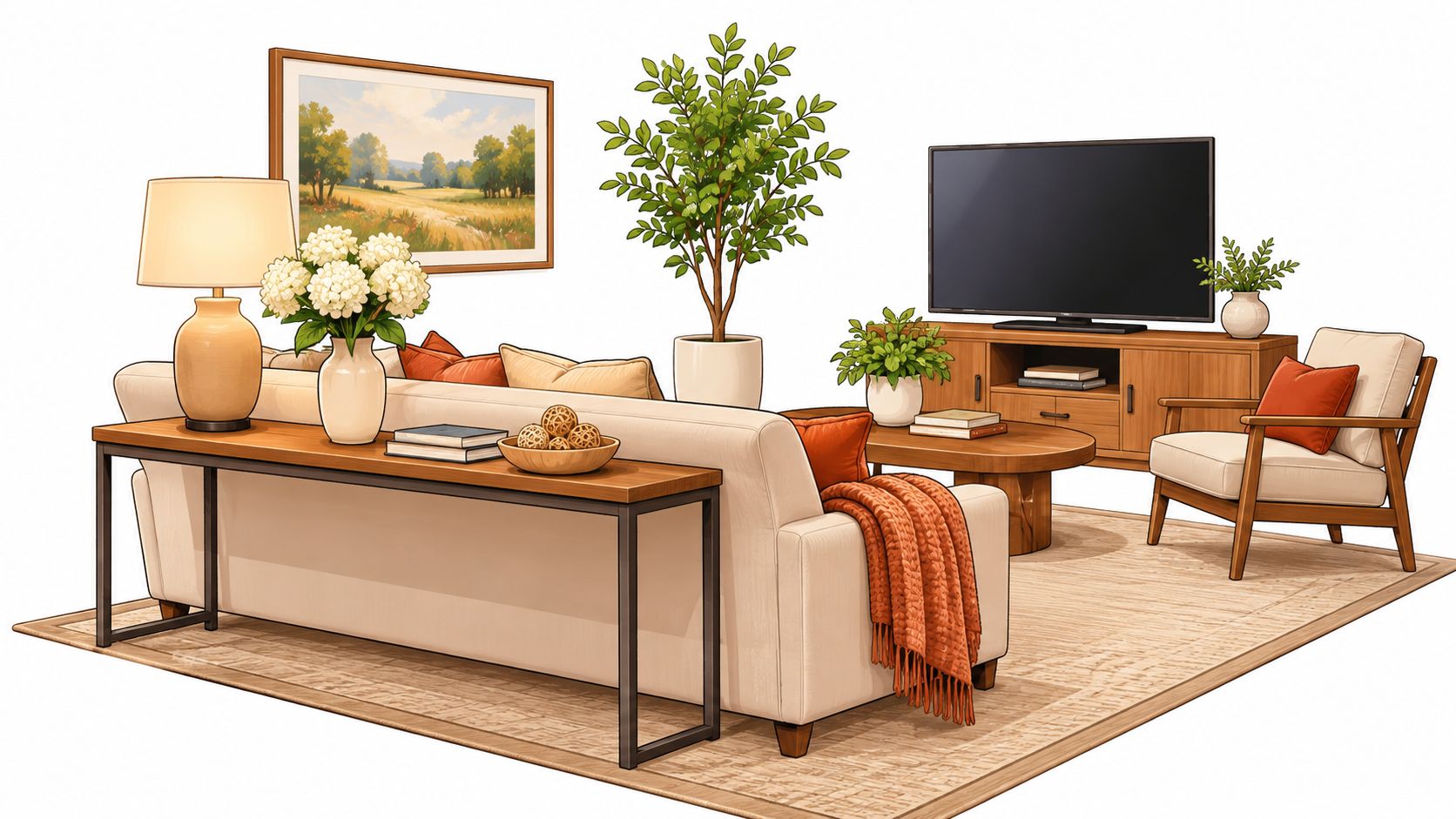
Place the sofa facing the main conversation or media focal point, then arrange swivel chairs where they can turn toward either gathering area. A console behind the sofa gives the exposed back a finished appearance, but it shouldn't consume the walking route.
Start With the Path Through the Room
Tape the sofa footprint onto the floor before ordering. Then walk from the entry to the kitchen and dining table while carrying something bulky, such as a laundry basket.
- Protect circulation. Leave a generous passage behind the sofa rather than squeezing through a decorative arrangement.
- Inspect the back. Exposed upholstery, seams, and reclining mechanisms should look appropriate from the entry.
- Size the rug to the grouping. The rug should connect the sofa and chairs instead of sitting beneath the coffee table alone.
Practical rule: A floating sofa works only when the walking route works behind it.
A Crown Point family room might benefit from a back-to-entry arrangement, while a narrower room may need the sofa shifted off-center. The guide to sofa and television placement can help organize the viewing relationship, while digital tools can help validate furniture layouts for interior design. Neither replaces testing the taped layout in the actual room.
2. Symmetrical Sofa Arrangement with Flanking Chairs
A stone fireplace in a St. John living room already supplies a strong focal point. Centering a sofa opposite it, with balanced chairs and lighting nearby, gives the room an orderly arrangement without requiring elaborate decorating.
Symmetry suits conversation-focused rooms, especially when the household wants a calmer alternative to oversized media seating. Matching end tables and lamps create consistency, while coordinating chair fabrics keep the arrangement from feeling like a rigid furniture set.
The mistake is forcing symmetry onto architecture that doesn't support it. An off-center doorway or projecting hearth may require a lighter chair on one side, not an identical piece that blocks movement.
Match Visual Weight, Not Every Detail
Start with the sofa and focal point before choosing occasional furniture. End tables should make drinks easy to reach, and lamps should provide comparable light at either end.
A Munster living room might use facing loveseats across a centered coffee table instead. That arrangement encourages conversation, but it requires checking the route around both pieces and accepting that television viewing may be less direct.
- Balance the chairs. Similar scale matters more than identical upholstery.
- Keep tables usable. A table far below the sofa arm can be awkward even when it looks attractive.
- Avoid crowded corners. A substantial rolled-arm sofa usually needs visually lighter companion seating.
The living room accent chair ideas guide offers useful directions for coordinating chair shapes with the sofa.
For a more personal result, consider a Bassett silhouette with chairs in a related pattern rather than the same fabric throughout. A balanced room can still feel collected, particularly when artwork, wood finishes, and textiles introduce gentle variation.
3. L-Shaped Sectional with Chaise
A Schererville basement media room may need seating for a group and a place to stretch out. An L-shaped sectional gathers the main seats together, while its chaise provides room to lounge without placing an ottoman in the walking path.
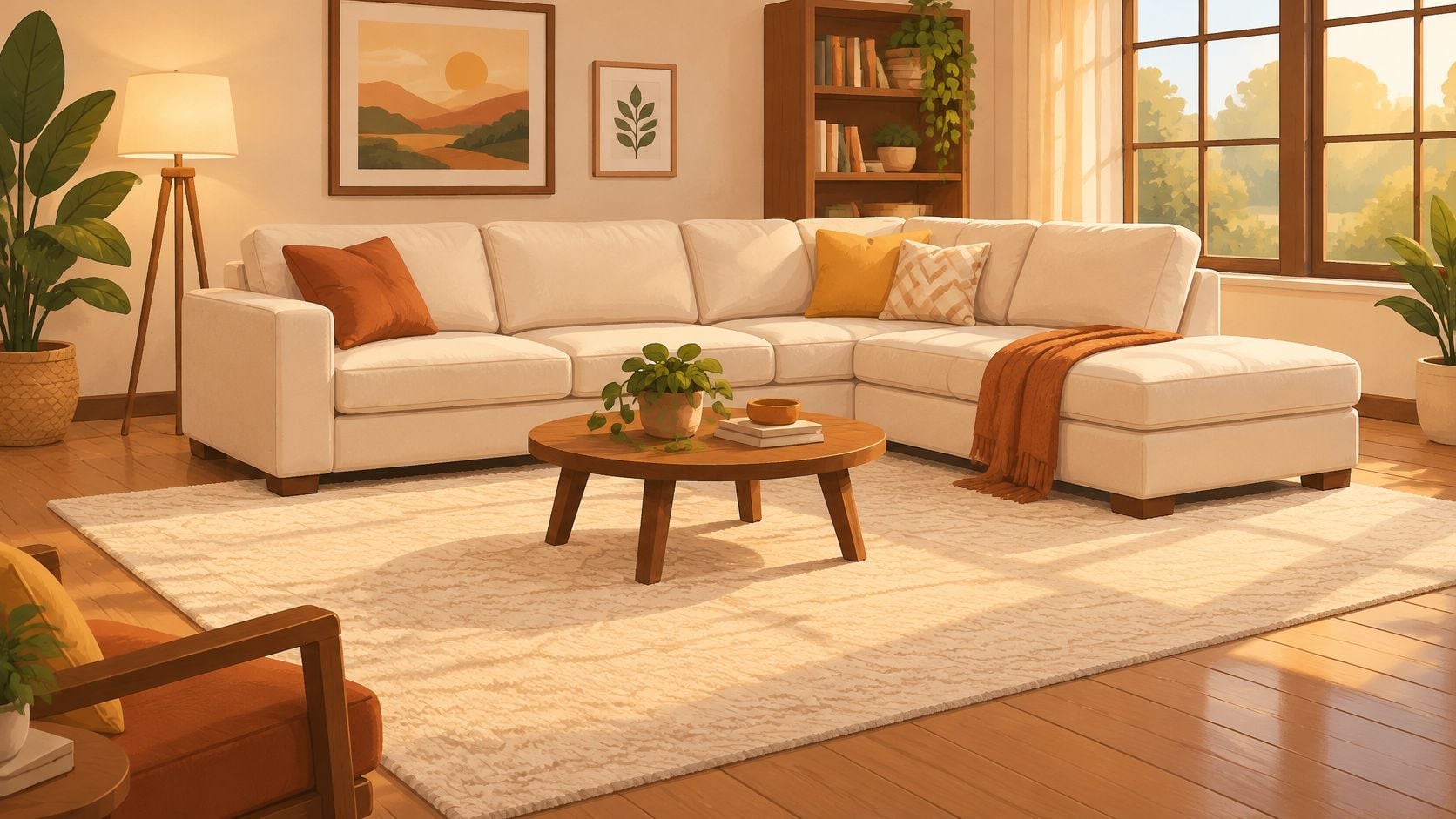
Check the route from the entrance before settling on the chaise side. A chaise that fits along the window can still block the room's main approach.
Confirm the Configuration Before the Fabric
Measure the sectional in its intended position, including the chaise extension. Check the manufacturer's diagram for left- or right-facing terminology. That detail matters: the wrong orientation can force people to walk around the chaise to enter or cross the room.
For a Dyer family room, a reversible chaise may help if the layout changes. Confirm that the selected model offers that feature; it should not be assumed for every Flexsteel sectional.
- Protect the entrance. Keep the chaise clear of the busiest route into the room.
- Check motion clearance. Reclining sections need room to operate fully.
- Preserve table access. Place the coffee table so people can reach it from the seats without climbing around the chaise.
The sofa with chaise guide can help you compare lounging configurations. If the chaise would crowd a compact room, a standard sofa with a movable ottoman leaves more options for arranging the seating.
4. Performance Fabric Sofa for Busy Households
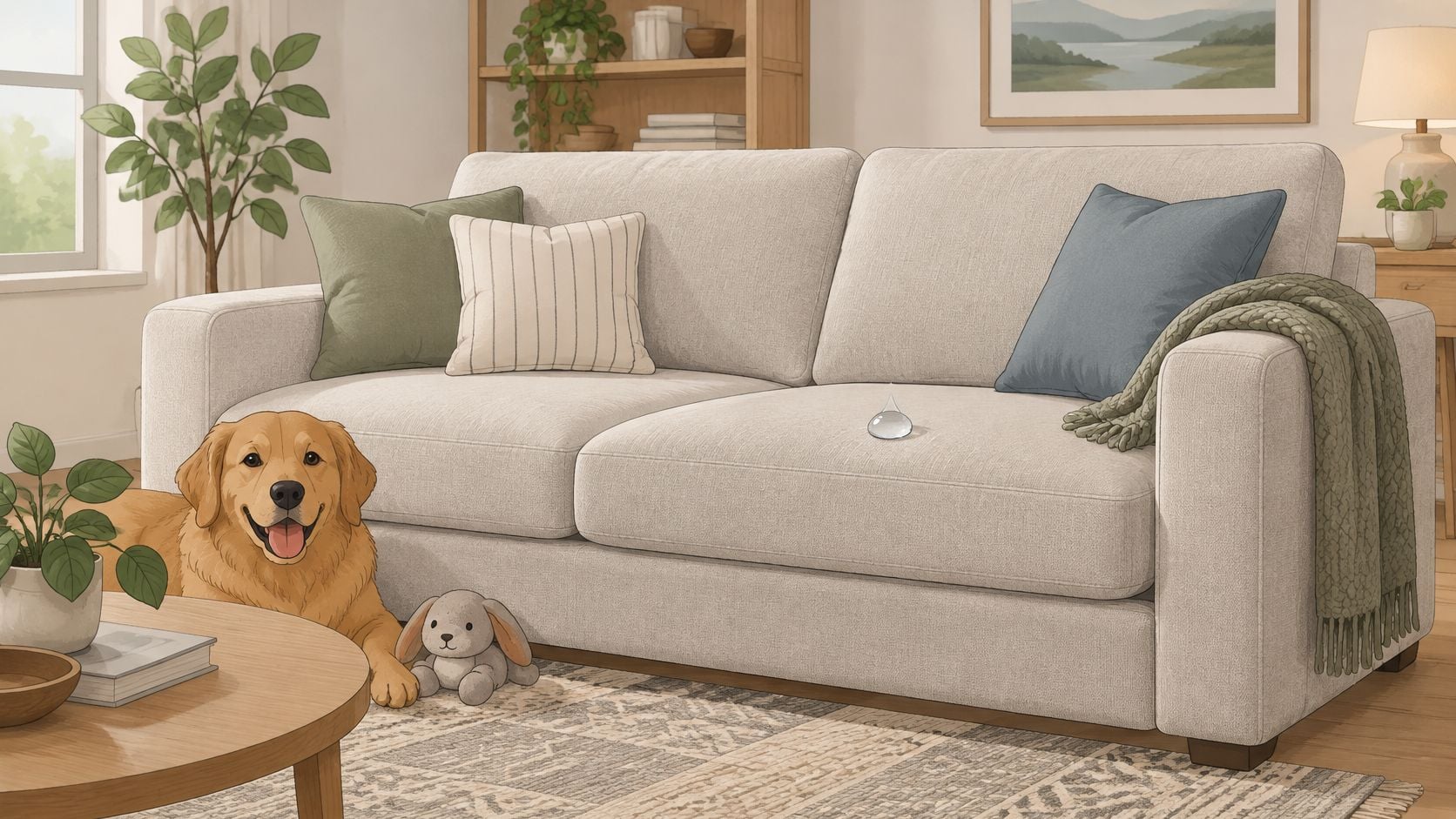
A Crown Point household with children and a dog doesn't necessarily need a dark sofa. It needs upholstery chosen for the messes that real life brings, along with a cleaning routine the family can keep up.
Performance fabric isn't a promise of indestructibility. Different fabrics address different concerns, including spills, abrasion, or moisture, and the cleaning instructions remain essential.
Choose for the Household, Not the Label
A light gray, subtly varied weave can be more forgiving visually than flat white upholstery. In a St. John sitting room, a performance velvet may offer a softer decorative look, but pets with snagging claws still call for careful examination of the surface.
- Review abrasion information. Double-rub testing addresses abrasion, not every kind of household damage.
- Read the cleaning code. A removable cushion cover isn't automatically machine washable.
- Blot promptly. Lift spills with a clean cloth rather than spreading them by rubbing.
- Examine the weave. Loose loops and pronounced texture deserve extra scrutiny around pets.
The performance upholstery guide provides a useful starting point for comparing fabric priorities. For microfibre specifically, check the sofa's care label before choosing water-based cleaners or another treatment.
A fabric that resists spills can still require careful cleaning. Performance and maintenance aren't opposites.
Compare performance-rated options within Flexsteel or Bassett upholstery collections by their actual specifications, not the collection name alone. A practical purchase balances fabric feel, cleanability, construction, and appearance rather than treating a single durability label as the whole decision.
5. Mid-Century Modern Sofa with Tapered Legs
In a compact Dyer condo, a sofa on exposed legs keeps more of the floor visible and gives the room a lighter appearance. Mid-century-inspired lines and restrained detailing suit open-concept rooms, too, where a bulky frame can interrupt the view between living and dining areas.
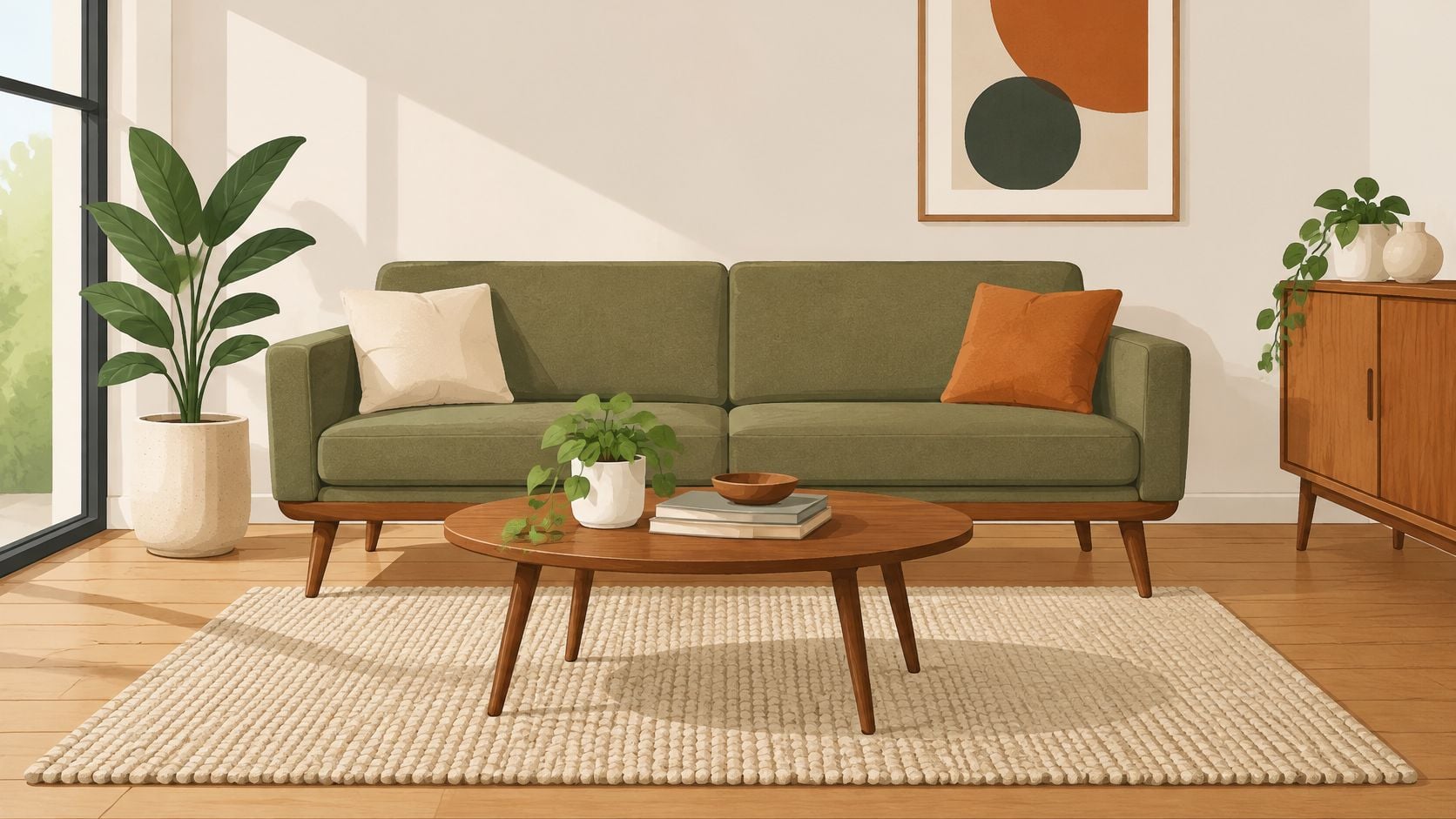
The benefit is visual openness; floor space stays the same. A slim-looking sofa can still be too deep, and a low seat may be uncomfortable for someone who needs more support when sitting or standing.
Separate the Silhouette From the Sitting Experience
In a Munster living room, rust upholstery and walnut-toned legs add warmth without making the frame feel heavy. Pair the sofa with a rounded coffee table, and keep pillows modest so they don't crowd the seat.
Homestyler's sofa dimension guidance gives general-use comparison ranges of 16–18 inches for seat height and 20–22 inches for usable upright seat depth. Treat these as starting points, then check how the sofa fits the people who will use it.
During a showroom test, sit back against the cushion with your feet supported. Check that the seat edge doesn't press uncomfortably behind your knees. If standing requires rocking forward, the low seat may not suit your household.
- Inspect the supports. Check the leg material, attachment, and manufacturer's care requirements.
- Measure beneath the frame. Confirm the actual clearance for cleaning access.
- Limit decorative bulk. Oversized pillows can overwhelm a slim sofa and reduce usable seat depth.
Solid wood legs complement the style, but leg material alone doesn't establish frame quality. Choose a sofa that pairs the look you want with comfortable proportions and sound construction.
6. Camelback and Rolled-Arm Traditional Sofa
In a Crown Point home where the living room opens toward the dining area, a camelback or rolled-arm sofa can soften a room full of straight lines. The camelback's raised center curve and rounded arms bring shape and character. Deep green upholstery makes the sofa a focal point; neutral fabric leaves more room for patterned chairs and seasonal accents.
Watch the Width Hidden in the Arms
Traditional styling can suit everyday use when the upholstery can take it. The Metropolitan Museum of Art's American sofa dated 1750–1775 measures approximately 203.2 centimeters wide. Its proportions show why a sofa's overall width and usable seating space both deserve attention.
In an older St. John home, measure the delivery route as carefully as the room. Rolled arms add to a sofa's outside width without adding the same amount of sitting space.
- Compare usable seating. Measure between the arms, not just across the frame.
- Check the route. Door openings, hallway turns, stair ceilings, and fixed railings can affect delivery.
- Balance the ornament. A curved sofa usually pairs best with simpler tables, lamps, and accessories.
- Choose fabric for daily care. Traditional styling can work with practical upholstery.
A rolled-arm sofa in a fabric suited to household use can fit a family room well. Make sure the room supports everyday sitting, reading, and conversation, and that the sofa's width works both in the space and along the delivery route.
7. Layered Textile and Tonal Color Styling
A sofa that looks fine alone can still clash with the rug, walls, or wood tones around it. Before replacing it, check whether the room needs a clearer palette or more varied textures.
Build a coordinated palette with one dominant color and one or two related accents. Oatmeal, cream, and warm stone create a quiet foundation. Rust or sage can add color without making the room feel busy.
Build Depth Without Covering Every Cushion
For a gray sofa in a Munster family room, pair smooth upholstery with a knit throw and a textured rug. Different surfaces add depth without putting a bold pattern on every piece.
- Choose a dominant color. Let the sofa, walls, or rug set the room's main direction.
- Repeat an accent selectively. Connect a pillow color to artwork or a small accessory.
- Vary texture. Linen-like weaves, velvet, and knits add contrast without visual clutter.
- Keep the seats usable. If pillows need their own chair when guests arrive, there are too many.
Styling judgment: If the household removes most pillows before sitting down, the sofa is overstyled.
Check fabric samples beside the flooring and under the lamps used at night. Cool gray can feel disconnected from warm wood, even when each looks appealing on its own.
With a light-colored sofa, consider cleaning needs alongside color. Washable throws can help, while the upholstery's care requirements should fit the household's habits.
8. Modular Sofa for Flexible Layouts
A narrow basement stairway in an older NWI home can rule out a full-length sofa. Modular seating may be easier to carry in separate pieces, but every module still needs enough room to turn. Measure stair landings, doorways, and the largest component before choosing a layout.
Buy for the Current Room and a Plausible Next Layout
In a Dyer first apartment, modular seating can adapt if each section remains useful on its own. For a growing Crown Point family, a corner module can shape a gathering area. Future expansion depends on compatible components and available upholstery, so confirm those details before counting on them.
- Inspect the connectors. Sections should attach as intended and stay stable during normal use.
- Measure each module. Check the largest piece against stair turns and doorway approaches.
- Check standalone use. Some sections have unfinished sides or need adjoining pieces.
- Confirm cover care. Removable upholstery is not necessarily washable.
The guide to contemporary sofa styles can help you compare modular seating with more fixed silhouettes.
Visible seams show most on light upholstery, and sections can shift during use. Modular seating makes sense when rearranging solves a specific room problem. Draw the preferred setup and one alternative on your floor plan, then check that both leave comfortable seating and clear circulation.
How the Eight Living Room Sofa Styles and Layouts Compare at a Glance
The right choice depends on what the room needs to do and what the delivery route can accommodate. Use this comparison to check practical constraints before settling on a style.
| Sofa style or layout | Main measurement to check | Care or setup consideration |
|---|---|---|
| Floating Sofa Placement | Clear paths around the sofa | Keep circulation routes open on every side used for walking. |
| Symmetrical Sofa Arrangement with Flanking Chairs | Combined width of the sofa, chairs, and side tables | Measure the full arrangement, not just the sofa. |
| L-Shaped Sectional with Chaise | Sectional footprint and access through stair turns | Check each piece's dimensions against the delivery route. |
| Performance Fabric Sofa for Busy Households | Fabric care instructions | Confirm the recommended cleaning method before choosing upholstery. |
| Mid-Century Modern Sofa with Tapered Legs | Overall width and leg clearance | Check whether the legs can be removed for delivery, if needed. |
| Camelback and Rolled-Arm Traditional Sofa | Overall depth and arm width | Broad arms can reduce usable seating space and complicate tight turns. |
| Layered Textile and Tonal Color Styling | Space for throws and cushions without blocking seats | Choose textiles that can be cleaned according to their care labels. |
| Modular Sofa for Flexible Layouts | Largest module's dimensions | Confirm connectors, finished sides, and whether each piece works on its own. |
Test Drive Comfort in Dyer or Crown Point
A sofa can look right in an open-concept living room and still block a walkway or feel awkward to sit on. Bring room measurements and photos to the showroom, then compare seat depth, cushion firmness, arm height, and how easily each person can stand.
Sit fully back and settle into a usual reading or television position. Then stand without pushing off a coffee table.
Comfort Should Include Every Generation
Research on age-friendly sofa design identifies low seats, very soft cushions, excessive depth, and low or missing armrests as potential barriers when standing. A deep lounge seat may be comfortable for movie night yet less practical for someone who needs firmer support.
- Test everyday positions. Sit upright, lean back, and try the position you use most.
- Check how the seat supports you. Notice where your feet, knees, lower back, and arms rest.
- Review ownership details. Read the warranty, cleaning instructions, and delivery terms before choosing.
Custom Orders and Financing That Fit the Plan
Groen's Fine Furniture offers many brands, styles, and fabrics, and most furniture can be customized to suit personal style and comfort. Flexsteel and Bassett are among the brands available. For dining spaces, Groen's offers Canadel's custom dining program and locally crafted Amish furniture made to order with solid wood craftsmanship.
Special financing is available, subject to credit approval. Set the budget alongside the room measurements, household needs, and preferred seating arrangement before settling on a configuration.
Groen's Fine Furniture serves Northwest Indiana from its Dyer and Crown Point showrooms. The business's five-star reviews reflect its customer-first approach, and its premium delivery service takes the process from selection to installation.
A good sofa choice fits the room, supports daily routines, and leaves clear paths through the space. Groen's Fine Furniture offers customizable sofas and sectionals, personal guidance, and special financing subject to credit approval. Visit Groen's Fine Furniture in Dyer or Crown Point to compare comfort and fabrics with room measurements in hand.