Mattress Reviews Latex: How to Judge Them Honestly


For homeowners in Dyer and Crown Point, the most popular advice about latex mattresses deserves a closer look: a latex layer doesn't automatically make the entire bed cool, durable, or suitable for someone with allergies. Those qualities depend on the complete mattress design, including the cover, support core, other foams, and how the materials work together.
Searches for “mattress reviews latex” often turn up confident recommendations with little explanation of how the reviewer reached them. A more useful approach starts with a simple question: What evidence supports the claim, and does it describe the whole mattress?
The Latex Review Scorecard Every Buyer Needs
Northwest Indiana shoppers reading reviews before a showroom visit need more than comfort adjectives. A useful review evaluates support and pressure relief, durability, temperature, and off-gassing separately. A mattress can perform well in one category and disappoint in another.
Latex review scorecard by performance category
| Category | What to Check | Credible Evidence | Red Flag |
|---|---|---|---|
| Support and pressure relief | Firmness rating, zone design, sleeper position tested | Extended testing in the intended sleep position, with edge-to-center comparison | Soft or cloud-like wording with no firmness data |
| Durability | Layer thickness, density, warranty length, definition of lifespan | Cyclic compression results, height loss, stated expected years of supportive use | Lifespan promise with no definition of end of life |
| Temperature | Cover fabric, layer structure, whole-bed design | Measured heat retention for the complete mattress and the room conditions used | Cool latex claims that describe only the latex layer |
| Off-gassing and allergies | Certifications, latex origin, emission testing | Verified GOLS or OEKO-TEX Standard 100 status, plus appropriate emission reports | Natural claims with no certificate or test report |
Reality Checks Before Trusting a Rating
- Name the construction. A review should identify natural, blended, or synthetic latex, Dunlop or Talalay processing, layer thickness, and firmness.
- Separate measurements from impressions. A reviewer's description of gentle cushioning isn't a pressure map. Both can help, but they answer different questions.
- Check the claim's scope. Testing a latex sample doesn't establish how a finished mattress performs beneath its quilted cover.
Score each category by the quality of its evidence, not the enthusiasm of its wording. A skipped category is incomplete, not an implied positive.
Practical rule: A review should make its conclusions checkable, even when its comfort judgment remains personal.
The reviewer's background matters, too. Look for who performed the testing, whether the mattress was purchased at retail or supplied by the manufacturer, and whether affiliate commissions or payments are disclosed. Owner-based conclusions should explain how many experiences support them and how those experiences were collected.
Natural, Blended and Synthetic Latex Compared
A latex mattress can contain natural, blended, or synthetic foam, but that label alone doesn't tell you how the finished bed will feel. Natural latex is made from rubber-tree sap, including Hevea; synthetic latex is a petrochemical-based polymer; blended latex combines the two. The layer's composition and position within the mattress both matter.
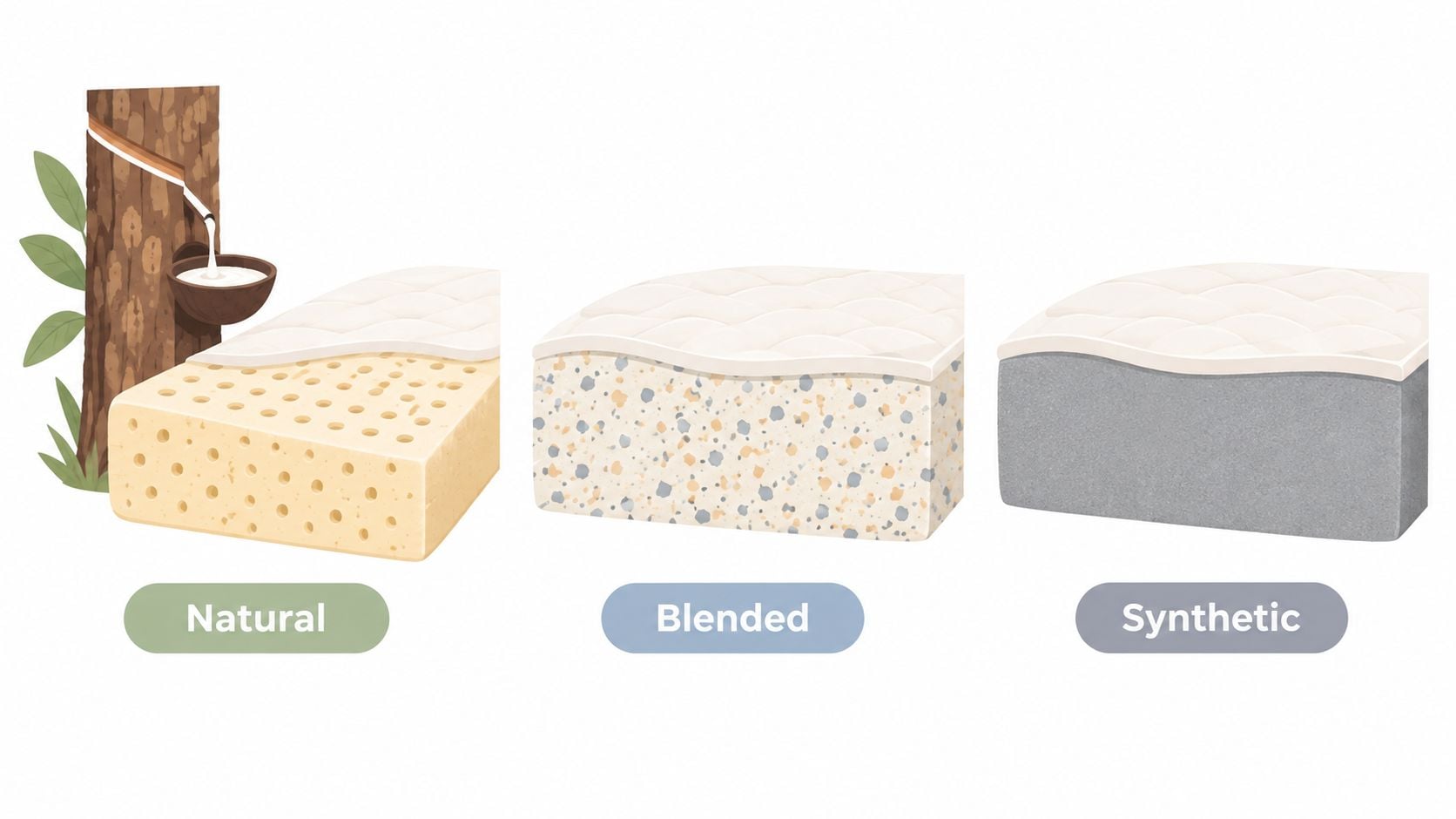
Natural, blended and synthetic latex compared
| Latex Type | Origin | Compression and Body Impressions | What to Confirm |
|---|---|---|---|
| Natural latex | Sap from rubber trees, including Hevea | Feel and resistance depend on the layer and the mattress design | Certified origin and GOLS status |
| Blended latex | Natural and synthetic latex mixed | Feel depends on the blend and layer construction | Stated percentage of natural content |
| Synthetic latex | Petrochemical-based polymer | Feel and resistance depend on the layer and the mattress design | Processing method and warranty terms |
Use the table as a guide to what each label means, not as a comfort ranking. A well-specified blend may suit a shopper as well as an all-natural model. Ask what each latex layer contains and where it sits in the mattress, then compare that information with the review's claims about the whole bed.
Processing Changes the Feel
Dunlop and Talalay describe manufacturing processes, not whether latex is natural. Dunlop latex is typically denser toward the bottom of a layer, while Talalay has a more uniform structure through its thickness. Even when two mattresses share a firmness label, their construction can produce different sensations.
Layer placement also changes the experience. A yielding latex top layer over a firmer latex core may feel different from the same top layer over springs. The material name is only one part of the design.
To assess a natural or blended claim, ask for the natural-content percentage in each latex layer. Check that against the stated composition of the entire mattress: the latex foam may be only one part of the bed.
If you're weighing latex's quick rebound against memory foam's slower contouring, this latex mattress versus memory foam guide can help frame the comfort trade-off. For either material, look for layer details that let you check whether the review describes the complete mattress rather than one component.
A natural or blended claim is more useful when the manufacturer identifies the percentage, processing method, and certification behind it.
Judging Support, Pressure Relief and Alignment
Shoulders and hips need enough room to settle into a mattress, while the pelvis should stay supported. A surface that is too firm can press on broad shoulders; one that is too soft may let the pelvis sink and bend the spine. The latex label alone cannot tell you how the finished bed will behave.
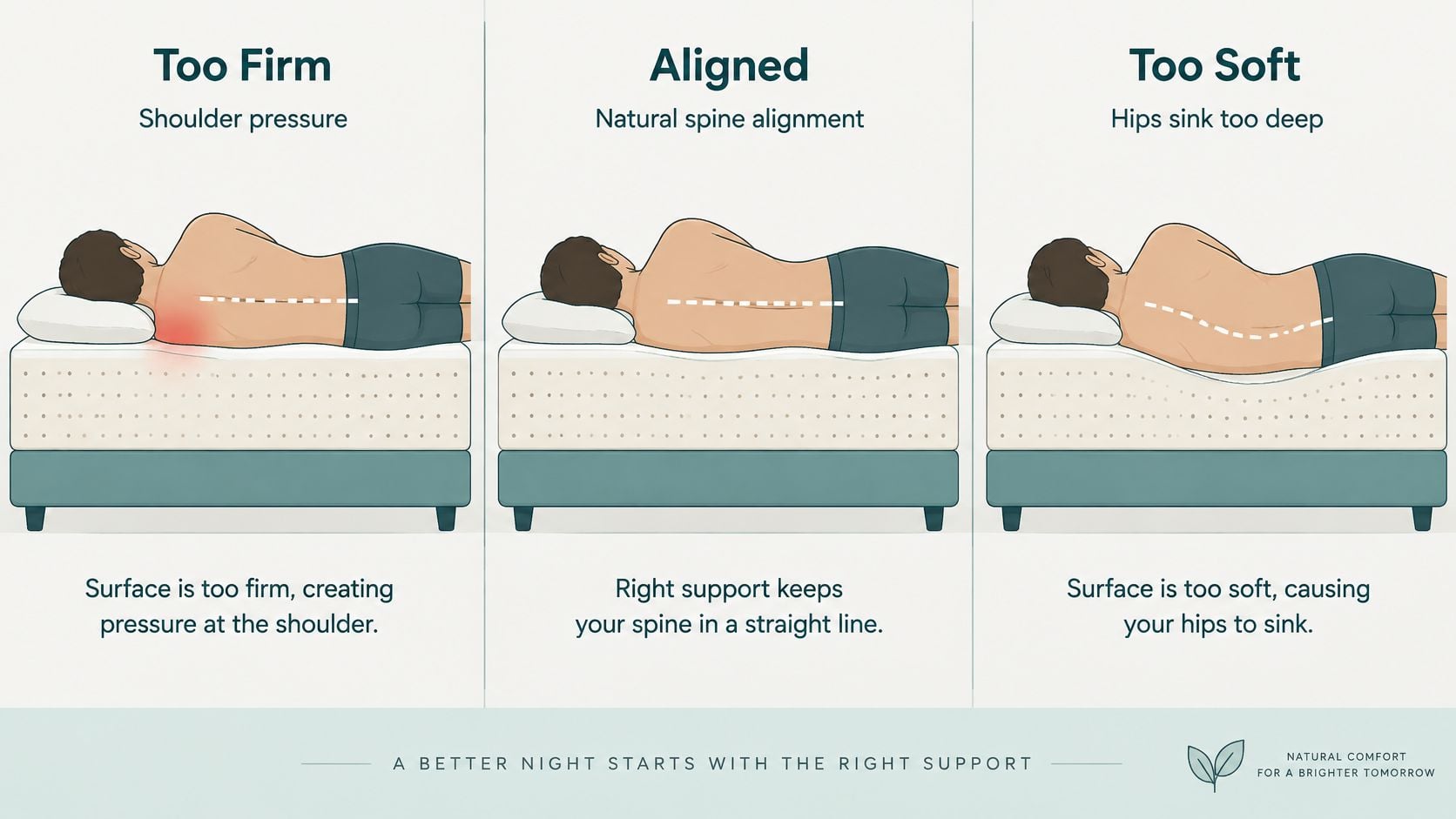
The biomechanical evidence discussed in TheRoundup's latex mattress guide suggests latex-core mattresses can reduce peak pressure at the torso and buttocks compared with polyurethane foam, while creating more areas of low-pressure contact. Latex yields beneath prominent body areas, then pushes back more as compression increases. That response can help limit deep sinking.
In the 2021 pressure-distribution study in PMC, 20 people in three sleeping positions for six minutes per position had lower peak pressure at the thorax and sacral regions on latex than on polyurethane foam. The finding describes pressure at the mattress surface, so use it to assess mechanics rather than promise a specific health outcome.
Match Firmness to the Sleeper
A 2021 systematic review reported benefits from medium-firm mattresses for comfort, sleep quality, and alignment. It also discussed a controlled study of 313 adults with nonspecific chronic low-back pain who improved more on medium-firm than firm mattresses.
- Pressure relief: Shoulders and hips should settle without feeling pinched or compressed.
- Alignment: Check whether the pelvis drops lower than the rest of the body.
- Movement: Turning should feel manageable, and a partner's movements should not distract you.
Use the mattress firmness guide to relate these checks to sleeping position. Reviews are more useful when they assess the complete mattress design and explain how firmness, support layers, and comfort layers work together. A single latex layer cannot establish that the whole bed will suit every sleeper.
Durability Claims and How to Test Them
A long lifespan estimate doesn't tell you whether a mattress will keep providing comfortable support. Reviews need to define what “lasts” means, then assess the complete mattress design rather than assuming the latex layer determines the whole bed's durability.
The Sleep Foundation durability framework gives these average lifespan ranges: latex, 7.5–8.5 years; hybrids, 6.5–7.5 years; conventional foam, 6–7 years; and innersprings, 5.5–6.5 years. Treat them as category estimates, not deadlines.
Average mattress lifespan by material
| Material | Average Lifespan | How to Read It in Reviews |
|---|---|---|
| Latex | 7.5–8.5 years | A longer category estimate; check whether latex makes up the entire mattress or only one layer |
| Hybrid | 6.5–7.5 years | Assess the support system and comfort layers together |
| Conventional foam | 6–7 years | Check density and firmness before relying on the range |
| Innerspring | 5.5–6.5 years | Review coil specifications alongside the comfort layer |
A mattress can still look presentable after its support has changed. A long warranty also doesn't show how long a particular sleeper will find it comfortable, so check what the warranty covers and how an impression must be documented.
What Compression Testing Actually Measures
A test result is useful when it names the method, load, cycle count, and measured outcome. The reported method of 100,000 Rollator cycles, described as roughly 10 years of use, used repeated 230-pound loading and recorded approximately 1% height loss and 0.80 inches of accumulated compression, below a cited 1.75-inch benchmark for high-performing mattresses. Height loss tracks the mattress's overall profile; accumulated compression describes lasting deformation after repeated loading. The benchmark provides a comparison point, not a prediction for every sleeper.
Laboratory cycling offers a controlled way to assess repeated loading, while everyday performance also depends on formulation, layer thickness, the foundation, and test design. Ask whether the results apply to the whole mattress or to one material sample. That distinction is like judging a cake by testing one ingredient: the ingredient matters, but it cannot describe the finished design on its own.
Before accepting a durability claim, check the evidence:
- Request the method. Look for the procedure, loading conditions, and measurements recorded after cycling.
- Identify every layer. An all-latex mattress differs from one with a thin latex comfort layer over lower-density polyurethane foam.
- Read the warranty. Check qualifying impressions, exclusions, foundation requirements, and documentation rules.
The mattress edge support guide covers another part of the whole-bed assessment: the usable surface includes the perimeter, so check whether the edge feels stable as well as the center.
Why Latex Can Sleep Hot and How to Check
Latex isn't universally cool: a compilation drawing on more than 450 owner experiences reports that roughly 10% of latex-mattress owners describe a significant sleeping-hot problem, according to Sleep Like The Dead. That doesn't make latex a poor choice for warm sleepers, but it does weaken blanket cooling promises.
An AARP latex mattress review describes one latex hybrid retaining 19.5 degrees of heat and another latex model retaining 17 degrees, with middling cooling results. Such figures are useful only alongside the test protocol and room conditions, not as universal predictions of bedroom comfort.
What Changes the Overnight Experience
- Bedding and quilting: A thick comforter or dense quilted cover changes the surface a sleeper touches.
- Shared body heat: A mattress tested without a partner may feel different when occupied on both sides.
- Bedroom conditions: Humid Northwest Indiana summers create a different setting from a temperature-controlled test room.
- Underlying construction: Springs, additional foams, layer thickness, and latex processing all belong in the assessment.
- Sleep position: Side sleepers may settle farther into the surface and experience more enclosure than back sleepers.
Cooling check: The relevant result belongs to the finished mattress, under stated conditions, not to an uncovered latex sample.
A brief showroom visit can reveal an immediate tendency to feel enclosed, but it can't reproduce a full night across changing seasons. The guide to mattresses for hot sleepers can help organize comparisons without treating a material name as a cooling guarantee.
A credible review identifies whole-mattress heat retention, cover composition, room conditions, and the exact scope of the cooling claim. Without those details, breathable is a description rather than a demonstrated outcome.
Off-Gassing, Allergies and Certifications Explained
A new-mattress smell and a suspected allergy flare-up raise different questions. Odor alone can't establish emissions levels, and an organic label can't establish that a mattress is appropriate for someone with a diagnosed latex allergy.
Exposure depends on latex type, manufacturing, the cover, and individual sensitivity. Someone with a known latex allergy should discuss mattress selection with a qualified clinician rather than treating hypoallergenic wording as medical reassurance.
Off-gassing evidence requires its own paperwork. A mattress that smells mild at delivery hasn't necessarily undergone low-emissions testing, and a noticeable odor doesn't identify a particular substance or its concentration.
What Each Certificate Should Establish
The Control Union explanation of the Global Organic Latex Standard describes GOLS as covering organic-origin raw materials, apart from approved accessories, certified organic plantations, and certified manufacturing units. It also includes harmful-substance limits, emission-testing requirements, and controls on polymer and filler percentages.
- GOLS: Ask for the certificate and confirm whether its scope covers the latex material, processing operation, or claimed finished product. Organic origin and manufacturing controls are more specific than an unsupported natural claim.
- OEKO-TEX Standard 100: Treat this as another named label to verify, not as a substitute for GOLS. Request the certificate details and identify which component or finished article it covers.
- Emission reports: Match the report to the mattress or relevant component, and check the testing scope. A certificate for one layer shouldn't be presented as proof about everything inside the bed.
For households also evaluating room air, EcoQuest Purifiers provides a place to shop VOC-focused air purifiers. An air-cleaning purchase shouldn't replace checking mattress emissions documentation, addressing an irritating source, or obtaining medical advice about symptoms.
Match each materials, emissions, or allergy-related claim to the specific evidence that could support it.
How to Test a Latex Mattress in Our Showroom
Record what your body notices in each sleeping position, then compare those observations with the specific claims in a review. A showroom visit is more useful as a side-by-side test than a quick sit. Wear comfortable clothing, bring a familiar pillow if practical, and write down what feels different.
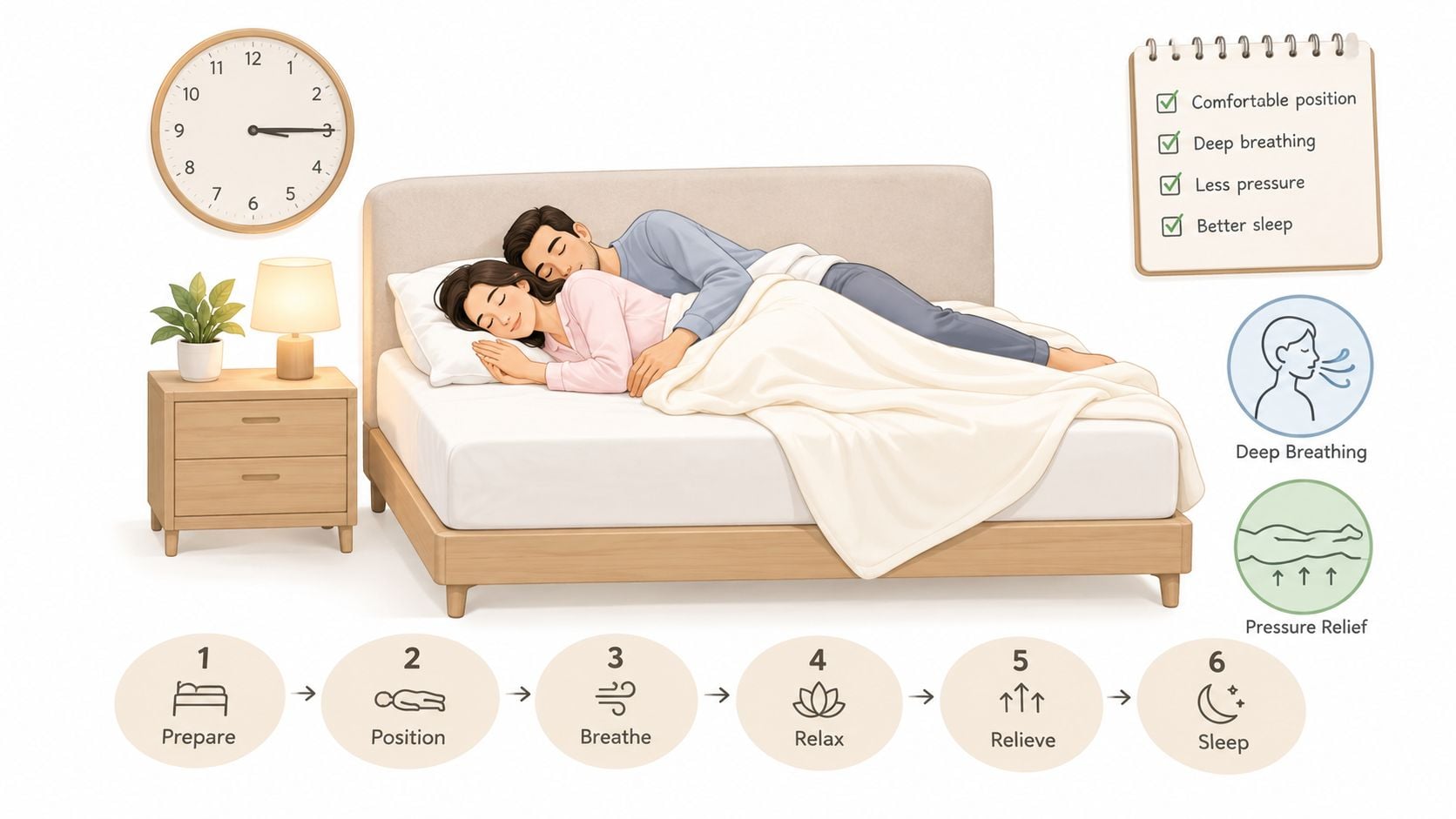
A Practical Testing Routine
Start in your usual sleeping position. If you sleep on your side, lie on your side rather than judging the mattress only on your back. Bring your partner when possible, since both people need to assess a shared bed.
Give pressure time to show up. Stay still long enough to notice whether your shoulder, hip, or another joint starts to feel compressed. First contact can feel pleasant even when pressure becomes uncomfortable after your body settles.
Compare the center and perimeter. Sit near the edge, then lie close to the side in your usual position. Notice whether you feel supported or tilted toward the floor.
Check your shoulders, hips, and lower back. On your side, see whether your shoulder settles without pulling your torso into an awkward angle. On your back, notice whether your pelvis drops too far or your lower back feels unsupported.
Move while your partner stays still. Both of you should lie down, change positions, and roll toward each other. Note whether turning feels easy for one person but disruptive to the other.
Check warmth with permission. If the showroom allows a blanket test, stay beneath a warm blanket long enough to notice whether the bed starts to feel enclosed. This is a comfort observation, not a replacement for controlled cooling measurements.
Write down specific mismatches. Compare what you felt with the review's descriptions of firmness and temperature. “Shoulder pressure,” “easy turning,” and “noticeable partner movement” are more useful notes than “comfortable.”
When Partners Disagree
A couple testing a firm latex model may have different reactions: one enjoys its stable, buoyant feel, while the other notices each turn and finds the rebound distracting. Those observations can both be accurate. The review may describe firmness well yet say little about movement across the mattress.
Use the difference to identify what the couple needs from the whole bed. Shared comfort includes what happens when someone moves, not only how the mattress feels while both people lie still. A different comfort-layer arrangement or support design may address the mismatch, so a disappointing trial does not automatically rule out latex.
Confirm Your Latex Choice Before You Buy
A latex mattress review is only useful if its claims describe the whole bed. Before buying, ask for the construction details behind the review: the latex type and layer placement, the support materials beneath it, and any stated measurements for firmness, cooling, or durability. A latex layer alone cannot establish how the complete mattress will feel.
Use this evidence checklist:
- Construction: Request the layer order and materials, including the support core. Check that the review describes the same configuration as the model you are considering.
- Measurements: Ask what method supports claims about firmness, cooling, or durability. A clear description lets you compare reviews with less guesswork.
- Certifications: Confirm which materials or parts of the finished mattress a certification covers. A certification for one component does not automatically describe every material in the bed.
- Terms: Read the mattress return policy and clarify which terms apply to your selected model before purchase.
Shoppers across Northwest Indiana can compare latex with foam and hybrid options in person. Available models from Serta and Beautyrest can offer additional reference points, but the construction and evidence matter more than the label. Bring your checklist and ask staff to help match review details to the mattress on the floor.
Groen's Fine Furniture offers mattress guidance, custom options, and special financing, subject to credit approval. Its family-owned team has served Northwest Indiana since 1983, with showrooms in Dyer and Crown Point. Visit Groen's Fine Furniture to compare available mattress constructions and ask about current financing plans.