Blog
Home Office Furniture for Small Spaces: Optimize Your Setup

By 8 a.m., the laptop is open on the dining table. By lunchtime, a stack of papers has spread to the nearest dresser or counter. By evening, the room still feels like work, even after the computer is closed.
That pattern is common in Dyer, Crown Point, and across Northwest Indiana because many homes were never built with a dedicated office in mind. A spare corner, a bedroom wall, or the end of a hallway often has to do the job. The trouble is that a makeshift setup usually costs more comfort than people expect. It can crowd the room, strain your posture, and make it harder to separate work time from home life.
Small-space office planning works a lot like packing a good carry-on bag. Every piece needs a purpose, the fit matters, and wasted space adds up fast. The goal is not to squeeze in the smallest desk you can find. The goal is to create a workspace that fits your room, supports how you work, and still feels right with the rest of your home.
That is where better furniture choices make a real difference. High-quality, customizable, American-made pieces can solve problems that flat, one-size-fits-all furniture often creates. In tighter NWI homes, a well-built desk or storage piece that is sized correctly can give you more usable room, better comfort, and a setup that lasts for years instead of one season.
If you want to see how different rooms can be arranged before choosing furniture, these home office design ideas offer a helpful starting point.
Table of Contents
- Creating Your NWI Home Office in Any Space
- Measure Twice Buy Once Your Small Space Blueprint
- Choosing Smart Desks for Compact Areas
- Beyond the Desk Smart Storage and Layout Strategies
- Ergonomics and Lighting Your Keys to All-Day Comfort
- Design It Your Way With Custom and Quality Furniture
- Your Small Home Office Checklist and Next Steps
Creating Your NWI Home Office in Any Space
You finish breakfast, open your laptop, and claim the only open spot in the house. It might be a bedroom corner, part of the dining room, or a short stretch of wall in the living room. By the end of the day, that same spot still has to feel like home, not like a cubicle that took over the room.
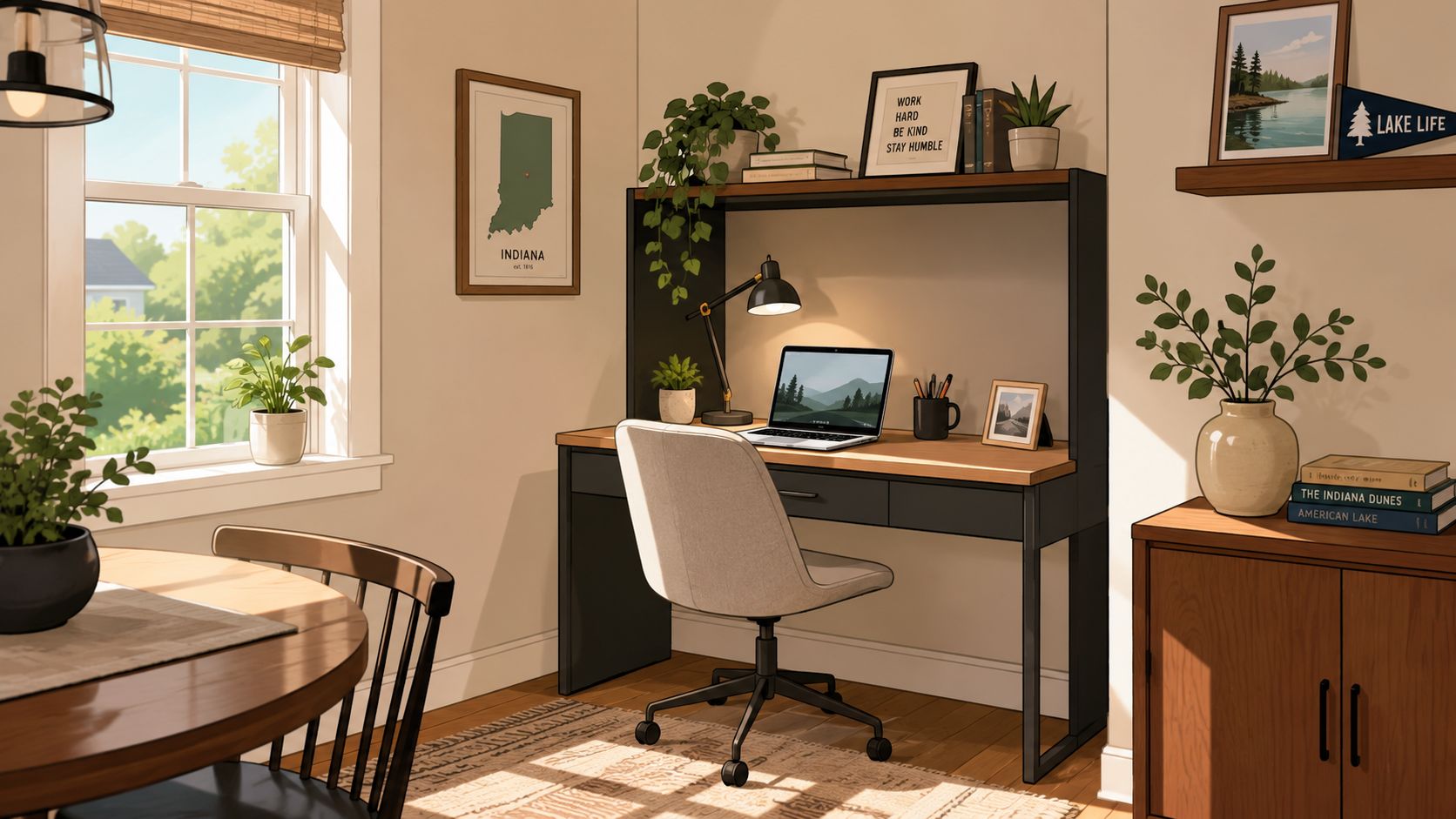
That is the challenge in many Northwest Indiana homes. The office is rarely a dedicated room. It is usually a shared space that has to work hard during the day and settle back into family life at night.
A good small office supports both jobs. It gives you a place to focus, keeps the room comfortable to move through, and avoids the crowded feeling that comes from furniture chosen only by width and price.
A good small office doesn't just fit physically. It fits the way the room still needs to live after work hours.
That shift in thinking matters. Small-space planning is not only about finding the tiniest desk possible. It is about choosing pieces with the right scale, the right visual weight, and the right staying power. A bulky desk can make a room feel shorter and tighter, even if the measurements technically work. A well-proportioned piece feels more like built-in support for your routine.
In practice, that often means cleaner lines, smarter storage, and furniture that earns its footprint. A desk should give you enough surface to work without turning the whole room into an office. A chair should tuck in easily. Storage should help contain paper, cords, and devices so the space can shift back to normal life without a long cleanup every evening.
Many homeowners also reach a point where temporary furniture stops making sense. A bargain desk may fit the corner, but if it wobbles, chips, or never feels comfortable to use, it costs more in frustration than it saves. Better-made furniture solves a different problem. It helps a small room feel intentional, and it keeps doing its job year after year.
That is where local guidance makes a difference. At Groen's, small home office planning is not treated like a one-size-fits-all category. The goal is to help you choose high-quality, customizable, American-made pieces that fit the way your home functions, even if your office is carved out of a guest room, hallway nook, or living area. If you want examples of layouts that feel polished without wasting space, these home office design ideas for real homes are a helpful place to start.
A small office can absolutely feel comfortable, capable, and lasting. It just needs furniture chosen with the room, the routine, and the years ahead in mind.
Measure Twice Buy Once Your Small Space Blueprint
A small office can look perfect on a product page and still frustrate you by day three. The desk fits the wall. Then the chair bumps the bed, a drawer hits the walkway, and the room starts feeling tighter than it did before. Good measuring prevents that kind of expensive surprise.
Start with the room you actually have
Begin with the full footprint, not just the open wall. Measure width and depth, then mark every feature that changes how furniture will work in real life. Door swings, windows, vents, trim, outlets, radiators, and traffic paths all count because they affect usable space, not just empty space.
Clearance matters just as much as the furniture itself. You need enough room to sit down, push the chair back, and move through the area without twisting sideways. A narrow setup may technically fit, but daily use is what proves whether it works.
If you want a simple process to follow, this guide on how to measure furniture walks through the basics clearly.
Measure three zones, not one piece
A home office works like a small system. The desk is only one part of it.
The desk zone
Measure for the worksurface and for what lives on it. A laptop setup needs different depth than a monitor, keyboard, notebook, and task lamp. In many small rooms, the mistake is choosing a desk that is shallow enough to fit but too shallow to use comfortably.The chair zone
Chairs need operating room. Even a compact chair has to slide back far enough for you to sit down and stand up without banging into another piece of furniture.The movement zone
The room still has another job to do. In a guest room, you may need to preserve a clear path around the bed. In a living area, you may need to protect the route to a sofa, window, or doorway.
That is the blueprint. Furniture should support the room, not interrupt it.
Use a simple test before you buy
A quick sketch can save you from a return, or worse, a piece that technically stays but never feels right. Draw the room as a basic outline. Add fixed features first. Then mark the furniture footprint.
Painter's tape helps here. Tape the desk shape on the floor, then stand in front of it, step back as if your chair is pulled out, and walk the path you use every day. That physical test catches problems a measurement on paper can miss.
This is also the stage where shape starts to matter. A rectangular desk is not always the smartest answer. In an alcove or underused corner, a corner-friendly piece can make the room feel more settled and less crowded. If you are trying to blend function with a more traditional look, these timeless corner table styles can spark useful ideas.
Plan for comfort now and quality later
Small-space buying often goes wrong because shoppers measure for arrival day instead of year three. A desk that barely clears the room leaves no margin for a better chair, a file cabinet, or a larger monitor later. Better planning gives you options.
That matters even more if you are investing in higher-quality, customizable, American-made furniture. Well-built pieces are meant to stay with you. At Groen's, that long-view approach helps homeowners in Northwest Indiana choose furniture that fits the room now and continues to serve them well as work routines change.
A good measurement plan does more than prevent mistakes. It helps a small office feel calm, comfortable, and intentional from the first day you use it.
Choosing Smart Desks for Compact Areas
The desk carries more pressure in a small room than almost any other piece. It has to work hard, look appropriate in the room, and avoid turning a useful corner into a bottleneck. That's why desk style matters as much as desk size.
The desk has to fit the room and the routine
For workspaces in shared rooms, designers emphasize two things: a desk should create a visual boundary and it should include enough storage to keep work items from spreading into the rest of the home. That same guidance notes that a minimum desk depth of 20 to 24 inches is often needed for real productivity, which pushes back on the idea that any tiny ledge will do (designer guidance for shared-room home offices).
That point confuses shoppers all the time. A very shallow desk may look neat online, but once a monitor, keyboard, notebook, and lamp land on it, the surface stops being practical. Small should mean efficient, not undersized.
For some rooms, shape makes the biggest difference. A corner setup can reclaim space that usually goes unused. Readers exploring older and more decorative approaches to corners may enjoy these timeless corner table styles, especially when trying to blend a workspace into a traditional home.
Space-Saving Desk Comparison
| Desk Type | Best For | Space-Saving Feature |
|---|---|---|
| Wall-mounted desk | Bedroom nooks, hall alcoves, occasional workstations | Keeps the floor visually open |
| Secretary desk | Living rooms and multipurpose spaces | Closes up to hide papers and devices |
| Slim writing desk | Daily work in a small footprint | Minimal depth and clean lines |
| Corner desk | Awkward corners or underused angles | Uses space that often sits empty |
| Desk with side shelving | Small rooms that need storage without another case piece | Combines work surface and storage in one footprint |
A desk with side shelves can be especially useful when the room can't handle both a desk and a separate bookcase. It keeps supplies nearby without asking for another section of wall.
Matching desk type to real life
A wall-mounted desk often works well for someone who needs a tidy station for laptop work and paperwork, but not heavy storage. It gives the room an airy look and can help a bedroom feel less crowded.
A secretary desk solves a different problem. In a living room or studio space, it lets work disappear when your workday is complete. That visual reset matters more than many people expect. When papers and chargers stay in sight, the whole room feels unfinished.
A slim writing desk is a steady middle ground. It suits people who want an open look and don't need a lot of built-in storage. With the right chair and vertical shelving nearby, it can support a full workday without dominating the room.
A corner desk makes sense when the room layout already points that way. It can preserve the center of the room and leave better movement paths. The downside is that corners need careful measuring, especially if baseboards, windows, or outlets complicate placement.
The smartest desk isn't the smallest one. It's the one that supports the workday and still lets the room breathe.
Beyond the Desk Smart Storage and Layout Strategies
The room usually breaks down after the desk is in place.
A laptop fits. The printer lands on a dresser. Chargers creep onto the nightstand. Paper piles up on the nearest flat surface. In a small NWI home, the office starts to feel crowded less because of square footage and more because each item lacks a clear home. Good storage and a smart layout solve that problem together.
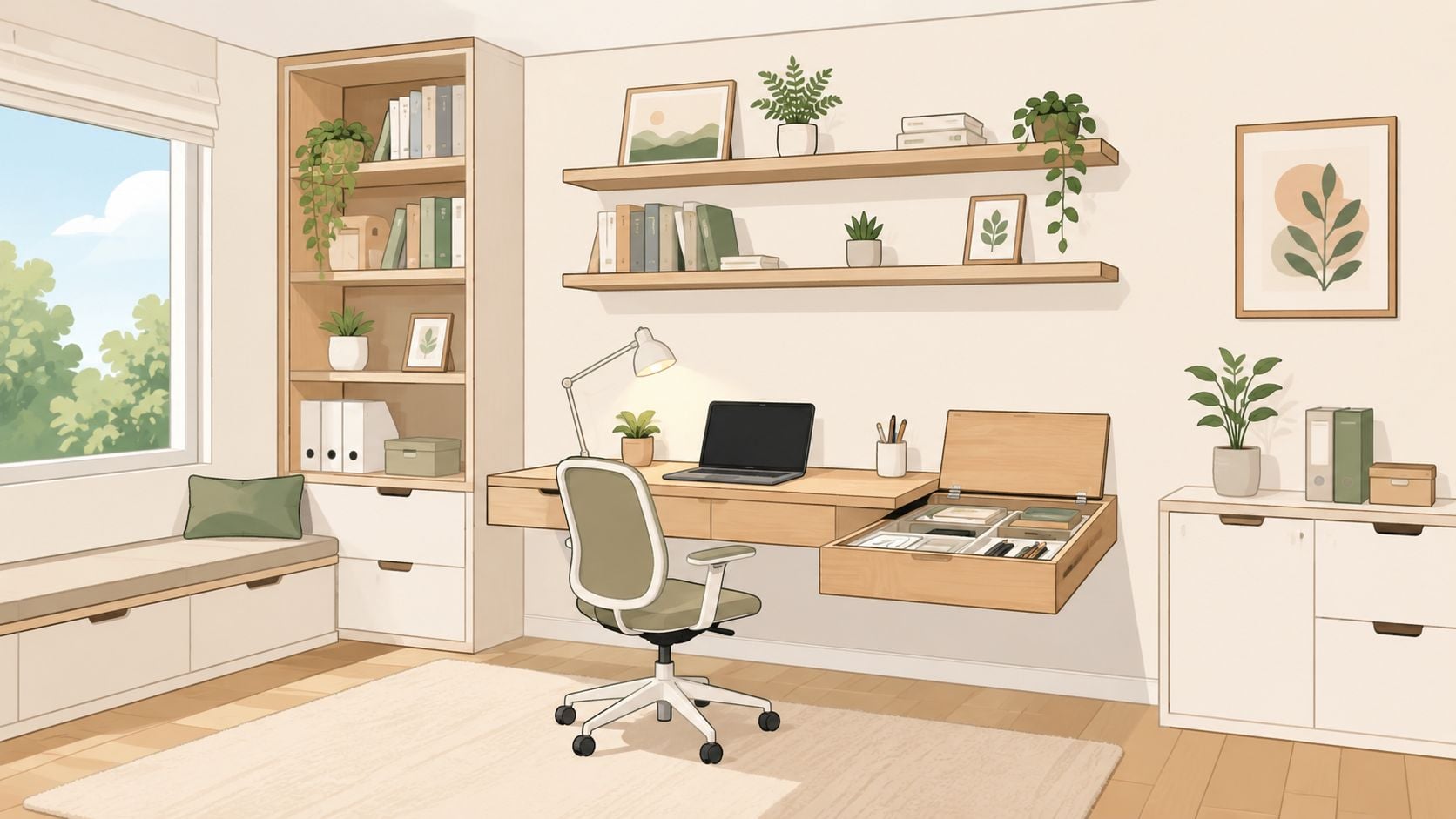
Build upward before adding bulk
In a compact office, walls often give you more usable space than the floor. Tall bookcases, stacked shelving, and floating shelves store the same supplies that might otherwise spread across the room, but they keep the walkway open and the work area calmer to look at.
Desk depth still matters here. A shallow surface may save a few inches, but if it cannot comfortably hold your daily tools, the overflow ends up everywhere else. That is why storage planning should happen at the same time as furniture selection, not after the room already feels full.
A few approaches work especially well in smaller homes:
- Use tall, narrow shelving. It holds books, baskets, and office supplies without taking over a whole wall.
- Place shelves above the work surface. Items you reach for often stay close, while the desktop stays clear for actual work.
- Be selective with under-desk storage. A file cabinet or small drawer unit helps only if it leaves enough room for legs and chair movement.
- Skip overly deep cabinets. Extra depth can make a compact room feel heavy and tighten the path through the space.
For more practical ideas, browse these storage solutions for small spaces.
Think in zones, not just furniture pieces
A small home office works better when you treat it like a workshop. Every tool needs a station, and every station should support the way you move through your day.
Instead of asking, "Where can I squeeze in a desk?" ask, "Where will I sit, reach, file, charge, and put work away?" That small shift changes the layout. A desk near natural light, shelving within arm's reach, a drawer or cabinet for papers, and a clear path to the chair will usually feel better than a larger setup placed wherever an open wall happened to be available.
This matters even more in a bedroom, guest room, or living room office. In shared spaces, storage should contain work so the room can return to its main purpose when the workday ends. A secretary cabinet, closed drawers, or labeled baskets can do a lot of quiet work here. They reduce visual noise, which helps the whole room feel settled.
A good layout gives your work a place to live, instead of letting it spread into the rest of the house.
Light control can support that layout too. If your desk sits near a bright window, filtered daylight helps reduce glare and keeps the room comfortable through the day. This guide to solar shades in London shows how window coverings can help manage brightness without making a compact office feel closed in.
There is also a long-term value piece that gets overlooked. Better storage is not just about fitting more into less space. It is about buying fewer stopgap pieces that never quite work together. Well-built, customizable, American-made furniture from a local expert such as Groen's can help you create one coordinated workspace that fits the room properly, supports daily comfort, and still serves you years from now.
Ergonomics and Lighting Your Keys to All-Day Comfort
You can fit a workspace into a spare corner and still end the day with a sore neck, tight shoulders, and tired eyes. In small home offices, comfort problems often come from scale. A desk sits a little too high, the chair arms bump the work surface, or the screen drops too low because there is no room for a proper stand.
That is why ergonomics matters so much in a compact setup. In a larger room, you can sometimes work around a poor fit. In a tight room, every mismatch gets felt faster.
Small spaces still need proper fit
A good workstation should fit your body the way a well-made pair of shoes fits your feet. Close enough usually is not good enough if you are sitting there day after day.
The basic goal is simple. Your elbows should rest comfortably near desk height, your feet should feel supported, and your screen should meet your eyes without forcing your chin up or down. Guidance from the Occupational Safety and Health Administration explains these workstation basics clearly, including neutral arm and wrist position and monitor placement for reduced strain (computer workstation ergonomics guidance from OSHA).
That helps clear up a common point of confusion in small homes. A dining table, console, or spare bedroom desk can look like it should work. Sometimes it can. But if the height is off, your body spends hours compensating for furniture that was never meant for full workdays.
Start with these three checks:
- Chair fit: Your chair should let your feet rest firmly and support your back without forcing your knees into the underside of the desk.
- Desk height: Your forearms should feel relaxed, with elbows close to a right angle instead of lifted or dropped.
- Screen position: The top of the screen should sit at or slightly below eye level so your neck can stay in a natural position.
If seating is the weak point in your setup, this guide to the best office chair for long hours can help you sort through what supports comfort over time.
Quality matters here. In a small Northwest Indiana home, one well-built chair or properly sized desk often does more good than a collection of stopgap pieces that almost fit. That is part of the long-term value of working with a local furniture expert who can help you choose American-made pieces with the right proportions for your room and your routine.
Lighting should support the work
Lighting affects posture more than many homeowners expect. If the screen is washed out by glare, you lean forward. If paperwork sits in shadow, you hunch to see it. Poor light changes how you sit, even when the chair and desk are fine.
Natural light is usually the best starting point, but it needs control. A window beside the desk often works better than one directly in front of or behind the screen. Then add a task lamp for the part of the desk where reading, writing, or keyboard work happens most often.
Window treatments can make a big difference in a small room because they soften brightness without making the office feel boxed in. Readers comparing options for glare control may find this guide to solar shades in London useful.
A comfortable office is easier to use every day. In the smallest rooms, that comfort does not come from squeezing in whatever happens to fit. It comes from choosing furniture and lighting that work together, support your body, and keep serving you well for years.
Design It Your Way With Custom and Quality Furniture
A small home office has very little room to forgive a bad fit. In a spacious room, furniture that is a few inches off may only look awkward. In a tight guest room, hallway nook, or corner of the living room, those few inches change how the whole space works.
Why custom matters in tight rooms
Custom furniture gives you control over the details that standard pieces often miss. Width, depth, drawer placement, wood tone, hardware, and storage can be chosen to suit the room instead of forcing the room to work around a stock size.
That difference matters in many Northwest Indiana homes. Older floor plans, alcoves, dormers, and shared family spaces rarely follow showroom dimensions. A made-to-order desk can sit neatly under a window, leave space to pass behind a chair, or match the trim and style already in the room. The office feels settled, not squeezed in.
For homeowners who want the workspace to blend with the rest of the house, customization also solves a design problem. The desk or cabinet can carry the same visual language as the bedroom, den, or living room around it. That is especially helpful in small homes where the office is always in view.
Groen's Fine Furniture offers custom-order furniture and Amish solid wood options, which is helpful when a room calls for exact sizing and lasting materials.
Quality pays back over time
Small-space furniture usually works harder than furniture in a dedicated office. One piece may need to serve as a desk, a storage center, and part of the room's everyday appearance. That kind of use calls for better construction, not just a smaller footprint.
Solid wood, steady joinery, and well-made drawers tend to age more gracefully under daily use. The difference shows up in the way a drawer keeps gliding, a top resists wear, or a desk still looks appropriate after the room changes around it. Cheap furniture often solves the first month. Quality furniture keeps serving the household for years.
That long view matters in NWI homes where one room may need to do several jobs over time. A well-chosen desk can begin as a work-from-home station, then become a student study area, a writing desk, or a storage piece in another room. Good furniture works like a tool you keep reaching for because it still does the job well.
Furniture earns its place in a small office by fitting the room now and still being useful later.
Design choices worth considering
When you are selecting or ordering furniture for a compact office, these details usually shape the result most:
- Right-sized dimensions: Match the actual footprint, including chair movement and walking space, not just the length of the wall.
- Purposeful storage: Choose drawers, shelves, or doors that support the way you work each day.
- Lasting materials: Solid wood and careful construction usually hold up better to regular use.
- Visual balance: In a bedroom or living area, the piece should look at home with the rest of the furniture.
- Budget flexibility: Special financing, subject to credit approval, can help families choose a lasting solution instead of replacing a temporary one later.
Customization is not about adding complexity. It is about getting furniture that fits your home, supports your routine, and keeps its value over time.
Your Small Home Office Checklist and Next Steps
A small office usually works well when the decisions happen in the right order. Measure first. Choose the desk type second. Build storage around the way the room already lives. Then fine-tune comfort.
A simple checklist helps keep the process grounded:
- Measure the room carefully. Include walls, walkways, doors, vents, and chair space.
- Choose the desk by use case. A living room may benefit from a secretary desk, while a nook may work better with a floating or corner design.
- Use vertical storage. Shelves and tall bookcases preserve floor space and reduce visual clutter.
- Protect comfort. The chair, desk height, screen position, and lighting should support full workdays.
- Consider custom options. In awkward rooms, made-to-order furniture often creates a cleaner and more lasting fit.
Some shoppers are surprised by how much clarity comes from bringing measurements into a showroom. A taped floor plan at home is useful. Sitting in the chair, seeing desk depth in person, and comparing storage proportions usually makes the final decision easier.
For homeowners in Dyer, Crown Point, St. John, Schererville, Munster, and across NWI, the strongest small-office setups tend to balance three things. Daily comfort. Long-term value. Furniture that still feels at home in the room.
For homeowners furnishing a workspace in Dyer, Crown Point, and across Northwest Indiana, Groen's Fine Furniture offers a local place to explore custom options, solid wood craftsmanship, and thoughtful home office pieces in person. Visit the showroom to test drive comfort, bring room measurements, and ask about special financing plans, subject to credit approval. Let their family help create a home that works beautifully every day.