Home Office Furniture Luxury: A Definitive Guide

A lot of homeowners in Dyer, Crown Point, and across Northwest Indiana are living the same routine. The kitchen table worked for a while. The spare bedroom got pressed into service. Then one day, the desk started to feel too small, the chair started to feel too hard, and the whole room started to feel more temporary than thoughtful.
That's usually the moment when interest in home office furniture luxury begins. Not because anyone suddenly wants a flashy office, but because the room is being used every day, for real work, real meetings, real paperwork, and real hours. A better office starts to feel less like a splurge and more like a sensible upgrade.
For a family-owned furniture business that has served Northwest Indiana since 1983, the conversation often comes back to one simple idea. Luxury isn't just about appearance. It's about comfort that lasts, materials that hold up, and furniture that fits the person using it. When a home office is chosen well, it supports work, eases strain, and still looks right in the home years later.
Table of Contents
- Defining True Luxury for Your Home Office
- Choosing Your Anchor Pieces The Desk and Chair
- Smart Storage and Lighting for a Productive Space
- Design It Your Way with Custom and Amish Furniture
- Making a Wise Investment in Your Workspace
- Why an In-Person Visit Is Essential
- Maintaining Your Heirloom Furniture for a Lifetime
Defining True Luxury for Your Home Office
Luxury gets misunderstood all the time. Many shoppers assume it means an oversized desk, a dramatic chair, or a room that looks polished in a photo. Those details can be part of it, but they aren't the heart of it.
In a well-designed office, luxury means the room works beautifully every day. It feels calm. It supports long hours without adding strain. It looks intentional because the pieces belong together and serve the way the household lives.
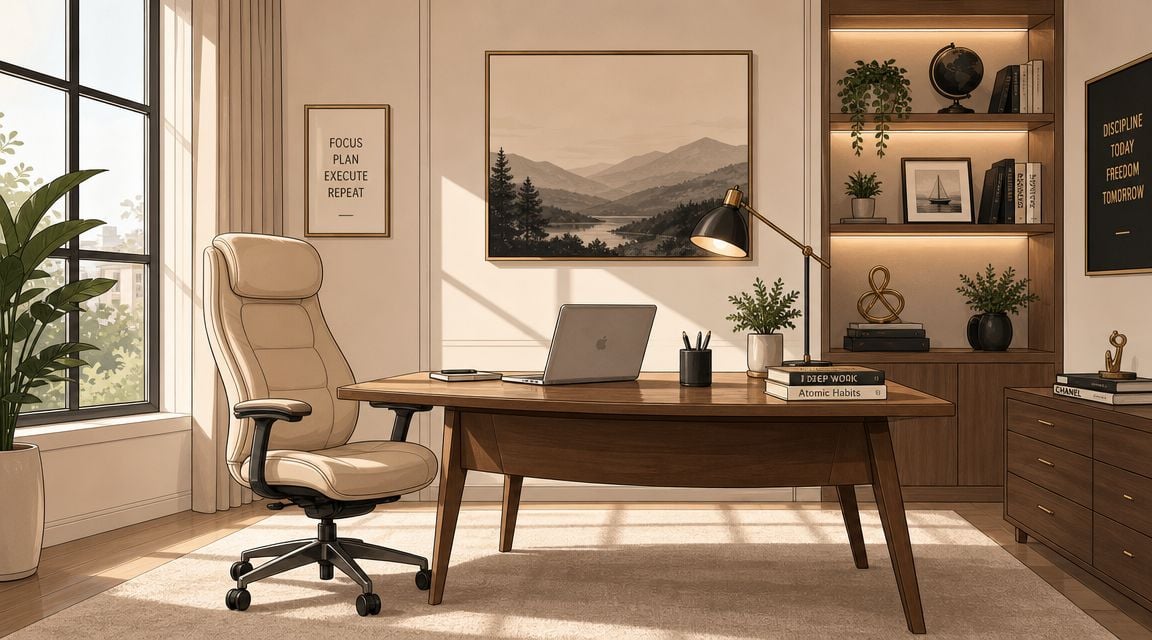
Luxury starts with function
One of the biggest mindset shifts is this. A premium office should be treated as a system, not as a set of unrelated purchases. Expert guidance for high-end offices emphasizes layered lighting, sound control, privacy, and ergonomic furniture to reduce strain and distraction. The same guidance explains that a premium home office should be planned so desk dimensions, chair adjustability, lighting layers, and noise control match the user's workflow.
That matters because a gorgeous desk under poor lighting still causes eye fatigue. A handsome chair without proper support still leads to discomfort. A beautiful room with no privacy still feels stressful on a call.
Practical rule: If a piece looks luxurious but creates friction in daily use, it isn't finished luxury. It's just expensive furniture.
Materials still matter, but they come second
Good materials are part of the appeal. Solid wood has depth and warmth that veneers rarely match. Leather can bring softness and structure. Metal accents can sharpen the look of a room. But materials should support the way the office works, not distract from it.
That's where buyers often get stuck. They focus on wood species, stain color, or hardware style before deciding whether the desk has enough surface area, whether the chair adjusts properly, or whether there's a place to hide cables and paper clutter.
A more helpful starting point is to ask three plain questions:
- How is the room used: Quiet writing, video meetings, paperwork, design work, or a mix.
- How long is the chair occupied: Short check-ins need something different than full workdays.
- What needs to stay within reach: Monitors, files, chargers, printers, notebooks, or reference materials.
For readers interested in one-of-a-kind pieces, bespoke furniture design ideas help show how custom sizing and material choices can solve practical problems, not just style concerns.
Some homeowners also like to create a quieter, more thoughtful desktop environment with a few tactile accessories. A simple resource for that is to explore minimalist journals, especially for offices that lean toward a restrained, uncluttered look.
Choosing Your Anchor Pieces The Desk and Chair
The desk and chair do most of the heavy lifting. They carry the body, support the equipment, and shape how the room feels from the first cup of coffee to the last email of the day. If those two choices are off, the rest of the office has to work around them.
That's why many luxury office plans frequently go wrong: the desk gets chosen for drama, the chair for upholstery. Then the person using them realizes the height feels wrong, the seat hits the back of the knees, or the arms don't line up with the work surface.
A high price doesn't guarantee comfort
This point deserves to be said clearly. Much of the available content on luxury offices focuses on aesthetics but gives little practical guidance on ergonomics. That same guidance notes that a high-priced desk is not automatically a better work tool, and that buyers often need to optimize dimensions, adjustability, and chair support first, then choose materials and finishes second.
That doesn't make style unimportant. It just puts style in the right order.
The most beautiful chair in the room can still be the wrong chair if it doesn't support a neutral posture.
What to look for in a desk
A good desk should fit both the room and the work. Bigger isn't always better. In a smaller home office, an oversized executive desk can crowd movement and make the room feel heavy. In a larger room, a desk that's too slight can feel temporary and leave equipment stacked awkwardly around it.
A desk earns its place when it does these jobs well:
| Need | What to check |
|---|---|
| Screen work | Enough depth so the monitor doesn't feel too close |
| Writing and paperwork | Clear surface area beside the keyboard zone |
| Daily storage | Drawers or nearby support pieces for quick access |
| Tech use | Sensible cable routing and access to power |
| Long sessions | Height that works with the chair and arm position |
Shoppers who want a deeper look at comfort for long workdays can review this guide to office chairs for long hours.
What to look for in a chair
True comfort is found not merely in extra padding, but in support that can be tuned to the body. A good chair should help the user sit with shoulders relaxed, feet supported, and the lower back properly supported through the workday.
Useful features include:
- Lumbar support: Helps the lower back stay supported instead of collapsing backward.
- Seat depth: Matters more than many people expect. Too deep, and the front edge presses the legs. Too shallow, and support feels incomplete.
- Arm position: Arms should support the forearms without forcing the shoulders upward.
- Height adjustment: Lets the body line up with the desk rather than adapting awkwardly to it.
Brands and looks vary. Some households lean traditional, some transitional, some clean and modern. Bassett styling may suit one room, while a solid wood Amish desk suits another. The important thing is to judge each piece first as a work tool, then as a design statement.
Smart Storage and Lighting for a Productive Space
A luxury office should feel settled, not crowded. That usually comes down to two quiet heroes in the room. Storage controls visual clutter. Lighting controls fatigue.
When both are handled well, the office feels easier to use. Papers have a place. Chargers disappear. Books and decor can stay visible without turning the room into a work pile.
Storage should support real life
Many homes in Northwest Indiana don't have the luxury of dedicating an entire room to office use. A guest room may double as a workspace. A den may need to feel polished after business hours. In those cases, furniture has to shift gracefully between tasks.
That's why multi-use pieces matter so much. In many modern households, the challenge is choosing furniture that can switch between work, display, and everyday living without looking like an office. The same guidance notes that the best luxury purchase may be a modular or custom-order solution that hides cables, adds concealed storage, and coordinates with living-room finishes.
A credenza is a good example. During the day, it can hold files, a printer, and office supplies. In the evening, it can read more like a refined cabinet than a workplace component. The same is true for bookcases with lower storage, closed-door cabinets, and writing desks paired with smart companion pieces.
Readers planning a room that has to balance office needs with the rest of the home may find helpful ideas in this look at living room storage solutions.
Lighting needs layers, not one bright bulb
Lighting gets overlooked because people often notice it only when it's bad. A single overhead fixture may technically light the room, but it rarely does the work well. It can create glare, cast shadows on paperwork, and make late-day work feel harsher than it needs to.
A more comfortable setup usually includes:
- Ambient light: General room lighting that keeps the whole space welcoming.
- Task light: Focused light for reading, writing, and keyboard work.
- Accent light: Softer light that adds warmth and visual depth.
A productive office should feel bright where work happens and gentle everywhere else.
There's one more practical layer that many people forget. Connectivity. Even the most beautifully organized office feels frustrating if calls freeze or large files crawl. For households trying to match furniture planning with technical performance, this guide to the best internet for working from home can help complete the picture.
Design It Your Way with Custom and Amish Furniture
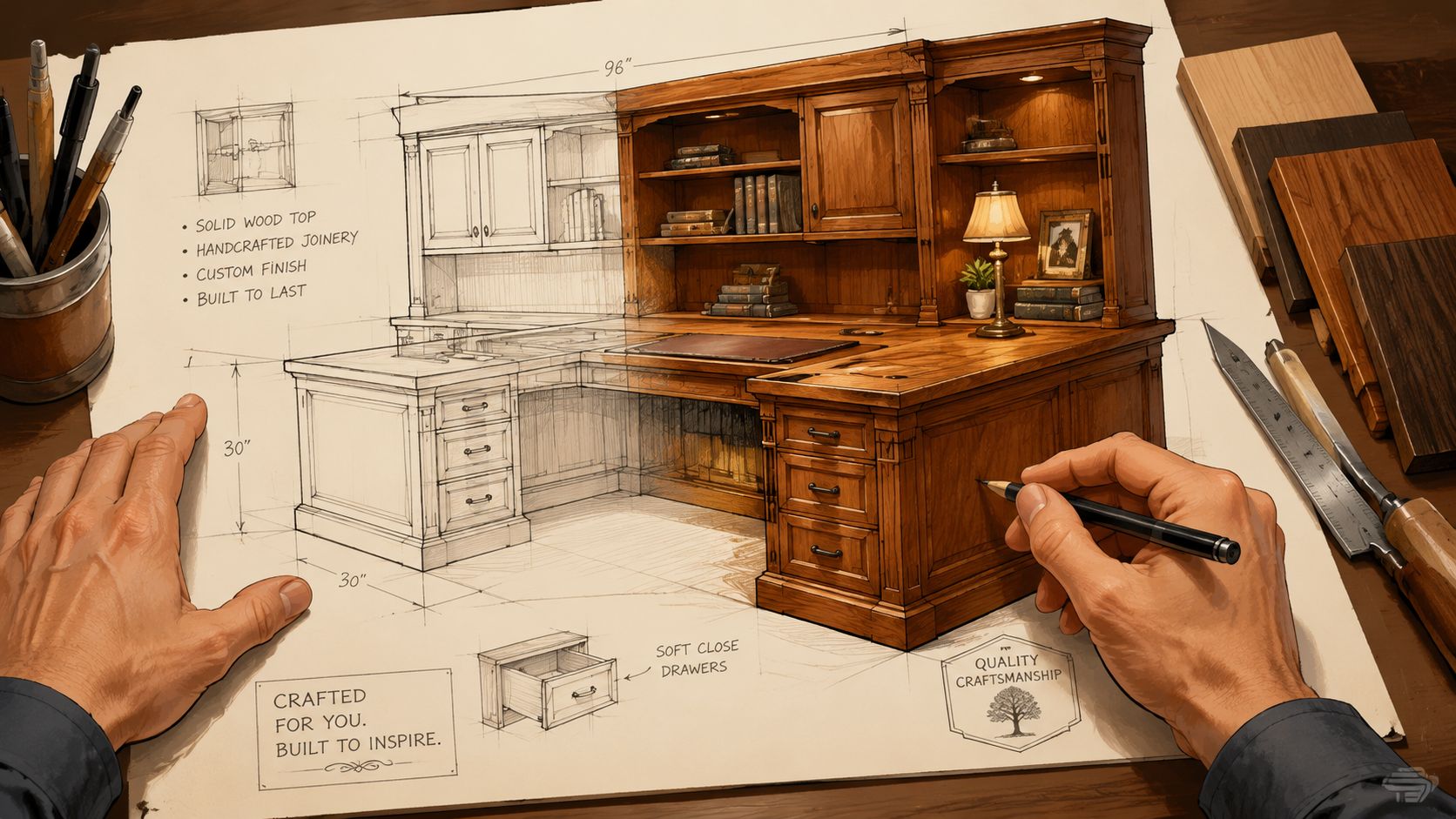
A luxury office starts to feel yours when the furniture fits your work, your room, and your home instead of asking you to adjust around standard sizes. In a real house, that matters more than many people expect. A spare bedroom may have one short wall, a window you do not want to block, or trim and flooring that make certain finishes look right and others feel out of place.
Made-to-order furniture solves those everyday design problems with precision. It also makes the room more comfortable to use year after year, which is a big part of what luxury should mean in a home office.
Why custom feels different
Custom furniture gives you control over the details that shape daily use. A desk can be built shallow enough for a smaller room, wide enough for dual monitors, or sized to leave proper walking space around the chair. That kind of fit works like tailoring a jacket. The difference is not always loud at first glance, but you feel it every day.
Amish-made pieces are especially appealing here because the focus stays on solid wood, careful joinery, and practical craftsmanship. Those qualities are not only about tradition. They help the furniture hold up to real work, from loaded file drawers to long hours at the desk. If you want a clearer picture of what sets these pieces apart, this guide to Amish furniture construction and design is a helpful place to start.
Wood choice is another area where shoppers sometimes feel intimidated, but it does not need to be complicated. Oak shows more grain and brings texture. Maple looks smoother and more restrained. Cherry starts warm and grows richer over time. None is the universal winner. The right choice depends on whether you want the office to feel formal, relaxed, light, or grounded.
Local customization also makes the process more personal, especially here in Northwest Indiana. Instead of picking from a short list of preset options, homeowners can often work through size, wood species, stain, hardware, and storage needs with someone who understands how the piece will live in an actual home. That usually leads to better decisions and fewer expensive compromises.
Craftsmanship should support the way you work
A beautiful desk still has a job to do. Drawers should glide smoothly under weight. The top should feel substantial, not hollow. File storage should match what you keep, and knee space should remain comfortable if you spend long stretches seated.
That practical side is where custom planning earns its keep. A family business that knows furniture well can help you sort through choices that sound small but affect daily comfort, such as whether a pedestal crowding one side will bother your legroom, or whether a keyboard drawer is useful for your height and chair setup. Good luxury furniture should look refined and work hard.
A simple checklist helps:
- Right-sized dimensions: Fit the room and support your workflow.
- Solid wood construction: Holds up well and can often be repaired instead of replaced.
- Drawer and door quality: Smooth movement and strong joinery matter with daily use.
- Finish choice: Match the room and the amount of upkeep you want.
- Storage plan: Include the files, devices, and supplies you really use.
For shoppers in Northwest Indiana, Groen's Fine Furniture is one local source for custom furniture and Amish solid wood office pieces. That local connection can make luxury feel much more approachable, because the process becomes a conversation about fit, comfort, budget, and long-term value rather than a guess from a catalog page.
Making a Wise Investment in Your Workspace
A well-made home office rarely feels expensive in the same way a trendy purchase does. It feels settled. The desk supports your workday without wobble or crowding. The chair still feels right after a long afternoon. The storage keeps the room calm instead of cluttered. That is why this category makes more sense as a long-term household purchase than a short-term decorating decision.
Industry analysts expect continued growth in home office furniture, and a recent home office furniture market outlook notes that desks and tables hold the largest share of the category. That lines up with what furniture families have seen for years. People feel the value of their main work surface every single day.
A good way to avoid overspending is to put your budget where daily use is highest. In most home offices, that means starting with the two pieces that carry the most weight, your desk and your chair. They do the heavy lifting for comfort, posture, and workflow. Once those are right, storage and lighting are much easier to choose with confidence.
A practical order of priority looks like this:
- Chair fit: It supports your back, shoulders, and sitting posture for hours at a time.
- Desk function: The right size, height, and layout make work feel easier and more natural.
- Storage support: Cabinets, files, and drawers should serve your routine, not just fill a wall.
- Lighting upgrades: Better light reduces strain and helps the room stay useful throughout the day.
- Decorative finishing: Art, rugs, and accessories should complete the office after the working pieces are settled.
This approach also makes luxury feel more attainable. Families do not have to build the entire room at once or chase every upgrade in one trip. They can choose lasting anchor pieces first, then add around them with a clear plan.
That matters in Northwest Indiana, where buyers often want more than a pretty office. They want furniture that fits the room, supports real work, and earns its place over time. Locally sourced custom and Amish-made options can help with that because the investment goes into solid materials, useful dimensions, and workmanship that can age well, rather than into features that look impressive for a season and disappoint later.
Financing can also play a sensible role when used carefully and with a clear budget. Special financing, subject to credit approval, can let a household choose the desk or chair they expect to keep, instead of settling for a temporary piece that may need replacing sooner than planned. The goal is not to buy more than you need. The goal is to buy well once.
A helpful question to ask is simple: will this piece still suit your work habits a few years from now?
That one question clears up a lot. If the answer is yes, the investment often makes sense. If the answer is uncertain, it may be worth adjusting the size, storage plan, or material choice before you commit. In a family furniture business, that is often the most useful part of the conversation. Helping people match budget, comfort, and longevity so luxury feels personal, practical, and within reach.
Why an In-Person Visit Is Essential
Online shopping is convenient. It's useful for narrowing styles, comparing silhouettes, and gathering ideas. But it has one major limitation in a home office category. It can't tell a shopper how a chair feels after ten minutes, how a desk finish reflects light, or how substantial a drawer feels in the hand.
That sensory part matters more in office furniture than many people expect. The room isn't just being viewed. It's being used, leaned on, opened, adjusted, and lived with day after day.

What a showroom reveals that a screen can't
A product photo can show shape and color. It usually can't show balance, scale, support, or tactile quality with enough confidence to make an important decision easy.
An in-person visit lets shoppers check things that are hard to judge online:
- Seat feel: Whether the chair feels supportive or soft.
- Desk scale: Whether the piece feels graceful or overpowering in person.
- Finish character: How wood grain, stain, and sheen look under real light.
- Drawer action: Whether storage feels smooth and sturdy.
- Comfort questions: Whether the piece fits the body, not just the room.
This is especially valuable for multigenerational households, shared offices, or rooms with unusual dimensions. A conversation in person usually clears up uncertainty faster than scrolling through another dozen product pages.
Local guidance has practical value
For shoppers in Dyer, Crown Point, St. John, Schererville, Munster, and the rest of NWI, the showroom visit also adds local context. A knowledgeable team can talk through how a piece will work in a newer open-plan home, a traditional study, or a hybrid guest room office. That kind of guidance tends to be more concrete than generic online advice.
Family-owned stores also tend to approach the process differently. The focus is often slower, more personal, and better suited to custom orders, wood finish comparisons, and space-planning questions. White-glove delivery can matter here too, especially for larger desks, hutches, and solid wood pieces that need careful handling on arrival.
Furniture for a working room should be tested the way a vehicle is test-driven. Sit in it. Open it. Reach across it. Use it the way life will use it.
Maintaining Your Heirloom Furniture for a Lifetime
Good furniture ages well when it's cared for consistently. That doesn't require complicated routines. It usually comes down to a handful of steady habits that protect the finish, support the materials, and prevent avoidable wear.
Solid wood desks benefit from regular dusting with a soft cloth and quick attention to spills. Moisture left sitting on a surface can dull a finish over time. Direct sunlight can also change the look of wood gradually, so placement matters, especially near bright windows.
Leather seating needs gentle care too. Dust can settle into seams, and dry indoor air can make leather feel less supple over time. Performance fabrics are often easier for busy households, but they still benefit from prompt spot cleaning and routine vacuuming with a soft brush attachment.
Simple habits that protect quality
A few maintenance practices make a real difference:
- Use coasters and desk pads: They reduce wear from drinks, writing pressure, and daily friction.
- Control room conditions: Stable indoor humidity helps wood stay more consistent.
- Lift instead of drag: Moving accessories carefully protects both the piece and the floor.
- Clean with restraint: Gentle products are usually better than harsh cleaners.
Homeowners who want a practical overview can review these wood furniture care basics.
The bigger point is stewardship. Luxury office furniture is often built to stay in the home for many years. With sensible care, a desk can gain character, a chair can remain inviting, and a well-made office can keep serving the household long after trends change.
For homeowners ready to create a more comfortable and lasting workspace, Groen's Fine Furniture offers a local place to compare styles, test comfort, explore custom options, and ask about special financing plans. A visit to the Dyer or Crown Point showrooms gives Northwest Indiana families the chance to see solid wood craftsmanship up close and design a home office that fits both daily life and long-term goals.