Blog
Amish Wood Dining Table Guide for Lasting Style

For homeowners in Dyer, Crown Point, St. John, Schererville, and Munster, an Amish wood dining table can turn an ordinary dining area into the room where birthdays, homework, Sunday dinners, and long conversations naturally gather. The right table isn't just a surface with chairs around it. It becomes part of the home's rhythm, especially when its size, wood species, finish, and construction suit the family using it.
Groen's Fine Furniture has served Northwest Indiana since 1983, with multigenerational ownership, five-star service, and practical guidance for choosing furniture that feels comfortable today and remains useful for years. This guide explains what separates Amish craftsmanship from a generic solid-wood label, how to compare hardwoods, how to plan a table for an NWI home, and how custom ordering and special financing can make an heirloom purchase easier to approach. For the entertaining details that complete the room, homeowners can also learn how to set an unforgettable dining table.
Welcome Home to Heirloom Dining in Northwest Indiana
A family in Crown Point may need one table to handle quick weekday breakfasts, laptop work, craft projects, and holiday meals. A couple in Dyer may be furnishing an open-concept home and want a dining piece that feels substantial without overwhelming the room. In St. John, Schererville, or Munster, the common question is practical: which table will look beautiful now and still make sense if the household changes later?
An Amish wood dining table answers that question through a combination of solid hardwood, made-to-order design, and careful construction. Buyers can choose a look that suits a traditional dining room, a farmhouse-inspired space, or a cleaner contemporary interior. The table can also be selected around the room's actual dimensions instead of forcing the room to accommodate a fixed showroom piece.
More than a place to eat
A well-chosen dining table creates a dependable gathering spot. Children can spread out for schoolwork, guests can stay through dessert, and family members can use the room without worrying that delicate construction will make ordinary life feel risky. That daily usefulness is part of the value of heirloom furniture. Longevity matters because the table earns its place through repeated use, not because it remains untouched.
Amish furniture also fits naturally into a broader custom-furniture plan. Canadel dining programs offer made-to-order choices for homeowners who want a different combination of size, shape, and finish, while Amish solid wood offers a more traditional handcrafted route. The important point is that shoppers don't have to settle for a table that is almost right.
A local buying experience
At a family-owned NWI showroom, the process can be more personal than selecting a box from a warehouse catalog. A helpful furniture team can discuss traffic flow, finish coordination, chair comfort, delivery access, and the way the table will be used. That conversation can prevent a common mistake, choosing a beautiful table that doesn't fit the room or the household.
The strongest decision usually begins with the home's needs. Room dimensions, preferred seating, wood character, maintenance expectations, and future flexibility all deserve attention before an order is placed. Special Financing, subject to credit approval, can also help shoppers consider lasting quality while fitting the purchase into a household budget.
What Makes an Amish Wood Dining Table Different
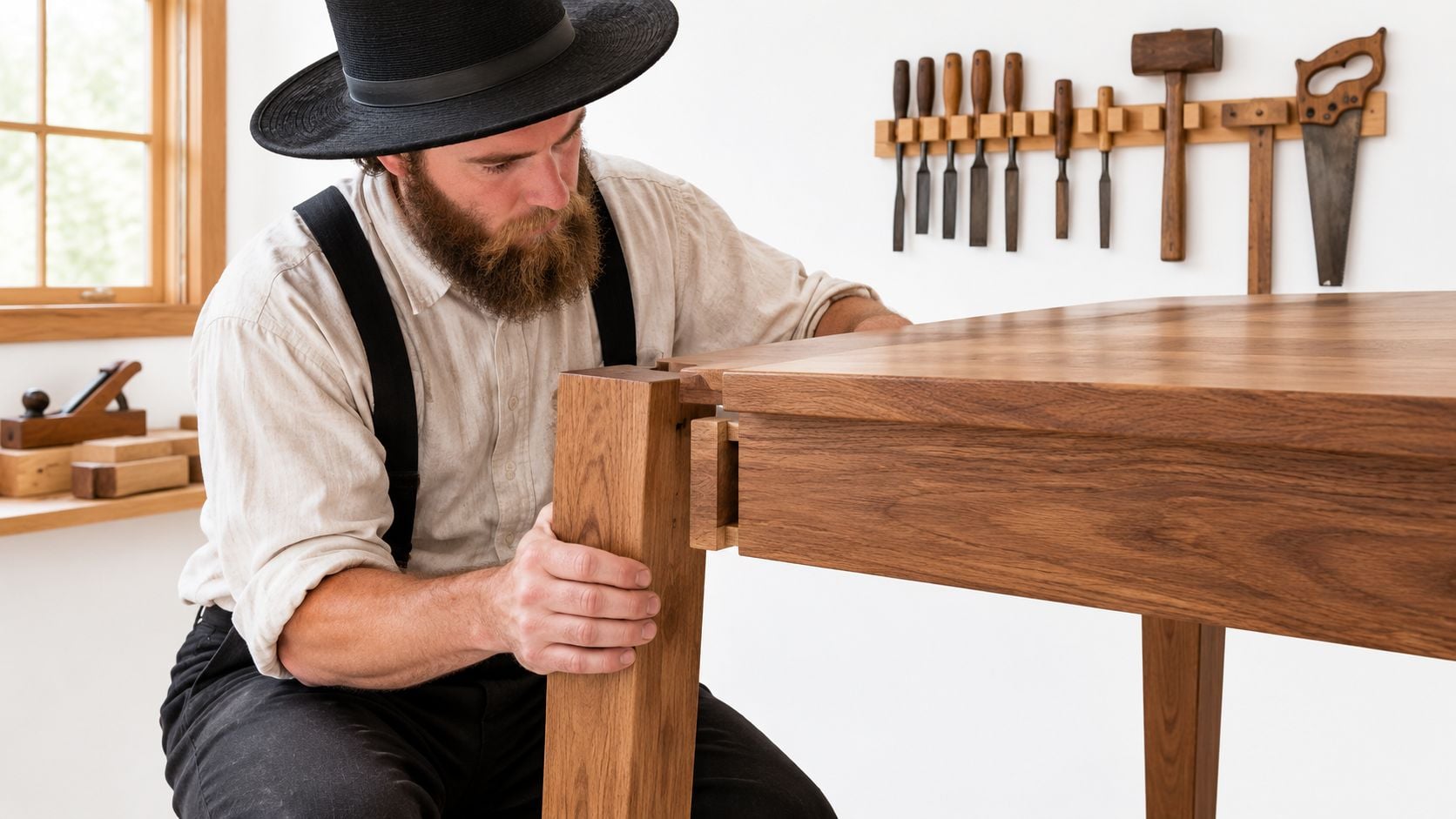
“Solid wood” describes a material, but it doesn't describe the entire table. An Amish wood dining table is better understood as a made-to-order construction system, where the lumber, joinery, finish, dimensions, and attachment methods work together.
Research on Ohio's Amish furniture cluster illustrates the scale behind this type of work. Researchers estimated annual wood use at about 44 million board feet, equal to 11% of Ohio's total hardwood lumber production and about 19% of the state's hardwood lumber used in appearance-based applications. Another study estimated the cluster's output value at roughly $280.7 million, nearly 3% of total U.S. production of nonupholstered wood household furniture. These figures show that Amish wood dining tables belong to a substantial handcrafted furniture system, not a tiny product category. (Forest Service research on Ohio's Amish furniture cluster)
Small-shop workmanship
The same research recorded 2,723 workers in 2005, with a median firm size of four employees and a median establishment year of 1996. That pattern helps explain why many Amish furniture pieces have a workshop character. Production often grows through small, family-run operations rather than a single large factory line. (Ohio cluster employment and firm data)
Another analysis reported that 71% of firms in the Ohio cluster expanded during the three-year period from 2006 to 2008, even while the broader domestic industry contracted. A separate Holmes County analysis found about 500 firms and roughly 3,000 employees in 2005, while estimating annual consumption at about 19% of Ohio's grade hardwood lumber production. (Regional Amish furniture manufacturing analysis)
Those numbers don't guarantee that every table carrying an Amish label has identical workmanship. They do provide useful context. Shoppers should still ask who built the table, which wood was used, how the top was prepared, what joinery appears in the base, and how the finish was applied.
Construction that serves daily life
Traditional Amish furnishings are commonly associated with dovetail and mortise-and-tenon joints, along with solid North American hardwoods such as oak, cherry, maple, and walnut. Finished pieces may be sanded, stained, and sealed with a catalyzed conversion varnish designed for everyday wear resistance.
The everyday benefit is straightforward. Sound joinery gives a table a better chance of staying sturdy through years of chairs being pulled out, elbows resting on the edge, and family members gathering around it. Solid wood also gives future repair and refinishing options that shoppers should discuss before ordering.
A useful comparison is a custom suit. An off-the-rack suit may look fine, but a custom one accounts for the wearer's proportions and preferences. Made-to-order furniture follows the same principle. It starts with the household's room and routines instead of asking the household to accept whatever dimensions happen to be available.
For a closer explanation of materials, methods, and design characteristics, Groen's educational guide on what Amish furniture is offers another practical reference.
Choosing Your Wood Species and Construction Details
Wood species changes the table's visual personality, but it also affects how the piece fits a household's habits. Oak can feel familiar and strongly grained. Cherry brings warmth that develops with time. Maple looks quieter and cleaner, while walnut makes a darker statement. Hickory adds pronounced character, and quarter sawn white oak offers a distinctive grain pattern with a more architectural feel.
Custom Amish dining programs may include red oak, hard and soft maple, cherry, walnut, hickory, and quarter sawn white oak, allowing shoppers to choose more than a stain color.
A practical species comparison
| Wood Species | Grain and Color Character | Best For |
|---|---|---|
| Oak | Visible, expressive grain with a familiar hardwood character | Busy family dining rooms and traditional or farmhouse interiors |
| Cherry | Warm reddish tones that can deepen as the piece ages | Classic rooms and buyers who appreciate a changing patina |
| Maple | Smooth, relatively subtle grain with a light appearance | Clean, contemporary spaces and high-use households |
| Walnut | Naturally darker color and refined grain variation | Statement tables and interiors that call for contrast |
| Hickory | Strong grain variation and natural character | Rustic, relaxed rooms where each board can show personality |
| Quarter sawn white oak | Distinctive figure with a crafted, architectural appearance | Mission, craftsman, and heirloom-focused interiors |
The table is a starting point, not a substitute for seeing samples in person. Finish color can change how the grain reads, and surrounding floors, cabinets, rugs, and upholstery can make the same species feel warmer or cooler. A dark walnut finish, for example, can coordinate with flooring while still requiring attention to undertones and natural light. A hardwood-floor resource such as this dark walnut wood guide can help homeowners think through that broader color relationship.
The hidden importance of moisture
Furniture-grade hardwood for interior use is typically dried to about 6% to 8% moisture content, with 6% to 9% commonly cited as an acceptable interior range. Proper drying reduces the likelihood of significant swelling, shrinking, joint stress, and finish checking after installation. (Wood Handbook guidance on drying and moisture content)
Large dining tops need particular care because their width gives seasonal humidity changes more room to affect the wood. If a top is assembled while significantly wetter than its interior environment, later drying can open joints, twist components, or create checking in the finish.
Construction question: Ask how the lumber was dried and how the top was engineered for the environment inside the home.
Wood also moves mostly across the grain. A wide top shouldn't be rigidly screwed to its base. Figure-eight fasteners or slotted screw holes allow the top to move laterally while keeping the structure secure. Practical joinery guidance notes that seasonal movement can reach several millimeters across a typical dining-table width, so quartersawn stock and movement-friendly attachment help reduce splitting, cupping, and rail-to-top failure. (Guidance on timber expansion and contraction)
For homeowners who want to compare solid-wood construction, dimensions, and dining configurations before visiting a showroom, this solid wood dining table resource provides a useful next step.
Finding the Right Size Shape and Style for Your Space
A table can be beautifully built and still be wrong for a room. The right choice leaves enough space for people to sit, stand, walk behind chairs, and open nearby doors without turning every meal into a furniture puzzle.
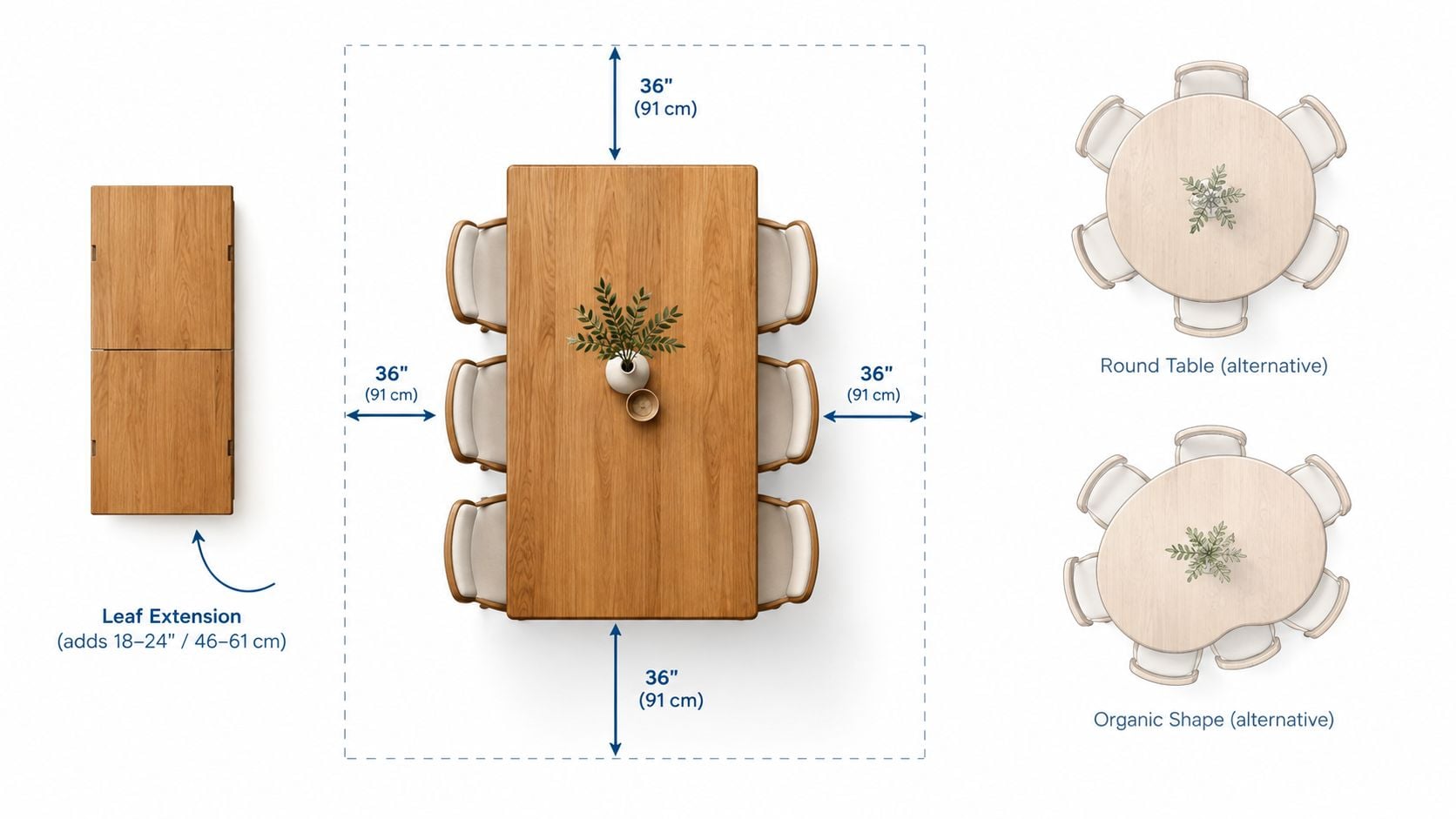
Start with the room's usable footprint rather than its wall-to-wall measurement. Mark the table's proposed outline with painter's tape or temporary furniture, then place additional markers where chair backs will sit. Walk the route between the dining area, kitchen, living room, and exterior doors. This simple exercise reveals problems that a floor plan can hide.
Match the shape to the room
Rectangular tables remain versatile because they align with long rooms and can often accommodate leaves. They work well in open-concept homes where the table needs to define the dining zone without blocking the main path. Round and oval shapes soften circulation, especially in smaller dining areas, because they remove sharp corners from the walking route.
Recent dining coverage describes growing interest in rounded, organic, multifunctional, extendable, workspace-friendly, and more expressive table designs. That doesn't make a traditional rectangular Amish table outdated. It means buyers should consider how the table may serve the home if dining also becomes homework space, remote-work space, or a flexible entertaining area.
Plan for people, leaves, and tomorrow
A practical sizing rule is to leave a comfortable circulation zone around the table, including the space occupied by pulled-out chairs. The exact amount depends on the room, chair design, doors, and traffic pattern, so a showroom consultation with measurements is more reliable than choosing by seating count alone.
Before ordering, check:
- Daily seating: Count the people who use the table most often, not only holiday guests.
- Extension needs: Confirm how leaves work, where they store, and whether the table remains stable when expanded.
- Traffic flow: Protect the route between the kitchen, living area, and exterior doors.
- Rug placement: Make sure the rug can extend beyond the chair movement zone instead of catching chair legs.
- Future reuse: Consider whether the table could move to another room or home if the household's layout changes.
A smaller room may benefit from a round table or a design with flexible extensions. A larger open room may call for the visual weight of a solid rectangular top. Homeowners can use Groen's dining table size guide to organize measurements before comparing finishes and chair styles.
The most lasting choice balances today's gathering needs with tomorrow's flexibility. A table shouldn't force a room into one arrangement forever.
Custom Ordering Pricing and Financing at Groens Fine Furniture
Custom ordering works best when the process begins with how the household lives, not with a finish chart. A buyer may need a specific length for a dining nook, a leaf for larger gatherings, a rounded corner for safer circulation, or a wood tone that coordinates with existing cabinetry. Those details turn a general table search into a design decision.
Groen's Fine Furniture offers a Design It Your Way path for custom furniture, including bespoke Amish solid wood built to exact specifications. Canadel dining programs add another made-to-order route, with extensive combinations of size, shape, and finish. That range matters because homeowners don't have to choose between a table that fits and a table that looks right.
What buyers should decide
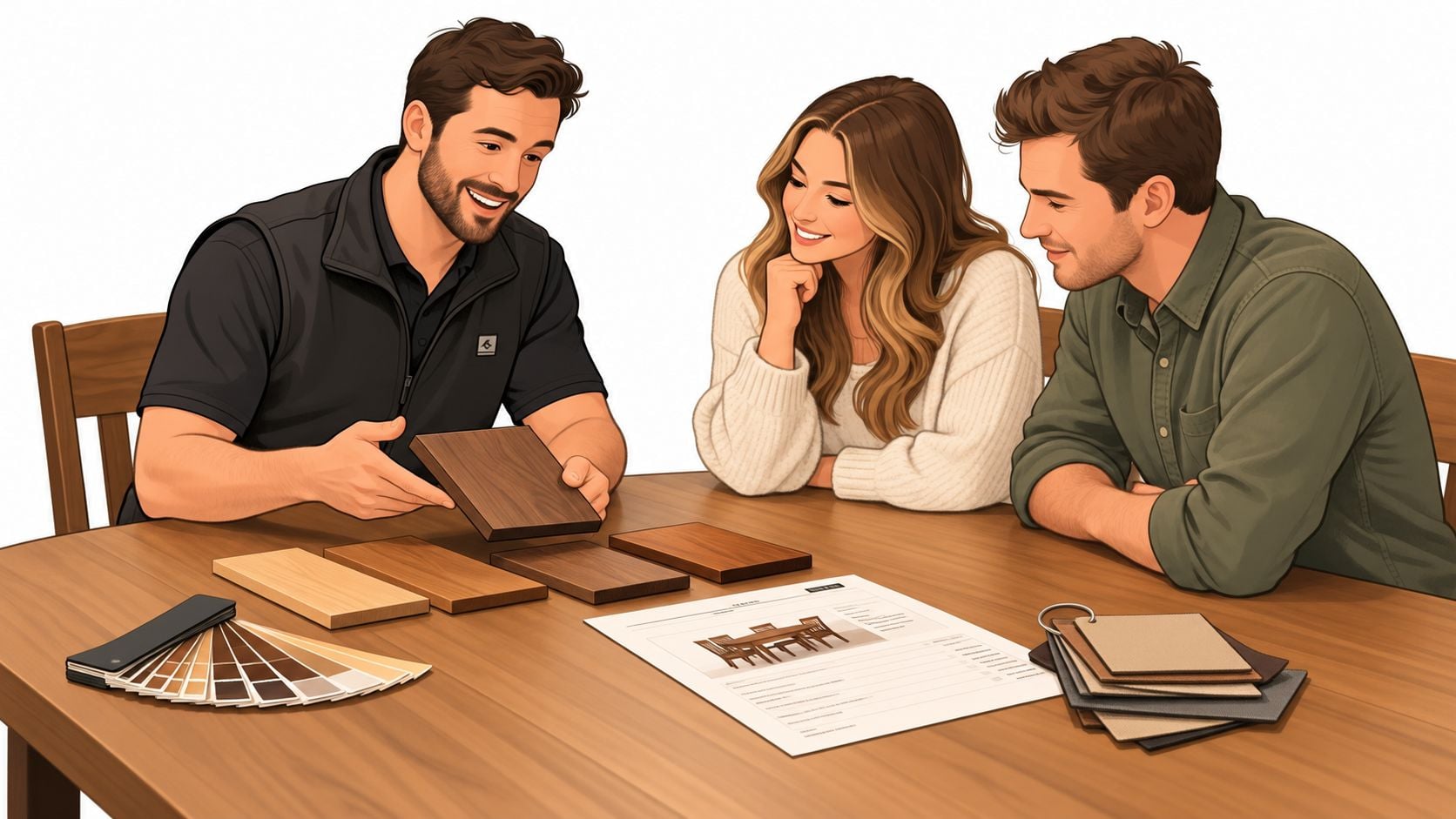
A custom appointment should cover more than color. Shoppers can bring room measurements, photos of adjoining spaces, and notes about everyday use. The conversation can include:
- Table dimensions, including closed and extended sizes.
- Shape and edge profile, based on traffic flow and the desired visual weight.
- Wood species, selected for grain, color, and household habits.
- Finish and sheen, coordinated with flooring, cabinetry, and lighting.
- Base design and chair comfort, because legroom affects how long people want to stay.
- Delivery access, including stairways, doorways, and placement instructions.
The custom-order starting guide can help shoppers prepare for that conversation. Made-to-order furniture may require planning around production and delivery timing, so the showroom team should explain the expected process before the order is finalized.
Understanding value and buying power
An heirloom table can command a premium because the purchase may include solid hardwood, custom dimensions, traditional joinery, careful finishing, and construction intended for long service. Honest pricing means evaluating those components instead of comparing a handcrafted table with a mass-produced surface as if they were identical products.
Special Financing is available subject to credit approval. Promotional financing may include deferred interest if the balance isn't paid in full during the promotional period, so shoppers should review the exact terms, approval requirements, and repayment schedule before agreeing. Financing can provide buying power and help fit a lasting purchase into a budget, but it shouldn't replace a clear understanding of the total obligation.
Groen's family team also supports the broader process through Interior Design guidance and White-Glove Delivery. That local support is useful when a large solid wood table needs careful placement, room coordination, and a plan that carries the piece from showroom selection to installation.
Caring for Your Solid Wood Table Through Every Season
Solid wood responds to its environment. A dining table doesn't need to be treated as fragile, but it does benefit from stable indoor conditions and habits that protect the finish from concentrated heat, moisture, and abrasion.
Large tops experience more humidity-driven movement than smaller case goods because their width gives the wood more room to expand and contract. Properly dried lumber and movement-friendly fasteners address that movement during construction, while household care reduces unnecessary stress after delivery.
A simple care routine
- Keep conditions steady: Avoid placing the table directly beside a strong heat source or in a location with dramatic environmental changes.
- Use protection thoughtfully: Coasters, placemats, and trivets help limit moisture rings, heat marks, and scratches during everyday meals.
- Clean gently: Use a soft cloth and a cleaner recommended for the specific finish. Avoid abrasive products and excess water.
- Respond quickly: Wipe spills rather than allowing liquid to sit along seams, edges, or end grain.
- Inspect seasonally: Look for changes in joints, hardware, or finish, and ask about professional service before a small concern grows.
Daily habit: A soft pad beneath a hot serving dish protects more than the finish. It also keeps the table ready for the next family gathering.
Ask better questions about finish and sourcing
Durability isn't the only proof point. Homeowners concerned about indoor air quality and sustainability should ask where the lumber came from, whether it is traceable, whether FSC-certified or reclaimed options are available, and which finish was applied. Low-VOC or GREENGUARD-style finish information can also help buyers understand potential indoor-air-quality considerations.
Some Amish furniture sources describe completed pieces as sealed with a catalyzed conversion varnish for everyday wear resistance. The finish should still be discussed for the particular table, since sheen, maintenance instructions, and repair options can vary.
A repairable table is often a more responsible long-term choice than one designed only for replacement. Keep the care instructions with the purchase records, and contact the showroom or maker when the surface needs attention. Regular, appropriate care helps preserve the table's comfort, appearance, and usefulness through changing seasons.
Visit Groens in Dyer and Crown Point to Design Your Table
Choosing an Amish wood dining table becomes easier when the decision moves from a screen to a showroom. In person, homeowners can see grain variation, compare stain samples, sit in different chairs, judge legroom, and understand how a top feels at the edge. That hands-on visit is the furniture equivalent of a test drive. Comfort and scale become easier to evaluate when the body, room, and materials are part of the same conversation.
Groen's Fine Furniture serves Northwest Indiana from showrooms in Dyer and Crown Point, with customers from St. John, Schererville, Munster, and surrounding NWI communities. The family-owned team can discuss Amish solid wood, Canadel custom dining, complementary styles from Bassett, and practical delivery needs. White-Glove Delivery and Interior Design support can help carry the plan from inspiration to installation.
Bring room dimensions, photos, preferred seating, and a few finish ideas. Ask about made-to-order options, expected timing, honest pricing, and Special Financing subject to credit approval. The right table should feel personal, comfortable, and capable of serving the home for a long time.
Groen's Fine Furniture offers custom Amish solid wood dining tables, Canadel dining options, finish guidance, and White-Glove Delivery for Northwest Indiana homes. Visit Groen's Fine Furniture in Dyer or Crown Point to test-drive table and chair comfort, compare materials in person, and ask the family team about Special Financing for a table designed your way.