Blog
Solid Wood Furniture for Living Room Buyer Guide


The coffee table has started to wobble, the media console edges are peeling, and another living room replacement is already being discussed. For homeowners in Dyer, Crown Point, and throughout Northwest Indiana, that cycle is a sign to stop shopping by appearance alone. The right solid wood furniture for living room use should feel comfortable today, remain structurally sound through daily family life, and offer enough character to stay welcome as styles change.
Solid wood isn't automatically well made. The species, joinery, moisture preparation, finish, and construction details determine whether a piece becomes an heirloom or merely costs more. This guide gives local homeowners a practical way to evaluate coffee tables, media consoles, bookcases, sofa tables, and accent storage before bringing them home.
Why Solid Wood Belongs in Your Living Room
A family buys a living room table because it looks beautiful in the showroom. A few seasons later, the same table may face drink rings, toy impacts, sunlight, shifting humidity, and the occasional pair of feet. Veneer can lift, composite edges can swell, and weak joints can loosen. Replacing that piece repeatedly costs more than choosing a repairable, carefully constructed table in the first place.
Solid wood brings natural variation, visual depth, and the ability to age with dignity. Scratches can often be addressed, finishes can be refreshed, and a well-built frame can remain useful long after a trend has passed. A detailed explanation of what is solid wood furniture can help shoppers distinguish genuine solid construction from pieces that only imitate a wood appearance.
A material that supports daily living
The living room is usually where a household gathers, hosts guests, reads, watches television, and relaxes. Its furniture needs more than a polished surface. A solid wood coffee table can anchor the seating arrangement, while a properly built console can carry media equipment and storage without making the room feel temporary.
Wood also offers a grounded visual quality that works across design changes. A warm oak table can suit traditional upholstery today and coordinate with cleaner, more contemporary seating later. Timeless doesn't mean plain. Grain, knots, figure, stain, and hand-finished edges give each piece a distinct identity.
Indoor air quality deserves attention
Many shoppers compare wood furniture only by durability and appearance, but the material mix matters for the air inside the home. The largest formaldehyde concerns generally involve pressed-wood and composite products rather than solid wood itself. EPA guidance on indoor air quality notes that newer pressed-wood products can contribute to indoor formaldehyde exposure, while humidity and poor ventilation can worsen conditions.
That doesn't mean every solid wood piece is automatically emission-free. Finishes, adhesives, drawer bottoms, backing materials, and engineered components still deserve questions. Buyers should ask what parts are solid wood, which components are composite, what finish was applied, and whether low-emission materials were used.
For a practical starting point, shoppers can review Groen's solid wood furniture brands before visiting a showroom. The useful standard is simple: choose natural materials where they add strength and longevity, then inspect the construction rather than trusting the label alone.
Choosing the Right Wood Species for Daily Life
Wood species should match the household, not just the color palette. A family with an active dog, young children, or frequent gatherings needs a different surface strategy than a quiet room used mainly for reading. Grain visibility, hardness, finish, and repairability all affect how a piece will look after years of use.
Janka hardness ratings provide a useful comparison of resistance to denting, but the number alone doesn't settle the decision. A highly durable species with a smooth, pale surface may show marks differently from a more visibly grained species. The best choice balances resilience with the way the homeowner wants wear to appear.
Living Room Wood Species Comparison
| Wood Species | Durability & Grain | Best Living Room Application |
|---|---|---|
| Oak | Strong, prominent grain that helps disguise small marks and adds visual texture | Coffee tables, entertainment consoles, bookcases, and family-room storage |
| Maple | Hard, relatively smooth grain with a clean, refined appearance | Modern media consoles, sleek sofa tables, and lighter contemporary interiors |
| Cherry | Smooth texture with a warm tone that develops richer color over time | Accent tables, display cabinets, and traditional living rooms |
| Walnut | Distinctive dark color and expressive grain with a refined, premium presence | Statement coffee tables, bookcases, and sophisticated media furniture |
Match the surface to the household
Oak is the practical choice for visible activity. Its stronger grain can soften the appearance of minor scratches, making it appealing for a coffee table that sees constant use. It also brings warmth without requiring a heavily distressed finish.
Maple suits a cleaner design language. Its relatively smooth grain works well when the homeowner wants a media console or sofa table to look orderly and architectural. The tradeoff is visual exposure. Marks may stand out more on a uniform, light-colored surface.
Cherry brings warmth and a sense of tradition. It works especially well where the furniture should feel established rather than stark. Walnut creates the strongest visual statement, particularly in a room with neutral upholstery, but its darker tone may make dust and light surface marks easier to notice.
Practical rule: Choose grain character for the way the room is used, then choose stain and finish to support the surrounding flooring, upholstery, and lighting.
Families shouldn't feel pressured to use one species throughout the home. A walnut coffee table can sit comfortably beside an oak bookcase when the undertones and finish levels work together. The room should feel coordinated, not copied.
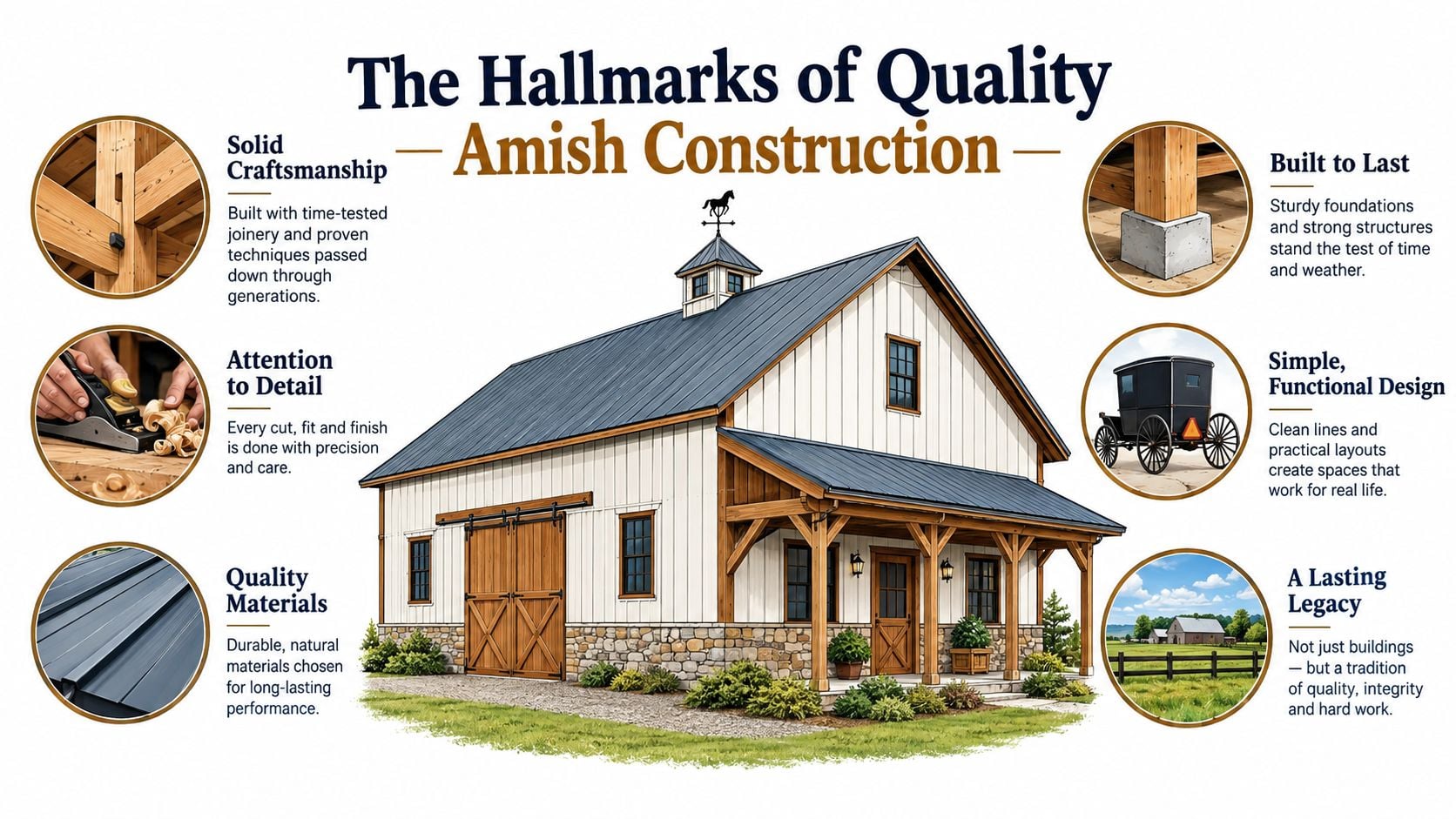
The Hallmarks of Quality Amish Construction
The strongest solid wood furniture depends on how the maker manages stress. A thick tabletop won't compensate for a weak frame, and beautiful grain won't prevent a joint from loosening. Joinery is the structural language of furniture.
Staples, nails, and heavy adhesive can assemble a piece quickly, but they don't provide the same mechanical strength as properly designed interlocking joints. Mortise-and-tenon construction joins one member into a fitted opening in another. Dovetail joints lock drawer parts together. Well-designed edge joints connect boards while respecting the direction in which wood naturally moves.
Why wood movement changes the design
Wood is hygroscopic. It absorbs and releases moisture as indoor relative humidity changes, expanding and shrinking mainly across the grain rather than along its length. Interior furniture is commonly stabilized around 6–8% moisture content, a range associated with typical 30–40% indoor relative humidity conditions, according to Wood Review's guidance on wood movement.
Outside that balance, low humidity can pull wood below about 5% equilibrium moisture content, while high humidity can push it above about 10%. Those conditions increase the risk of checking, joint movement, drawer binding, and warping. A 12-inch-wide solid panel may move roughly 1/4 to 1/2 inch across an annual humidity cycle in a conditioned home, so wide tabletops, cabinet doors, and media-console fronts need room to move.
That room comes from floating panels, elongated fastener holes, and carefully placed attachment points. A maker shouldn't rigidly lock a wide panel across the grain. Doing so can split the panel or force joints apart as the seasons change.
What to inspect before buying
A shopper doesn't need to dismantle a cabinet to evaluate its fundamentals. The following details reveal whether the design respects both strength and movement:
- Look at the frame: Framed doors and reinforced corners usually provide a more stable structure than thin panels attached directly to a case.
- Open a drawer: Solid drawer sides, fitted bottoms, and smooth movement indicate attention to both materials and assembly.
- Study the underside: The bottom of a tabletop or cabinet can reveal whether the construction is substantial or dependent on thin overlays.
- Ask about acclimation: Kiln-dried wood is commonly brought near 6–8% moisture content before construction, and the finished piece should live in an environment similar to the one where it was built.
- Check movement points: Wide surfaces should have floating or otherwise accommodated panels rather than rigid cross-grain fastening.
A fuller explanation of what Amish furniture means helps shoppers recognize why craftsmanship matters beyond the visible finish. Amish furniture is often made to order, so buyers can discuss species, dimensions, stain, and construction details rather than accepting a fixed mass-produced configuration.
Designing Your Space with Custom Sizes and Finishes
Off-the-shelf furniture often forces the room to adapt to the piece. Custom ordering reverses that relationship. The homeowner starts with the room, the traffic pattern, the seating, and the functions the furniture must perform.
Start with the room, not the catalog
Measure the wall, doorway, baseboards, outlets, vents, and nearby furniture. A media console must leave space for cables and ventilation. A sofa table shouldn't narrow the walking path. A coffee table needs enough clearance for people to pass without bumping knees or corners.
A simple planning sequence keeps the process manageable:
- Mark the footprint: Use painter's tape on the floor to show the proposed length and depth.
- Test circulation: Walk around the taped outline while carrying a basket, serving tray, or laundry basket. If the route feels tight now, it won't improve with a solid piece in place.
- Note fixed obstacles: Record baseboards, registers, outlets, window trim, and door swings.
- Define the job: Decide whether the piece needs open display, concealed storage, media equipment space, or a combination.
- Request the build around those needs: Custom furniture can adjust dimensions, storage arrangements, wood species, and finishes.
The custom wood finish options deserve as much attention as the dimensions. A finish should complement the floor and upholstery without forcing every wood tone to match exactly. Warm undertones generally work well together, while contrast can make a statement piece feel intentional.
Choose the finish for real use
A busy household may benefit from a durable furniture-grade protective finish that handles regular cleaning and spills. A homeowner who values tactile character may prefer a hand-rubbed oil finish, understanding that it can call for more attentive maintenance and periodic refreshing.
Dark stains emphasize richness but may show dust and fine marks. Lighter finishes reveal grain variation and can make a room feel open. A sample viewed beside the actual flooring is more reliable than a digital image because light changes how stain appears throughout the day.
Custom order service is also useful beyond living room pieces. Canadel's custom dining program allows homeowners to design tables and chairs around their room and style, while Amish solid wood furniture can be specified for living room dimensions and finish preferences. Design it your way means the final piece serves the household instead of dictating how the household lives.
Caring for Solid Wood Through the Seasons
Solid wood needs stable conditions, not complicated rituals. Northwest Indiana homes experience seasonal changes that can move indoor humidity from dry winter air to muggy summer conditions. Furniture responds to that environment, so sensible climate control protects both the finish and the structure.
Winter and summer routines
During winter, a humidifier can help prevent excessively dry indoor air. During humid summer weather, a dehumidifier and consistent air circulation can reduce moisture stress. The goal isn't to chase a perfect reading every hour. The goal is to avoid sharp, prolonged swings that push furniture far outside its normal indoor environment.
A seasonal routine works well:
- Winter: Keep furniture away from direct heat vents and monitor especially dry rooms near fireplaces or forced-air registers.
- Spring: Check doors and drawers for changes in fit without forcing them. Small seasonal shifts can be normal.
- Summer: Use air conditioning or dehumidification to limit prolonged moisture exposure.
- Fall: Inspect tops, corners, and joints, then address small finish issues before heating season begins.
Clean without stripping the finish
Dust with a soft, dry cloth or a slightly damp cloth suited to the finish. Wipe spills promptly, use coasters, and avoid soaking seams or leaving standing water on a tabletop. Harsh household chemicals, abrasive pads, and silicone-heavy sprays can cloud or weaken some furniture finishes.
Minor surface scratches often need a careful touch-up rather than aggressive sanding. A furniture professional can identify whether the mark affects only the finish or reaches the wood beneath it. Homeowners looking for additional practical guidance can read how to extend furniture lifespan with care.
Solid wood is forgiving when its environment and finish receive consistent care. The mistake is treating a wood piece like an indestructible surface.
For a fuller maintenance reference, Groen's guide on how to care for wood furniture can help households establish a repeatable cleaning and protection routine. The best care plan is simple enough to follow and gentle enough to preserve the finish.
Navigating Value and Special Financing Options
A solid wood living room piece deserves a broader value check than its purchase price. A cheap table that warps, peels, or fails can lead to replacement, disposal, delivery, and more shopping. Well-built furniture can stay useful, repairable, and relevant as your household changes.
That is why solid wood can qualify as affordable luxury when chosen carefully. Its value rests on honest materials, sound joinery, a finish suited to indoor conditions, and proportions that continue working when the room is rearranged. Stable construction also helps protect indoor air quality by favoring durable materials and finishes over furniture designed for quick replacement.
Make the budget serve the room
A household does not need to furnish the entire living room at once. Start with the coffee table, media console, or storage piece that handles the most daily use. One well-made anchor is a better investment than several temporary items. Custom sizing also prevents the costly mistake of buying furniture that crowds the room and replacing it later.
Special financing can provide more room in the budget, but read every term before signing. Offers are generally subject to credit approval. Promotional arrangements may include no-interest periods such as 12 or 18 months if paid in full within the stated period. Review Groen's current furniture financing options and confirm the agreement's terms before committing.
Groen's Fine Furniture offers special financing subject to credit approval, along with custom furniture options and guidance on solid wood selections. Choose a payment plan that fits the household budget and preserves room for responsible repayment. Financing should support a considered purchase, not turn a durable piece into a financial strain.
Bringing Your Vision to Life in Northwest Indiana
A photograph can't show how a drawer glides, how a tabletop feels under a hand, or whether a sofa and coffee table create a comfortable relationship. Those details matter when a living room must support real family life. Seeing the furniture in person also makes it easier to compare wood species, stain depth, grain movement, upholstery, and scale.
Groen's Fine Furniture has served Northwest Indiana since 1983 as a family-owned business with multigenerational ownership. Showrooms in Dyer and Crown Point give homeowners a place to discuss custom furniture, Amish craftsmanship, Flexsteel durability, Canadel design options, Bassett style, and the broader needs of a complete living room.
The showroom conversation should be practical rather than pressured. Bring room measurements, flooring photos, and a rough list of priorities. The team can help evaluate a media console's proportions, compare wood samples, discuss finish choices, and coordinate White-Glove Delivery when the purchase is ready.
Homeowners from St. John, Schererville, and Munster are part of the surrounding NWI service area. The same local guidance extends to families furnishing a first home, updating a long-established house, or working with an Interior Design plan that needs carefully selected American-Made and solid wood pieces.
A comfortable room doesn't come from buying the heaviest table or the darkest stain. It comes from matching materials, construction, dimensions, maintenance expectations, and budget to the way the household lives. In-person service makes those decisions clearer, while five-star service and honest guidance keep the process personal.
Groen's Fine Furniture offers custom solid wood furniture, Amish craftsmanship, complementary living room brands, and Special Financing subject to credit approval. Visit Groen's Fine Furniture in Dyer or Crown Point to test drive the comfort, compare wood samples, and let the family help create a living room built for lasting everyday life.