Contemporary Sofa Styles: A Complete Guide for Your Home


A family can love the look of a sleek new sofa and still regret the purchase after a few weeks of snack crumbs, muddy paws, crowded movie nights, and a tight doorway. For homeowners in Dyer, Crown Point, and throughout Northwest Indiana, the right contemporary sofa has to do more than photograph well. It needs comfortable proportions, sensible upholstery, dependable construction, and a configuration that fits how the household lives.
The current market reflects that practical shift. The global contemporary sofa category was valued at USD 236.39 billion in 2025 and is projected to reach USD 325.11 billion by 2033, with a projected 4.2% CAGR from 2026 to 2033, according to Grand View Research's sofa market analysis. Sectionals held the largest type share at 27.3% in 2025, while synthetic fabrics led fabric choices with a 39.8% share. Those figures point to a clear reality: contemporary sofas are no longer niche statement pieces. They're central, flexible furniture for busy living rooms.
Defining Contemporary Sofa Style
A couple in a Crown Point home may walk into a showroom looking for “something modern.” After a few questions, the actual request often sounds different: clean lines, plenty of room to stretch out, a fabric that can handle a dog, and a shape that won't make the living room feel crowded. That combination is the heart of contemporary sofa style.
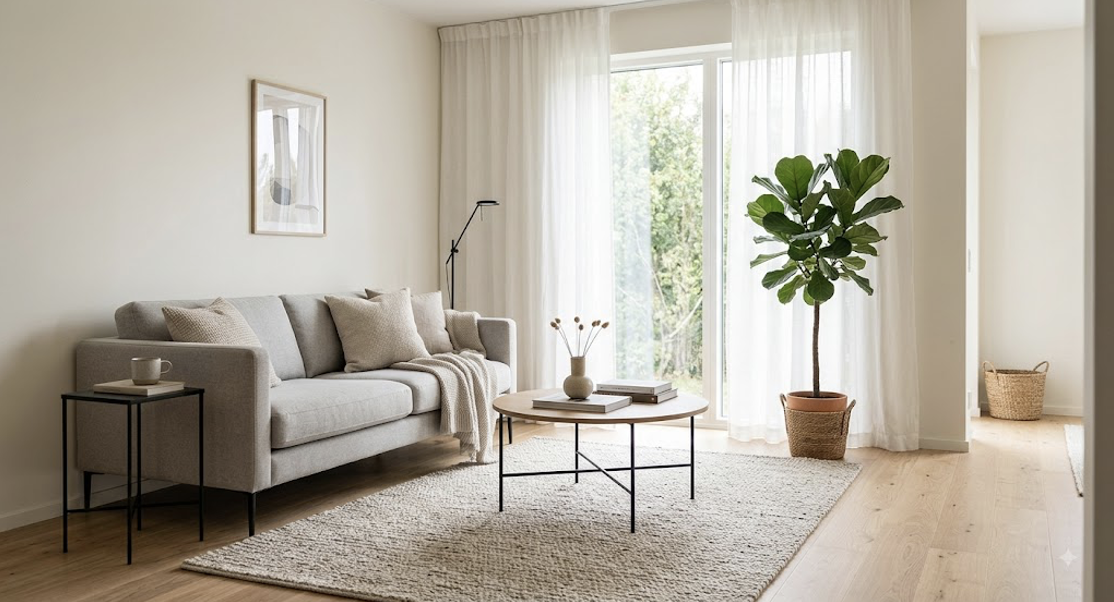
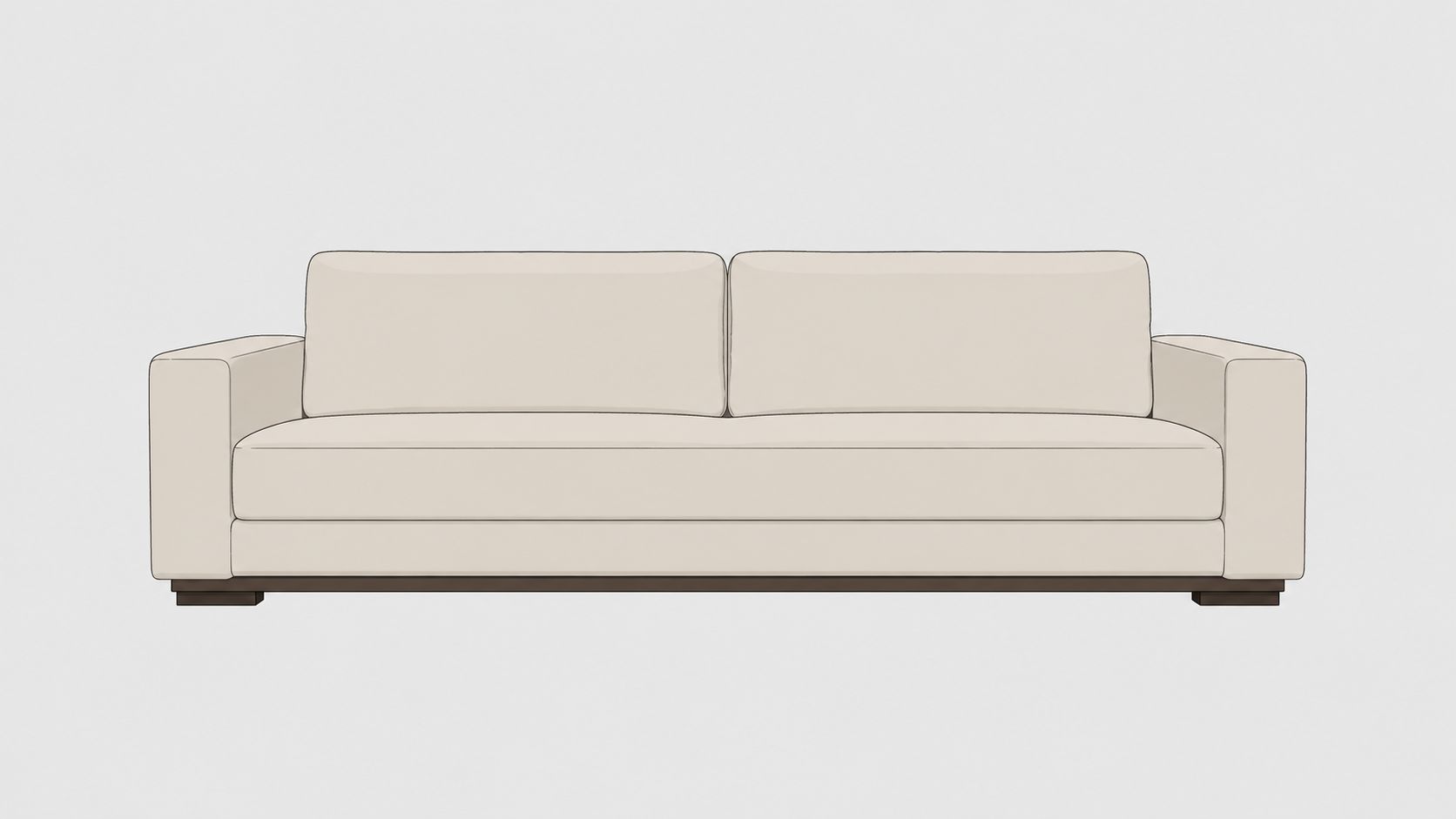
Contemporary furniture generally favors straight lines, minimal ornamentation, neutral upholstery, and a low, horizontal profile. Slim wood or metal legs may lift the frame visually, while simple cushions keep attention on proportion rather than carved details or heavy decoration. A traditional sofa might have rolled arms, deep button tufting, ornate woodwork, and a formal high back. A contemporary sofa usually looks calmer and more open, even when it offers generous seating.
Contemporary versus modern
The terms overlap in furniture advertising, but they aren't identical. Modern usually refers to a defined 20th-century design movement associated with function-led forms, while contemporary describes what feels current and continues to change with materials, comfort preferences, and household needs. A mid-century sofa with tapered legs can sit comfortably in a contemporary room, but the two labels describe different design ideas.
Contemporary style grew from design movements that replaced ornate forms with clean geometry, lower profiles, and useful construction. Over time, the look softened. Today's versions often combine restraint with deep seating, rounded edges, plush cushions, and performance-minded upholstery. That balance keeps a room from feeling sterile while preserving a clean appearance. Readers comparing the two broader decorating languages can find a practical overview in this guide to contemporary versus traditional design styles.
Why the silhouette matters
A low profile can make a room appear more spacious, but it shouldn't automatically mean a shallow or rigid seat. Contemporary construction increasingly pairs low visual height with deep seating and softer sculptural curves, creating a lounge-ready sofa without excessive ornament. A build using kiln-dried hardwood or high-quality engineered framing, no-sag springs or webbing, and high-density foam wrapped in down or fiber can support that relaxed appearance while helping limit frame distortion and seat sag, as described in this contemporary sofa construction guide.
Practical rule: A sofa looks contemporary because of its proportions and restraint, not because it has the hardest cushions or the fewest details.
For an active household, that distinction matters. A family shouldn't choose a sofa just because it has a sculptural curve or pale neutral fabric. The better question is whether the style delivers the right combination of comfort, cleanability, scale, and flexibility. Contemporary design gives homeowners a strong starting point, but the upholstery and interior construction determine whether that attractive shape remains useful year after year.
Popular Contemporary Substyles Explained
“Contemporary” covers several distinct looks. Choosing among them is easier when each style gets judged against real household demands instead of showroom lighting.
Mid-century modern
Mid-century modern sofas typically use tapered legs, low seating, simple geometry, and warm wood accents. Their raised bases expose more floor, which can make a smaller room feel lighter. The shape also works well when a homeowner wants a recognizable design language without the visual bulk of a large sectional.
The trade-off is lounging capacity. A compact mid-century sofa may suit a formal living room, apartment, or sitting area, but it may not provide the sprawling depth a family wants for movie nights. It also deserves careful upholstery selection because the clean lines leave little room to hide wear or sagging cushions.
Minimalist contemporary
Minimalist sofas take restraint further. They often have armless or narrow-armed profiles, solid neutral upholstery, and simple rectangular forms. This substyle works especially well in small rooms, offices, formal spaces, and homes where open floor area matters as much as seating.
Minimalism becomes less forgiving when daily life is messy. A very pale fabric, tight seat, or delicate exposed leg can look beautiful but may demand more upkeep. Buyers should test whether the sofa supports the household's preferred posture. A piece that looks refined but feels too upright won't become comfortable just because the room is well styled.
Transitional contemporary
Transitional seating sits between traditional warmth and contemporary simplicity. Arms tend to be cleaner but still padded, cushions feel substantial, and upholstery often uses approachable neutrals. This is a smart choice for homes that mix inherited furniture, wood pieces, and newer accents.
Transitional sofas are often easier to live with because they don't force the room into one strict period. They can anchor a family room without looking overly casual, and they can remain useful as surrounding décor changes. For homeowners still narrowing down their preferences, a broader resource on decor trends for 2021 offers helpful context for recognizing recurring colors, materials, and silhouettes, even though individual tastes continue to evolve.
Modular contemporary
Modular sofas are the strongest practical choice for many active households. Separate pieces can be arranged as a sectional, separated into individual seats, or reconfigured when a room changes. That flexibility is particularly useful in apartments, open-concept homes, and households that host often. Major style coverage says modular designs continue to lead contemporary sofa trends because they adapt to changing layouts and real-life use, while customers frequently request them for that flexibility, as noted by Living Spaces' sofa trend coverage.
The drawback is planning. A modular sofa needs careful measurement, and individual pieces must connect securely without creating awkward gaps. Large configurations can also dominate a smaller room. A homeowner comparing silhouettes, proportions, and room relationships can use the elements of a modern home as a helpful style reference.
For families with children, pets, and frequent guests, modular contemporary usually offers the best overall balance. For a smaller formal room, minimalist or mid-century modern may be more appropriate. Transitional works when comfort and decorating flexibility matter most.
Materials and Construction That Last
A contemporary sofa's clean outline can hide major differences in quality. Two sofas may share the same neutral color and low profile, yet one can remain supportive while the other develops loose joints, flattened cushions, or visible wear. Active households should inspect the parts beneath the upholstery before judging the styling.
Start with the frame and suspension
Kiln-dried hardwood is a strong frame choice because controlled drying helps reduce movement caused by moisture changes. High-quality engineered frames can also perform well when properly designed and joined. The frame should feel stable when someone sits down or shifts position. Excessive twisting, creaking, or movement deserves attention.
Suspension affects how the sofa responds over time. No-sag springs can provide consistent support across the seat, while webbing may create a lighter construction with a different feel. Neither label replaces hands-on testing. The important question is whether the seat returns to shape and supports the body without feeling harsh.
Cushions should match the intended use. High-density foam wrapped in down or fiber can combine a supportive core with a softer surface. A very loose cushion may look relaxed but require frequent reshaping, while a tightly constructed cushion can maintain a neater appearance with less daily adjustment.
Use rub counts as a buying filter
Rub count measures abrasion resistance, not stain resistance, softness, or overall quality. Still, it provides a useful comparison when children, pets, and frequent entertaining place heavy demands on the upholstery. The following ranges come from this modern sofa material guide.
| Fabric Type | Rub Count Range | Best For |
|---|---|---|
| Performance fabric | 50,000–100,000 rubs | High-traffic family rooms and households needing easier maintenance |
| Top-grain leather | 50,000+ rubs | Busy rooms where durability and wipeable surfaces matter |
| Velvet | 20,000–50,000 rubs | Style-focused rooms with moderate wear |
| Linen | 15,000–25,000 rubs | Lower-wear settings where natural texture is the priority |
Higher rub counts generally correlate with stronger abrasion resistance in everyday use. Performance fabric and top-grain leather typically offer the most practical durability-to-maintenance balance for busy living rooms. Linen and velvet can still be excellent choices, but they're better matched to lower-wear spaces or households prepared to accept more visible texture and maintenance.
Cleanability requires a separate question
A durable fabric isn't automatically easy to clean. Buyers should ask about the manufacturer's care instructions, removable cushion covers, cleaning codes, and how spills should be handled. A household with pets may prefer a tightly woven performance fabric, while a formal room may justify a more delicate surface.
For an upholstery care plan, deep clean chairs and sofas provides useful general context. Groen's own guidance on everything to know about upholstery materials can also help a buyer compare feel, maintenance, and intended use before placing an order.
Choosing the Right Sofa for Your Room
A sofa should be measured against the room, the entry path, and the people who will use it. Showroom scale can mislead because large rooms, high ceilings, and wide aisles make almost every sofa appear more manageable than it will feel at home.
Open-concept living areas
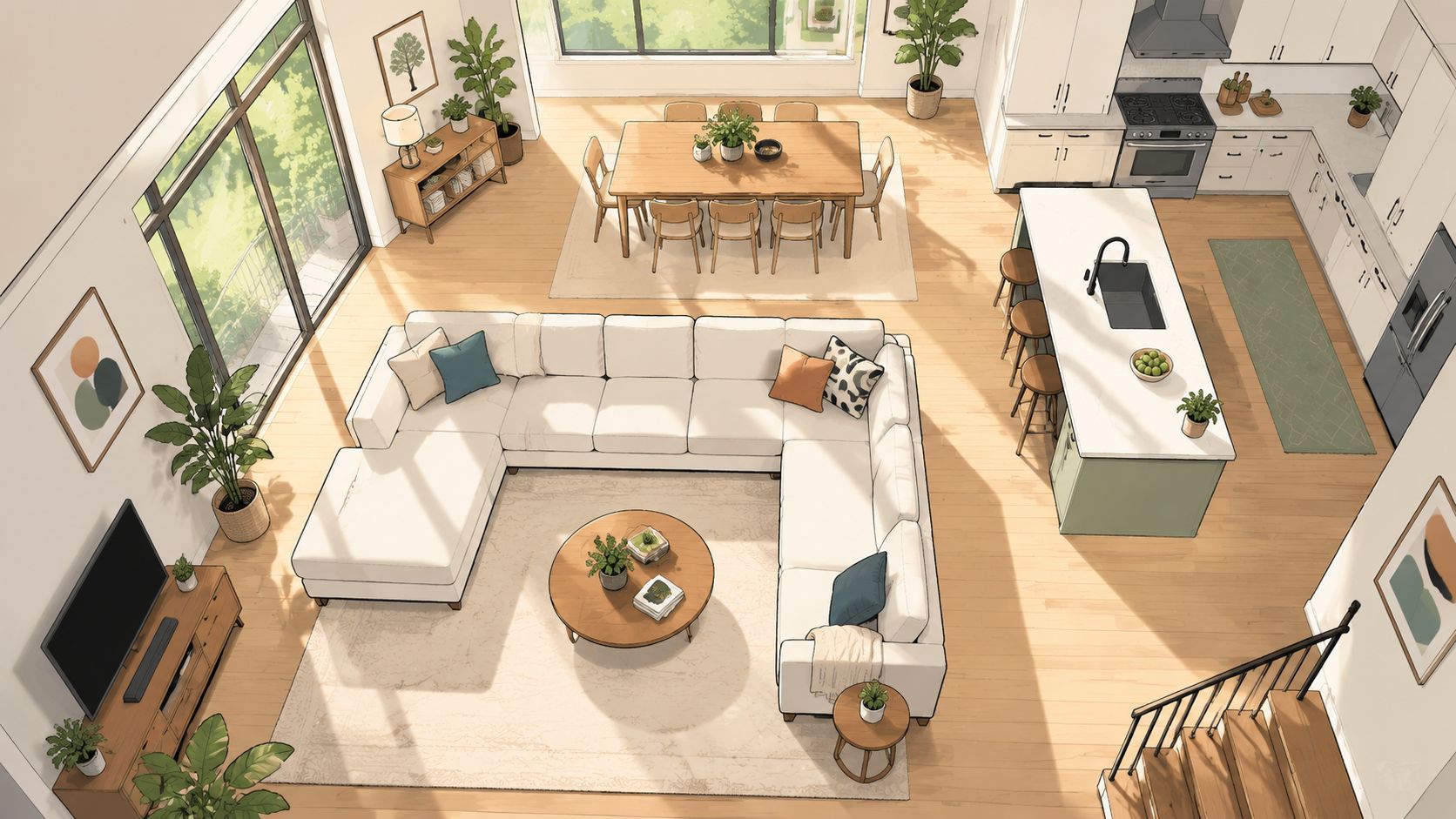
An open plan usually needs furniture to create zones without building walls. A modular sectional can define the living room, turn its back toward a dining area, and give several people a shared orientation for conversation or television. A chaise can add lounging room, but it may block a walkway if placed without enough clearance.
The best configuration depends on traffic patterns. Before shopping, note where people enter, how they reach the kitchen, and whether the sofa needs to face a fireplace, television, windows, or another seating group. A flexible modular arrangement works well when the room may change, but a fixed sectional can provide a cleaner outline when the layout is settled.
Formal living rooms
A formal room typically benefits from a more disciplined footprint. Minimalist and mid-century contemporary sofas can make a strong statement without overwhelming artwork, windows, or architectural details. Choose a fitted cushion and controlled depth when the room is used primarily for conversation rather than sprawling.
A transitional sofa may be better if the room also receives everyday family use. It offers enough visual polish for guests while retaining a more inviting seat. Buyers considering art, cultural objects, or sculptural accents should make sure the sofa supports rather than competes with those pieces. For readers exploring the cultural background of one such subject, this resource on the deity Shiva offers context that may inform an art-led room without dictating the furniture choice.
Small rooms and difficult entries
Small spaces need visual breathing room. Low-profile sofas, narrow arms, raised legs, and armless modular pieces can prevent a room from feeling packed. A compact sofa with a lighter base may serve better than a deeper sectional, even when both technically fit.
Measure more than the wall. Record doorway width, hallway turns, stair landings, elevator dimensions, and ceiling obstacles. A sofa that fits the floor plan can still fail at the front door. The guide to choosing the best sofa offers another useful checklist for matching comfort, scale, and household needs.
A practical room test
Before choosing a configuration, answer these questions:
- Daily use: Will people sit upright, lounge, nap, or do all three?
- Household traffic: Do children, pets, or frequent guests create high wear?
- Visual scale: Does the sofa leave enough open floor for the room to breathe?
- Access: Can every piece reach its final position without risky turns?
- Future flexibility: Might the room, household, or television placement change?
The right contemporary sofa style isn't the one with the most dramatic silhouette. It's the one that fits the room before delivery and still supports the household after the novelty fades.
Custom Options and Financing at Groen's
A ready-made sofa can solve a furnishing need, but a custom order solves the mismatch between a standard product and a specific home. One household may need a left-facing chaise, stain-conscious upholstery, and a firm seat. Another may need a compact apartment configuration, warmer fabric, or power reclining with a cleaner contemporary profile. Customers shouldn't have to settle for a shape that almost works.
At Groen's Fine Furniture, the practical starting point is designing the sofa around the room and the people using it. Custom options may involve upholstery, configuration, finishes, and comfort preferences, depending on the collection. The custom furniture service explains how made-to-order choices can turn a general style direction into a more personal result.
Brands and materials worth considering
Flexsteel is a sensible name to explore when durability is the priority. Bassett is useful for shoppers who want contemporary styling with broader upholstery and configuration choices. A showroom conversation should focus on the actual frame, suspension, cushion feel, fabric care, and available dimensions rather than relying on a brand name alone.
Custom thinking also applies beyond sofas. Canadel's made-to-order dining program supports a personalized gathering space, while Amish Furniture offers solid wood craftsmanship for buyers seeking heirloom construction. Those choices matter because a contemporary living room usually works best when the surrounding furniture supports the same balance of comfort, restraint, and lasting materials.
Fitting quality into a household budget
Quality furniture represents a meaningful investment, but the purchase doesn't have to be approached as an all-or-nothing decision. Special Financing is available, subject to credit approval, giving qualified buyers additional buying power while they fit a needed sofa or sectional into the household budget. Terms and availability can change, so shoppers should ask the team for current details before making a decision.
Groen's is a family-owned business serving Northwest Indiana since 1983, with multigenerational ownership and showrooms in Dyer and Crown Point. Its service area includes nearby NWI communities such as St. John, Schererville, and Munster. That local connection gives homeowners a place to discuss room measurements, fabric choices, custom furniture, American-made options, and White-Glove Delivery with a team focused on personal service rather than a one-size-fits-all transaction.
Visit Our Showrooms to Test Drive Comfort
A product photograph can't reveal whether a sofa encourages good posture, whether the seat depth suits shorter family members, or whether the cushions feel supportive after several minutes. Those details become obvious when a shopper sits down, shifts positions, stretches out, and tries the sofa the way the household will use it.
A showroom visit should include more than a quick glance at color. The household should test the arm height, seat firmness, back angle, cushion recovery, chaise position, and reclining controls when applicable. It should also inspect seams, legs, frame movement, and upholstery texture. These hands-on checks make it easier to separate a comfortable contemporary sofa from one that only looks relaxed.
The team can also help with the practical issues that cause the most regret:
- Room planning: Match the sofa's scale and configuration to walls, walkways, windows, and focal points.
- Material selection: Compare performance fabrics, leather, linen, and velvet according to actual household wear.
- Custom ordering: Explore bespoke dimensions, fabrics, finishes, and made-to-order configurations.
- Delivery planning: Confirm entry measurements and arrange White-Glove Delivery details.
- Whole-home comfort: Connect living room decisions with dining, bedroom, and sleep needs, including the Helpful Mattress Guide and mattress options from Serta and Beautyrest.
The best contemporary sofa styles combine a calm appearance with dependable daily performance. For a family in Dyer, Crown Point, or elsewhere in Northwest Indiana, the right purchase should create a comfortable gathering spot, not another fragile object to manage. Groen's five-star service, personal guidance, and local legacy make the showroom conversation more useful than choosing from a screen alone.
Visit Groen's Fine Furniture in Dyer or Crown Point to test-drive contemporary sofas, compare durable upholstery, and explore custom configurations for the household's room. Ask the team about Special Financing, subject to credit approval, and let this multigenerational NWI family business help create a comfortable home that lasts.