Blog
Recliners That Lift You Up: NWI Guide


A familiar evening can expose a furniture problem. A homeowner settles into a comfortable recliner after dinner, watches a favorite program, and then faces the difficult part, standing up without straining the knees, hips, or lower back. For families in Dyer, Crown Point, and throughout Northwest Indiana, a chair that helps with that transition can protect independence while still looking like a natural part of the living room.
Modern recliners that lift you up have moved well beyond the clinical look of older mobility equipment. They now combine powered movement, supportive seating, upholstery choices, and living-room style. The right chair can serve an older adult, someone recovering at home, or any household member who wants easier positioning without surrendering comfort or design.
Why Recliners That Lift You Up Are Changing Home Comfort
A lift recliner earns its place when standing has become the least comfortable part of sitting. Consider a Crown Point reader who enjoys a long afternoon in a favorite chair but needs to push hard through the armrests to rise. Or consider a St. John household arranging a recovery space where the chair needs to support resting, reading, and controlled transfers without looking out of place beside the sofa.
That distinction matters. A powered lift chair can assist a person who retains some ability to bear weight and participate in standing, but it isn't a hoist or a replacement for assessed transfer support. Anyone with major balance concerns, severe weakness, or regular caregiver assistance should ask a qualified health professional whether a lift recliner is appropriate before treating it as a mobility solution.
Practical rule: The chair should make a capable transfer easier. It shouldn't be expected to perform the entire transfer alone.
From assistive equipment to living-room furniture
The category has a long engineering history. Patent records include a 1969 filing for an occupant-assisting chair, a 1975 filing for a reclining elevator chair, and later lift-chair variants filed in 1988, 1989, 1995, and 1996. A historical summary also identifies the 1980s introduction of the first electric lift chair by La-Z-Boy as an important commercialization milestone, when motorized assistance and button-controlled operation became more practical for everyday users. These details are documented in the historical overview of power lift chair development.
Today's buyer sees a much broader furniture category. Choices can include custom upholstery, clean-lined arms, durable performance fabrics, soft leather, heat or massage features, and motor controls designed for simple daily use. A lift recliner can sit beside a Bassett sofa, coordinate with Flexsteel living-room furniture, or serve as a comfortable reading chair in an open-concept space.
A growing comfort purchase
The market's direction supports that change. One estimate values the power lift recliner market at $3.23 billion in 2025 and projects $5.59 billion by 2034, representing a 6.2% compound annual growth rate over that forecast period. Another estimate places the category at USD 1,450.75 million in 2024 and projects USD 2,850.60 million by 2032, with 8.25% annual growth. The estimates use different methods, but both point toward expanding demand for powered lifting recliners. The figures appear in the power lift recliner market estimate.
That growth reflects more than aging. Families are making homes easier to use, planning for changing mobility, and choosing furniture that supports rest without appearing institutional. Households exploring broader assisted living at home options may find that a properly fitted lift recliner provides useful support in a familiar room, provided the user can still participate safely in the transfer.
Understanding Lift Mechanisms and Motor Configurations
The best way to evaluate a lift recliner is to watch its movement, not just test the softness of its cushion. The chair should raise the seat and user forward in a controlled path, pause without rocking, and return smoothly to a stable seated position.
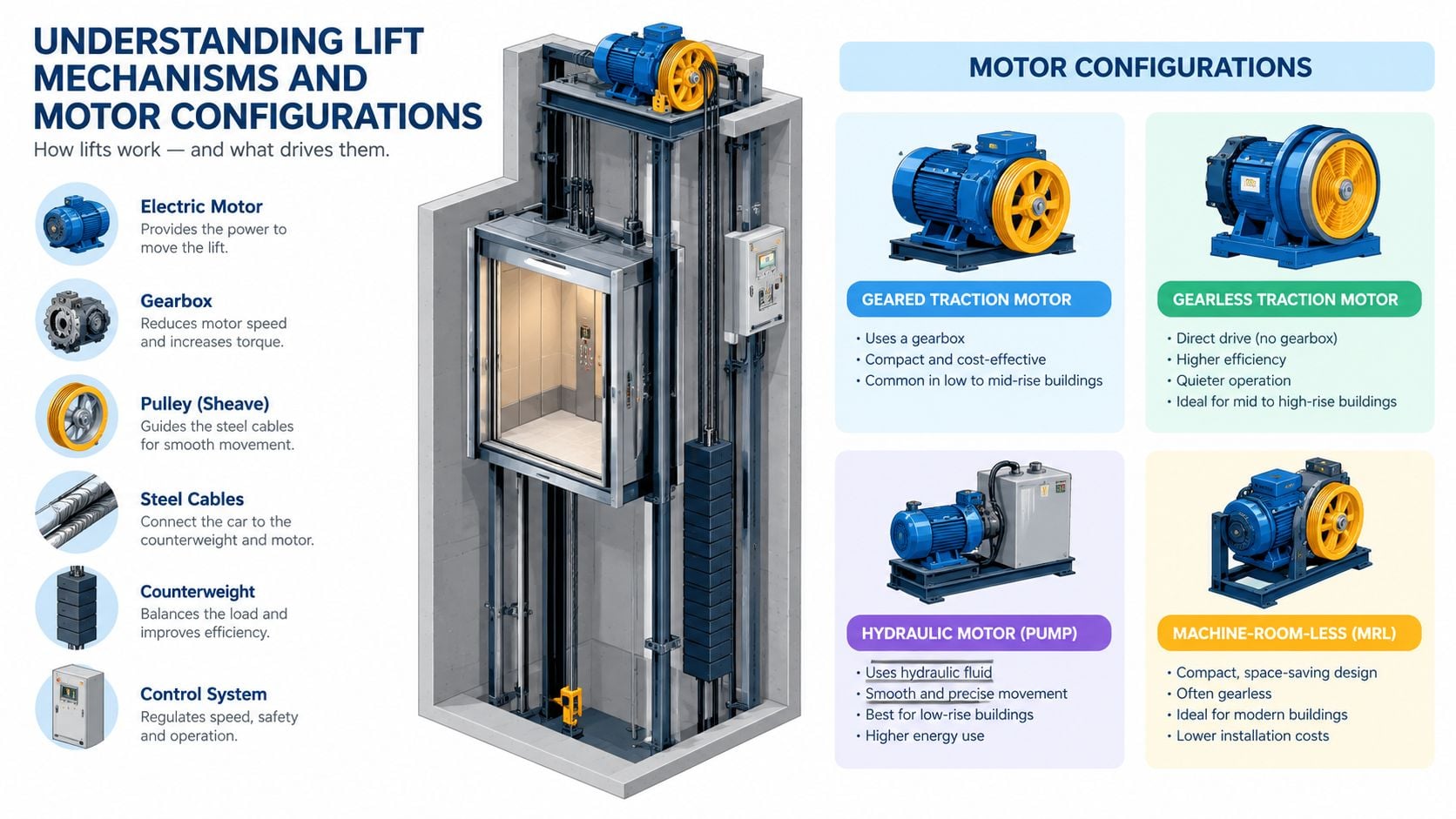
A power lift recliner generally uses an electric motor or linear actuator. The actuator converts motor rotation into push-pull movement, allowing the backrest, footrest, seat, or full chair frame to change position. Some models use one motor for a linked movement path, while dual-motor models allow separate adjustment of the backrest and footrest. A practical overview of power recliner construction appears in this guide to what a power recliner is.
Match the position type to the routine
Position labels describe how much control the chair gives the user.
- Two-position models generally focus on sitting and a limited reclined position. They suit households that mainly need standing assistance and occasional leg elevation.
- Three-position models offer a more pronounced recline, making them useful for reading, television, and resting without moving all the way into a flat sleeping posture.
- Infinite-position models provide a wider range of independent adjustment. They suit users who change posture often or need more precise positioning for extended sitting.
The correct choice depends on the hardest daily task. A reader who mainly needs help rising may prefer simple controls and a stable upright position. Someone who alternates between reading, napping, and elevating the legs may benefit from broader adjustment.
Single motor or dual motor
A single-motor chair links certain movements together. Raising the footrest may also change the back angle, creating a straightforward operating pattern with fewer controls. That simplicity can help users who don't want a complicated remote.
A dual-motor system separates the backrest from the footrest. The user can raise the legs while keeping the back more upright, or recline the back without forcing the legs into the same position. That flexibility is especially useful when the chair serves as a reading seat during the day and a resting chair later.
Showroom test: The strongest candidate should lift evenly on both sides, keep the torso centered, and avoid a sudden forward lurch at the start or end of the cycle.
The mechanism should also match the user's hand strength and vision. Large, distinct buttons are easier to identify than a crowded remote. Controls should remain reachable from the seated position, and the cord should be routed where it won't cross a walking path. A chair with more features isn't automatically a better chair. The best configuration is the one the user can operate confidently every day.
Sizing Your Space and Matching Weight Capacities
A lift recliner must fit three things at once: the user, the room, and the movement path. A chair can feel generous in a showroom yet leave a shorter user with unsupported feet, or it can fit the body well while blocking a walkway when fully reclined.
Start with the person rather than the catalog photo. Seat height should allow the user to place both feet securely on the floor while keeping the knees in a workable position. The seat depth should support the thighs without forcing the back away from the cushion. Armrests should sit at a comfortable height and provide enough structure for light push support during a transfer.
The measurement framework
Before visiting a showroom, households should record:
- User height and leg reach: The footrest should support the lower legs without leaving the heels suspended or pushing the knees into an awkward angle.
- Seated hip width: The user needs room to sit squarely, but excessive width can reduce arm leverage during standing.
- Seat height: A low, heavily cushioned seat may feel cozy but can make standing harder for someone with limited knee or hip strength.
- Doorway and hallway dimensions: Delivery teams need a practical route from the entrance to the final room.
- Room width and depth: Measure the chair footprint in the upright position and the expanded footprint when reclined.
- Outlet location: The power cord should reach the outlet without becoming a trip hazard.
A complete room plan should include side tables, lamps, walkers, canes, and the walking route used to approach the chair. The furniture measuring guide can help households organize those dimensions before ordering.
Weight capacity is a safety specification
Published examples show common recliner capacities ranging from 250 to 500 pounds, with standard models often rated near 300 pounds and heavy-duty lift recliners reaching 500 pounds. These figures come from the recliner weight-capacity guide. A buyer should treat the manufacturer's stated capacity as a firm limit, not a target.
The chair also needs the correct width and cushion support. A high-capacity model may offer a wider frame, but the user still needs stable arm support and a seat that doesn't allow excessive side-to-side movement. Capacity, fit, and transfer ability must be evaluated together.
Lift recliner sizing and clearance guide
| Chair Category | Ideal User Profile | Weight Capacity | Required Wall Clearance |
|---|---|---|---|
| Compact lift recliner | Petite user or smaller room where a close fit is essential | Confirm the model rating before purchase | Measure the full recline path and preserve a clear walking route |
| Standard lift recliner | Average-sized adult needing routine standing assistance | Published examples commonly approach 300 pounds, as described in the capacity guidance | Allow the model's specified clearance, with furniture kept outside the moving path |
| Large lift recliner | Taller or broader user needing more seat and armroom | Capacity varies by model, so the manufacturer's rating controls | Check wall, table, and adjacent-chair interference before delivery |
| Heavy-duty lift recliner | User requiring a stronger frame and higher stated capacity | Some models reach 500 pounds, according to the weight-capacity reference | Plan for the larger footprint and maintain open access beside the chair |
Many buying guides reference roughly 50 to 60 centimeters of rear clearance for riser recliners, though the exact requirement depends on the mechanism and model. That spatial guidance appears in coverage of rise-and-recline chair planning. Wall-hugger designs may reduce rear clearance, but they still need enough forward and side space for the lift motion.
Prioritizing Safety Features and Emergency Controls
A lift recliner is a moving machine in a household environment. Children, pets, blankets, charging cords, and loose clothing can all enter the space beneath the seat, where the scissor-and-lift linkage creates pinch and crush hazards.
The operating rule is simple: hands, feet, pets, and loose items stay clear beneath the chair during every rise and descent. Nobody should reach under the frame to retrieve a dropped object while the motor is connected or moving. The chair should stand on a level surface, and a nearby table or mobility aid shouldn't touch the frame as the seat changes position.
Watch the motion, not just the upholstery
A well-fitted chair should rise symmetrically. The seat should move forward and upward in a controlled manner, with minimal trunk sway and no abrupt shift that throws the user off balance. Biomechanical research indicates that older adults use markedly more lower-limb musculature than younger adults during standing transfer tasks, so the chair should assist knee and hip extension rather than eliminate the user's participation. The research also evaluated lift cycles using 8 cameras, comparing perceived stability and smoothness during movement. Those findings are discussed in the biomechanical lift-chair evaluation.
A smooth lift is a safety feature. Maximum speed matters less than a balanced ascent, stable arm support, and a seat angle that helps the user finish standing.
The user should sit fully back before activating the lift function. Feet should remain positioned as recommended by the manufacturer, and the user shouldn't attempt to walk away until the chair reaches a stable upright position. A caregiver should avoid pulling the user forward by the arms, since that can disrupt balance while the mechanism is moving.
Plan for an outage before one happens
Power loss deserves attention during the buying decision. The household should ask whether the chair accepts a battery backup, how that backup is installed, and whether it provides enough power for a safe return to an upright position. The user should also know the manufacturer's approved manual-release procedure, if one exists.
A backup battery isn't a substitute for safe placement. The chair still needs a clear path to upright, and the remote should remain accessible rather than falling behind the cushion. Families concerned about household fall risks can also consult this practical guide to preventing falls in older adults.
Before purchase, a buyer should ask:
- What happens during power loss? Confirm the available backup or emergency procedure.
- Where is the release mechanism? Learn whether it requires tools or special access.
- How does the remote work? Choose clear buttons that the user can identify without assistance.
- What does service include? Ask about motor support, parts, delivery, and setup.
- What should remain clear? Keep the underside, front, and sides free from obstacles.
A useful overview of lift chair pricing can help frame the purchase, but safety equipment and fit should lead the decision. A lower initial cost isn't good value if the chair is unstable, difficult to operate, or poorly matched to the user.
Designing Your Way with Custom Orders and Financing
Mobility support shouldn't force a living room to look like a treatment space. A well-chosen lift recliner can coordinate with existing sofas, complement an interior design plan, and use upholstery that fits the household's cleaning needs.
A local furniture showroom can help a buyer compare fabric texture, leather feel, arm style, seat firmness, and finish options in person. Custom Order Services make it possible to pursue a bespoke result instead of settling for the first available color. The same design-minded approach applies across a room, whether a household is pairing the chair with Canadel custom dining, solid wood Amish furniture, or a durable Flexsteel seating group.
Design the chair around real life
Performance fabrics can make sense in busy homes, while leather may suit households that prefer a smooth surface and a custom appearance. Cushion firmness matters as much as color. A chair that looks beautiful but allows the user to sink too far can undermine the transfer support that justified the purchase.
Furniture should also work as part of a complete home. Bassett brings a style-focused option for living spaces, while Amish Furniture emphasizes solid wood craftsmanship in dining and occasional pieces. For bedrooms, Serta and Beautyrest mattresses deserve evaluation through a health-and-rest lens, supported by a helpful mattress guide rather than a specs-only comparison.
The custom-order planning guide gives households a starting point for selecting materials and coordinating a made-to-order direction. Local buyers can explore those choices at showrooms serving Dyer, Crown Point, St. John, Schererville, and Munster.
Make the investment fit the household
A lift recliner is a practical purchase, but quality construction, reliable movement, and appropriate upholstery have lasting value. Special Financing is available, subject to credit approval, which can give families more buying power while they plan a comfortable, safe room. The important question isn't whether the lowest-priced chair fits the budget. It is whether the selected chair provides the right support, finish, warranty considerations, and daily usability for the household.
Smart value means buying the chair that will be used confidently every day, not choosing features that never leave the showroom.
A family-owned retailer can also make the process more personal through interior design guidance, White-Glove Delivery, and room-planning help. That service is particularly useful when a chair must pass through tight doorways, align with existing furniture, or arrive ready for a user who shouldn't be handling assembly.
Experience Lasting Comfort at Groen's Fine Furniture
A lift recliner should pass a practical test before it passes an emotional one. The user should be able to sit down without feeling swallowed by the cushion, reach the controls without twisting, rest the feet comfortably, and rise with a steady motion. The chair should also fit the room without blocking a walkway or colliding with nearby furniture.
The final decision usually comes down to a few clear questions:
- Does the chair fit the body? Feet, thighs, back, and arms should all receive useful support.
- Does the movement fit the routine? Simple linked movement may suit one user, while dual-motor adjustment may better serve another.
- Does the room fit the chair? Upright and reclined dimensions both matter, along with delivery access.
- Can the user operate it safely? Controls, backup power, and emergency procedures should be understood before delivery.
- Does the design fit the home? Upholstery, scale, and finish should feel intentional rather than clinical.
A showroom test reveals details that photographs can't. The shopper can feel whether the rise is smooth, check whether the armrests provide useful support, compare cushion firmness, and confirm whether the chosen fabric works with the rest of the room. Families can also discuss Custom Furniture, American-Made construction, Solid Wood accents, White-Glove Delivery, and Special Financing in one conversation rather than trying to solve every question online.
Groen's Fine Furniture has served Northwest Indiana since 1983, with multigenerational ownership and showrooms in Dyer and Crown Point. Its five-star service approach gives local households a personal place to evaluate lift chairs, mattresses, living-room furniture, and custom pieces.
Families in Dyer, Crown Point, and across NWI can visit Groen's Fine Furniture to test drive recliners that lift you up, compare upholstery, and plan a chair that fits both the body and the room. The showroom team offers custom furniture guidance, White-Glove Delivery, and Special Financing options subject to credit approval, helping households bring lasting comfort home with honest, personal service.