Custom Dining Table and Chair Design


A family dinner can look perfect in the showroom and still feel awkward at home. Someone's knees press against the table apron, a shorter guest's feet don't rest comfortably, and the chairs refuse to slide fully beneath the top. For homeowners in Dyer, Crown Point, and throughout Northwest Indiana, successful dining table and chair design starts with comfort, clearance, and the way a household gathers.
Groen's Fine Furniture has served NWI since 1983, helping families create rooms that feel personal rather than pieced together. A dining set should support everyday breakfasts, homework, holiday meals, and long conversations, so the table and chairs need to be designed as one coordinated system.
Designing a Dining Space That Actually Works
A family in St. John might begin with a beautiful solid-wood table in mind, then discover during dinner that the chairs sit too low for the tabletop. In Schererville, another household may choose armchairs for the head positions without checking whether the arms can pass under the apron. The room looks polished, but every meal includes small adjustments, sideways movements, and complaints about comfort.
That experience is avoidable. A dining room works best when the design begins with habits: how many people eat there daily, whether guests stay for long conversations, whether children need easy access, and whether the table also serves as a work surface. A compact room may need a shape that preserves circulation, while a larger space can support a more substantial solid-wood design with extension capability.
For practical ideas about arranging meals beyond the formal dining room, homeowners can also review this guide to outdoor dining space design from Task Masters Inc. The same principle applies indoors and out: furniture should support movement, conversation, and the way people use the space.
Practical rule: A coordinated dining set should feel comfortable before it looks impressive.
Dining furniture has long reflected the design values of its era. At Whitehall, Henry Flagler's estate in Palm Beach, a French Renaissance-style dining suite made by Pottier and Stymus was designed specifically for the house and installed in 1902, with one table, 24 chairs, and two sideboards. Later, Charles and Ray Eames developed molded-plywood seating through experimentation that began with a 1940 design by Charles Eames and Eero Saarinen. The Plywood Group was produced in California in 1946–1947, and the chair was named “Design of the Century” in 2001, as documented by the Flagler Museum's furniture history.
Modern custom furniture brings those traditions together. It preserves the discipline of good construction while allowing a household to select dimensions, finishes, upholstery, and proportions that suit the room. A useful guide to table shapes and seating arrangements can help clarify the layout before a family chooses a specific style.
Nailing the Measurements and Clearances
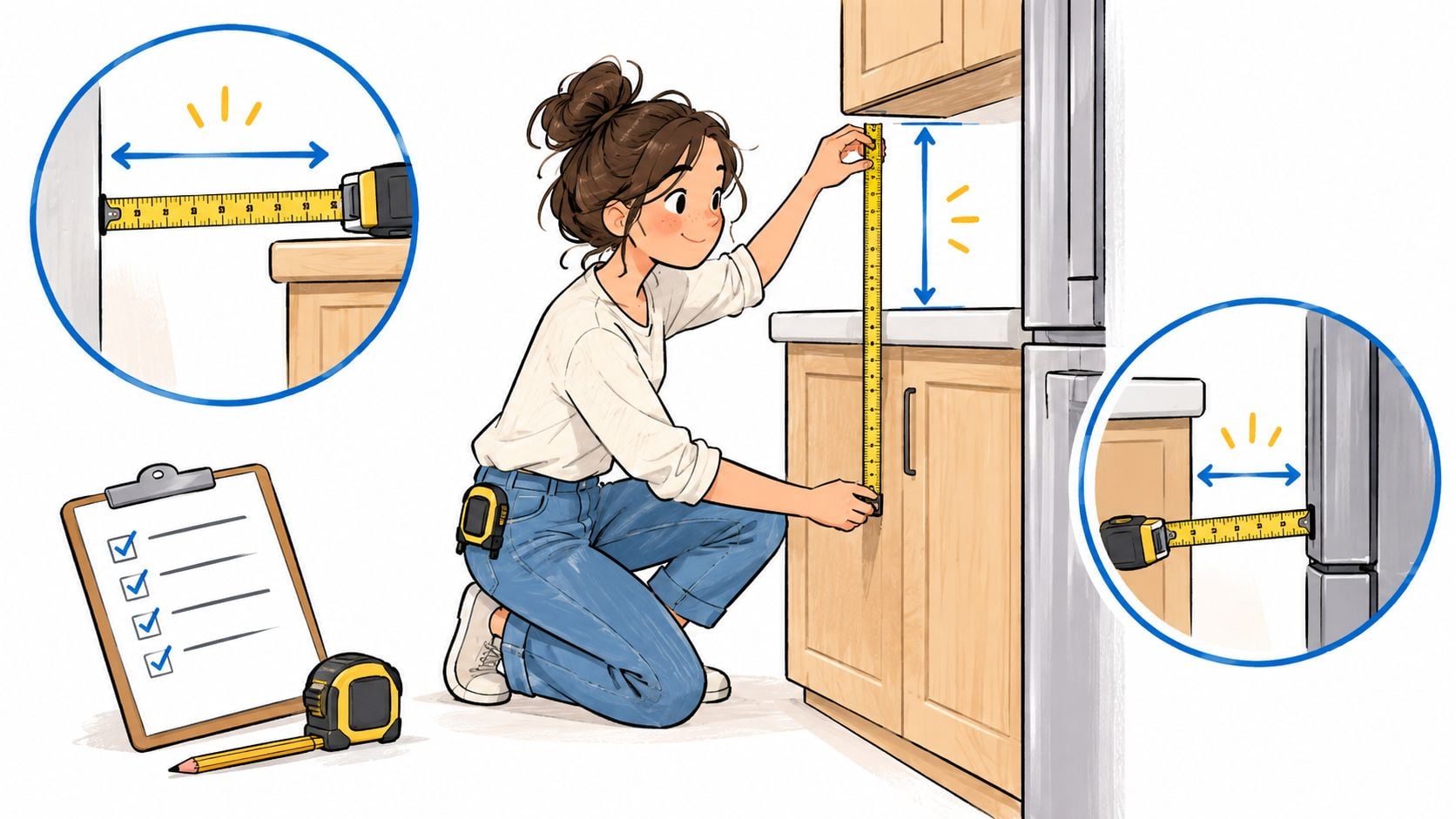
A dining room should be measured before anyone falls in love with a finish. Start with the room's usable floor area, not the wall-to-wall measurement. Account for sideboards, door swings, walkways, and the space needed to pull a chair away from the table.
For a conventional arrangement, plan around a 28–30 inch tabletop height and a 17–19 inch chair seat height, leaving approximately 10–13 inches between the chair seat and the underside of the table. That relationship gives diners room to sit, shift position, cross their legs, and stand without striking the table edge, according to this dining seating height guide.
Measure the finished relationship
The tabletop height alone isn't enough. Turn attention to the underside, where an apron, drawer, stretcher, or structural rail can take away valuable thigh and knee space. A table can meet a nominal height standard and still feel cramped if the chair seat is thick, the apron hangs low, or a pedestal occupies the area where diners naturally place their feet.
Use this simple measuring sequence:
- Mark the table footprint. Use painter's tape on the floor to outline the tabletop, including any extension leaves that may be used regularly.
- Mark chair positions. Place additional tape behind each chair to show how far it needs to move for a person to sit down and stand up.
- Check circulation. Walk around the marked layout while another person pulls out a chair. If the chair blocks a doorway or forces someone to turn sideways, the arrangement needs revision.
- Measure the underside. Record the distance from the floor to the bottom of the apron, rails, or drawers, not just to the tabletop.
- Test the actual chair. Include cushion compression and arm height. A soft seat may settle lower than its uncompressed catalog measurement.
For homeowners comparing four-, six-, or larger-seat arrangements, a dining table size guide offers a useful starting point. Final selection still depends on chair width, leg placement, mobility needs, and how much open floor the room must retain.
The practical recommendation is simple: buy the table and chairs as a matched system whenever possible. A beautiful top won't compensate for restricted knees or a chair that can't tuck beneath it.
Prioritizing Ergonomics for Every Guest
Comfort starts with the people who will use the furniture, not with a style label. A chair designed only around an average user may leave shorter diners without stable foot support, while a deep seat can press behind the knees or force taller guests into an awkward posture.
A practical ergonomic workflow measures the target users before final dimensions are selected. Relevant measurements include popliteal height, the distance from the floor to the underside of the knee, buttock-to-popliteal length, hip breadth, seated shoulder height, and thigh thickness. Research identifies popliteal height as the controlling variable for seat height, buttock-to-popliteal length for seat depth, and hip breadth for seat width in non-adjustable seating, as outlined in this anthropometric furniture study.
Test more than one body type
The shortest regular user deserves attention first when seat height is fixed. A seat that's too high can leave feet dangling, reduce stability, and place pressure beneath the thighs. Seat depth should leave clearance behind the knees, while seat width should accommodate the broadest likely user without crowding adjacent diners.
Before a custom order is finalized, a household should test the complete table-and-chair combination with representative short, medium, and tall users. Each person should check:
- Foot support: Both feet should rest naturally rather than hanging or reaching.
- Knee movement: The underside should allow the knees and thighs to move without striking an apron or drawer.
- Elbow position: The tabletop should support a relaxed working posture rather than forcing the shoulders upward.
- Back contact: The backrest should support the lower and middle back without pushing the body too far forward.
- Cushion behavior: The chair should be tested after compression, not only while standing beside it.
A dining chair's arms deserve special attention. Armrests can make getting up easier and support longer meals, but they may prevent the chair from sliding beneath the table. Pedestal bases can create a similar problem by occupying foot space even when the tabletop seems generous.
Accessibility must be part of the conversation from the beginning. The 2010 ADA Standards specify accessible dining surfaces at 28–34 inches above the finished floor, with a forward-approach clearance zone at least 30 inches wide. Knee clearance extends from 9 to 27 inches above the floor, with required depth tapering from at least 11 inches at the lower portion to 8 inches at the upper portion, according to this accessible furniture clearance guide. Legs, aprons, drawers, and bases all need evaluation because any one of them can obstruct the approach.
A matched dining chair selection guide helps families compare seat height, depth, upholstery, arm design, and table compatibility before ordering.
Choosing Materials and Customization Paths
A dining set can look perfect in a showroom and still frustrate you at home if the table and chairs were chosen separately. Material, construction, upholstery, and base design should work as one system. Amish solid wood furniture suits families who want substantial construction, visible craftsmanship, and a table that can remain part of the home for years. Canadel dining suits households seeking broad control over size, shape, finish, and coordinated seating.
A solid-wood Amish table has a reassuring physical presence. Explore these solid wood dining tables to see the construction firsthand. Their designs can complement traditional, farmhouse, or transitional rooms, while made-to-order construction lets the table respond to the space instead of forcing the room around a fixed product. Wood character and finish also give the dining area a distinct identity.
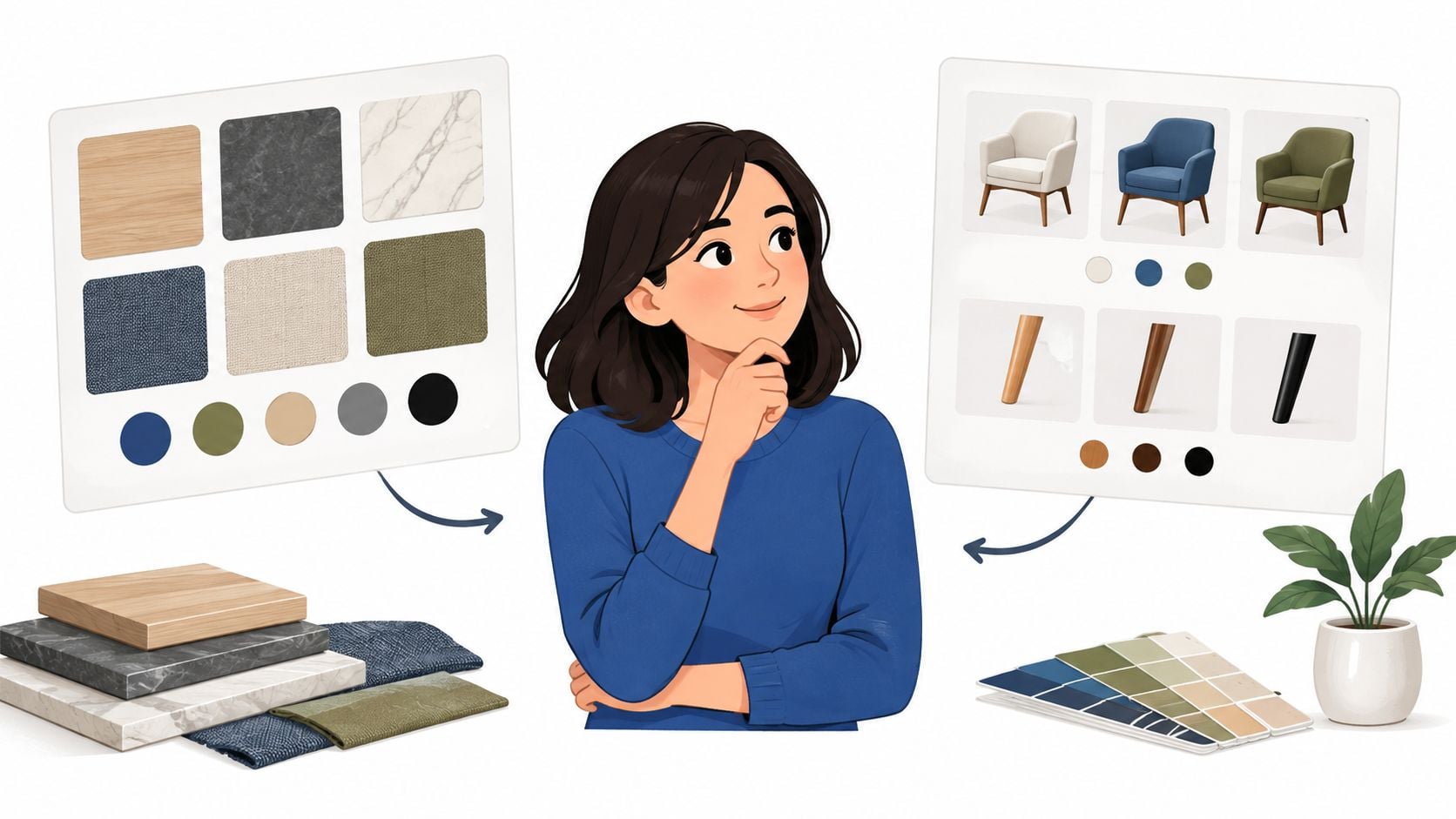
Canadel follows a more configurable path. Its custom dining program offers thousands of combinations of sizes, shapes, and finishes, helping homeowners coordinate the entire set without giving up personal preferences. Choices include the table edge, base style, stain, painted finish, chair upholstery, and the mix of armchairs and side chairs. Confirm that each chair still slides under the table and leaves enough room for comfortable entry and exit.
Match construction to daily life
Custom does not mean ignoring proven proportions. An evaluation of dining furniture proportions identified typical table lengths of 120–140 centimeters, widths of 75–90 centimeters, and heights of 72–75 centimeters. One reference configuration measured 120–140 centimeters long by 80 centimeters wide and accommodated 4–6 people.
Use those dimensions as a starting point, then test the complete arrangement. Check chair-arm clearance, legroom, serving access, mobility needs, and the circulation route around the table. A beautiful base that blocks feet or a thick apron that restricts knees will undermine the set every day.
A family may choose an Amish table for its craftsmanship and repair potential, or a configurable dining set for precise control over design details. Groen's Fine Furniture provides custom dining guidance covering table size, shape, wood, finish, edge, base, and coordinating chairs. Related furnishings can follow the same design language, with durable construction and broad style choices available across the collection.
Choose finishes and fabrics according to daily habits. Performance fabrics can simplify cleanup, while solid wood may develop character over time. Review samples beside the room's lighting, flooring, traffic patterns, pets, children, and expected use before ordering.
Evaluating Long-Term Value and Sustainability
A dining set earns its value over years of use, not on delivery day. The table and chairs should function as one durable system, staying comfortable and useful as children grow, rooms change, and hosting habits shift. A lower-priced set can cost more over time if worn finishes, loose joints, or poor proportions force an early replacement.
Judge the full lifecycle before you order. Ask whether the tabletop can be refinished, whether a damaged chair can be repaired without replacing the set, and whether the finish can handle everyday cleaning. Leaves, replaceable chairs, and adaptable configurations can keep the table useful through changing needs. Shipping distance and end-of-life options belong in the discussion, but durability and repairability deserve priority because furniture that remains in service avoids another purchase.
Recent trend coverage found that 52% of surveyed consumers considered sustainability somewhat or very important, while 64% of those respondents said they would pay more for sustainable products, according to this home decor sustainability coverage. Those findings show growing interest in responsible buying, but no single material makes every dining set the right choice.
Use a lifecycle test
Before ordering, ask these practical questions:
- Expected service: Will the table still suit the household after children grow, rooms change, or entertaining expands?
- Repair access: Can the surface be refinished? Can a loose joint or worn chair be fixed without replacing the complete set?
- Adaptability: Can leaves, alternate chairs, or a different arrangement extend the table's useful life?
- Maintenance reality: Does the finish match the household's willingness to clean, protect, and refresh it?
- Construction transparency: Can the seller explain the materials, joinery, finish, and available care guidance?
Solid-wood Amish furniture can suit buyers who want heirloom construction, while a custom dining program can provide adaptable dimensions and coordinated pieces. The sustainable decision is the one that remains useful and repairable for decades, rather than the newest item with a green label. Explore our guide to sustainable wood furniture for more context on responsibly sourced, repairable choices.
Quality furniture can fit a household budget through Special Financing, subject to credit approval. Financing does not replace careful planning, but it may give a family more buying power when a durable, made-to-order dining set is the sound long-term choice.
Bringing Your Vision to Life in Our Showrooms
A drawing and a fabric sample can only answer part of the question. Comfort becomes clear when a household sits in the actual chair, places a hand beneath the table, shifts position, and tests whether an armchair can slide into place. A showroom visit turns measurements into a decision that the whole family can understand.
Groen's Fine Furniture has showrooms in Dyer and Crown Point, serving surrounding communities including St. John, Schererville, and Munster. The family-owned team can help homeowners compare Canadel custom dining, Amish solid wood, upholstery, finishes, and table bases while keeping the discussion grounded in room size and daily use.
A productive visit should include a few practical checkpoints:
- Bring room measurements: Include doorways, nearby furniture, and the space needed to pull chairs back.
- Describe real routines: Mention children, pets, homework, holiday hosting, mobility needs, and the length of typical meals.
- Test the complete pairing: Sit at the table, check thigh clearance, and try every chair position.
- Review the finish: Consider cleaning, wear, lighting, and how the chosen color will work with existing floors and cabinetry.
- Ask about delivery: White-Glove Delivery can help move the selected pieces from inspiration to installation with less strain on the household.
The same family-centered process can guide other rooms as well. Mattress shoppers can use the Helpful Mattress Guide to connect sleep products with health and rest, including options from Serta and Beautyrest, rather than choosing only by surface feel. Dining shoppers deserve that same attention to how furniture supports everyday life.
A comfortable dining room isn't created by matching labels alone. It comes from proportion, access, construction, finish, and a table-chair relationship that works for the people who sit there. Groen's multigenerational ownership and 5-star service reflect a local approach built around personal guidance, honest pricing, and lasting comfort.
Visit Groen's Fine Furniture in Dyer or Crown Point to test-drive dining chairs, compare custom Canadel and Amish solid-wood options, and discuss White-Glove Delivery. The team can also explain Special Financing, subject to credit approval, so Northwest Indiana families can create a dining space that fits both their home and their budget.