Hybrid Mattress Firm Guide: Choosing the Right Firmness

You roll over at 2 a.m. and the spot under your hip feels like a board. That middle-of-the-night shift is often where a mattress search begins. Two beds can carry the same firm tag and still treat your shoulder differently. One lets it settle; the other pushes back.
A hybrid mattress firm decision depends on how coils and a thicker comfort layer share your weight, your hip shape, and the position you sleep in. Coils act like the sprung frame under a cushion: they carry the load, while the foam layer softens the spots that press hardest. Change the foam thickness or the coil response, and the same "firm" label can feel gentle to a back sleeper and stubborn to a side sleeper.
Groen's Fine Furniture stocks mattresses by size, comfort level, and type, including hybrid models, so you can compare how those layers behave instead of trusting a word on the tag. The useful question is where a bed shares your weight, and whether that match holds through the night.
What a Firm Hybrid Mattress Is and How It Is Built
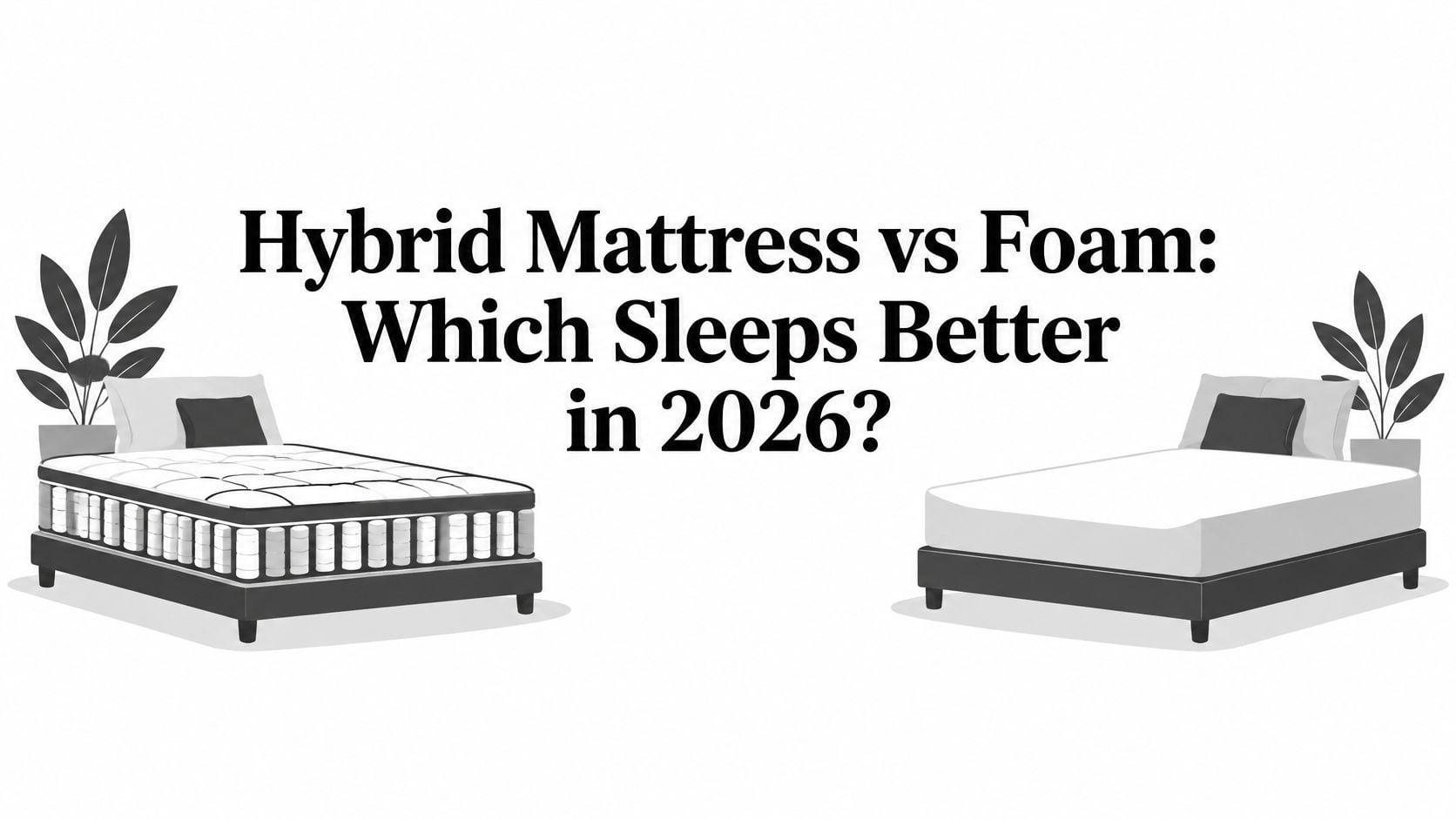
Walk the mattress aisle and two beds can sit side by side with the same quilted cover. Lie down and the difference shows up in seconds. One pushes back almost immediately. The other gives a short cushion, then a steady lift. That second bed is usually a firm hybrid mattress: a coil support core topped with a thicker comfort layer of memory foam or latex, much like a cushioned pad laid over a sprung frame.
The layers split the work. Pocketed coils supply resilience, edge support, airflow, and easier repositioning, because each spring moves on its own. Memory foam or latex takes peak pressure off the shoulders and hips and contours to the body. The Sleep Foundation draws a practical line. A traditional innerspring comfort layer is roughly 2 inches or less, while thicker foam comfort layers generally mark a hybrid. Innerspring designs trace to the 1870s, and memory foam came out of NASA work in the 1960s before it reached homes, so a hybrid bridges those two builds rather than inventing a new one.
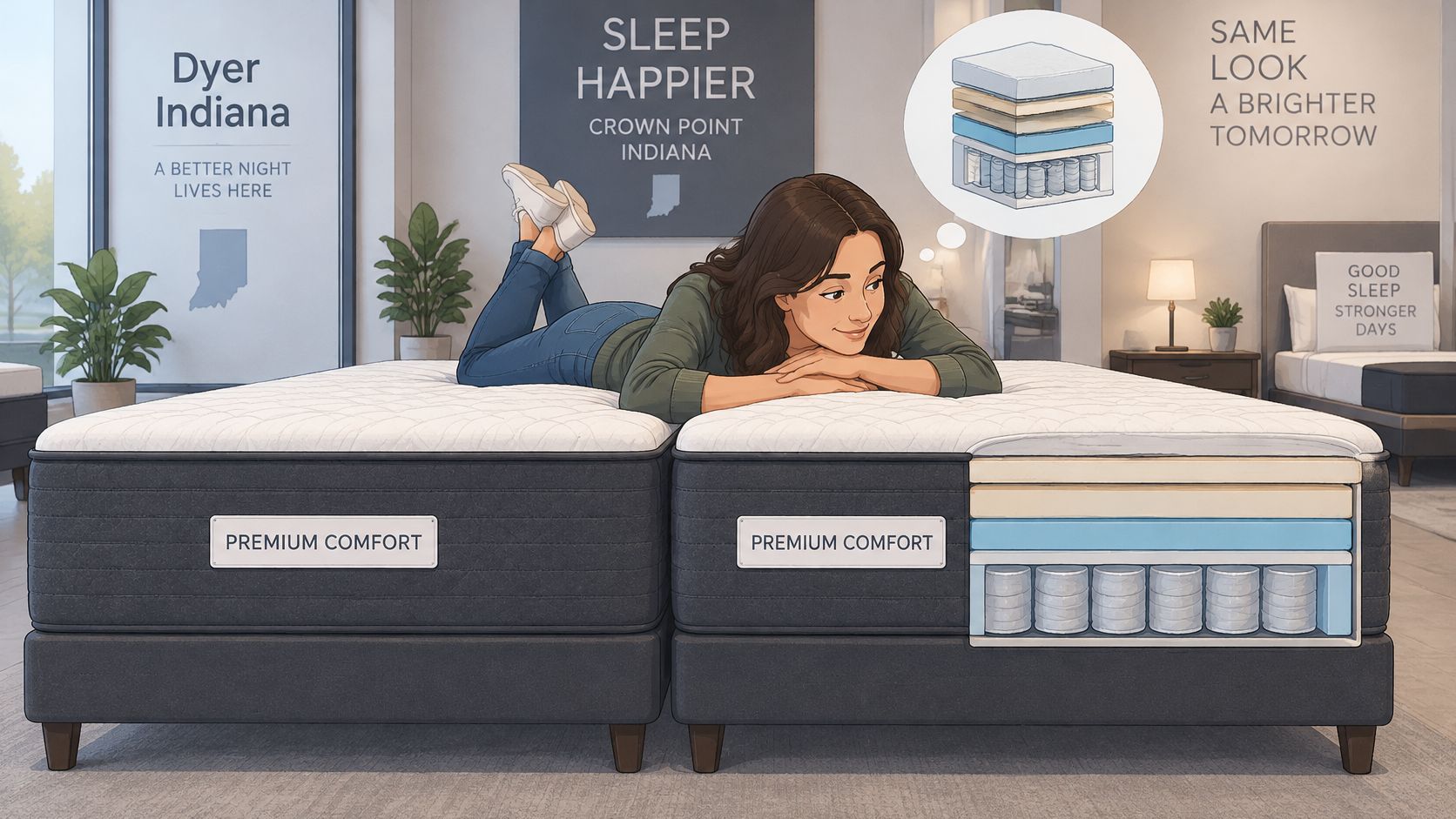
On the floor, familiar lines from Serta and Beautyrest make the category easy to spot. For a closer look at how the layers stack, the hybrid mattress overview walks through the construction in plain terms.
What the spec sheet should tell you
Three checks keep a firmness word honest.
- Comfort-layer thickness: Foam thicker than about 2 inches usually means hybrid, not a thin-topped innerspring.
- Coil type: Individually pocketed coils isolate motion and hold the perimeter better than one tied coil unit.
- What firm describes: The word should cover the whole system, coils plus comfort layer, not only the top foam.
A firm label on a thick foam hybrid can still feel softer under the shoulder than a thin-topped innerspring wearing the same word.
Firmness Scale From Extra Firm to Ultra Plush
Tags run from Extra Firm through Ultra Plush. Read the row for feel first, then for the trade-off, before you treat any label as the healthy choice.
| Comfort Level | What You Feel | Support and Pressure Trade-off |
|---|---|---|
| Extra Firm | Little give; the surface feels almost flat | Maximum support; can raise shoulder and hip pressure for lighter sleepers |
| Firm | Firm with slight surface give | Strong support for heavier sleepers; can feel harsh to side sleepers |
| Medium Firm | Balanced give that both supports and cushions | Settles the hips without pressing the shoulders; the usual first stop when testing |
| Medium | Moderate contour with a settled feel | Versatile middle ground for couples with mixed body weights |
| Plush | Deeper cushioning and visible body contour | Pressure relief for lighter side sleepers; watch for hip sink |
| Ultra Plush | Deepest contour and softest surface | Greatest pressure relief; higher risk of pelvic sink for stomach sleepers |
A systematic review of controlled mattress trials published since 2000 found that mattresses rated medium-firm, along with custom-inflated beds the sleeper adjusted, were the most favorable for sleep comfort, sleep quality, and spinal alignment. On a showroom floor, that makes Medium Firm the sensible place to begin, with one step firmer and one step softer as the next two stops.
The far ends of the scale are easiest to judge. Extra Firm limits how far the hips and shoulders can settle into the surface, while Ultra Plush lets them settle the furthest. That deep contour feels restful to one sleeper and confining to another, which is the whole reason the middle rows exist.
How coil gauge and foam density change the feel
Firmness describes how the whole stack behaves under your body. A thinner, stiffer coil wire pushes back quickly, so the mattress feels hard within the first inch of compression. A denser foam comfort layer resists squashing for longer before it bottoms out, which reads as support under the hip and as pressure at the shoulder once the foam has no give left. Change either one and the same word on the law label describes a different bed. Two "firm" models on neighboring bases can disagree with your shoulder for exactly that reason.
Ask the same three questions of any row.
- Does the hip sink? If the pelvis drops below the rib cage, the stack is too soft for that body, even when the tag says firm.
- Do the shoulders or hips feel pressed? A hard push at bony points means the comfort layer lacks thickness or resilience for that position.
- Does the edge hold when you sit? A collapsing perimeter makes getting in and out harder and shrinks the usable sleep surface.
Durability comes from coil count, foam density and the quality of the build, and a firm tag by itself promises none of those. The right level is the one that keeps the spine aligned and the pressure points calm. Start at Medium Firm, then step one level firmer or softer and lie still long enough to feel the difference.
Matching Firmness to Your Body and Sleep Position
Body geometry changes the load that travels through foam and coils. A heavier sleeper compresses the same stack farther than a lighter one, so the same firm hybrid can align one person and bruise the other.
In a controlled study of 59 healthy participants, people lay on visually identical mattresses with soft, medium, or firm spring units under the same gel-foam comfort layer. Participants with higher body weight tended toward more neutral spinal alignment on firmer spring systems. Lower-weight participants often aligned better on softer systems. People with a larger hip circumference showed greater spinal deviation on softer mattresses. Greater mass, or a deeper hip, can exceed a soft stack and drop the pelvis. A lighter sleeper may not compress a firm build enough to get pressure relief.
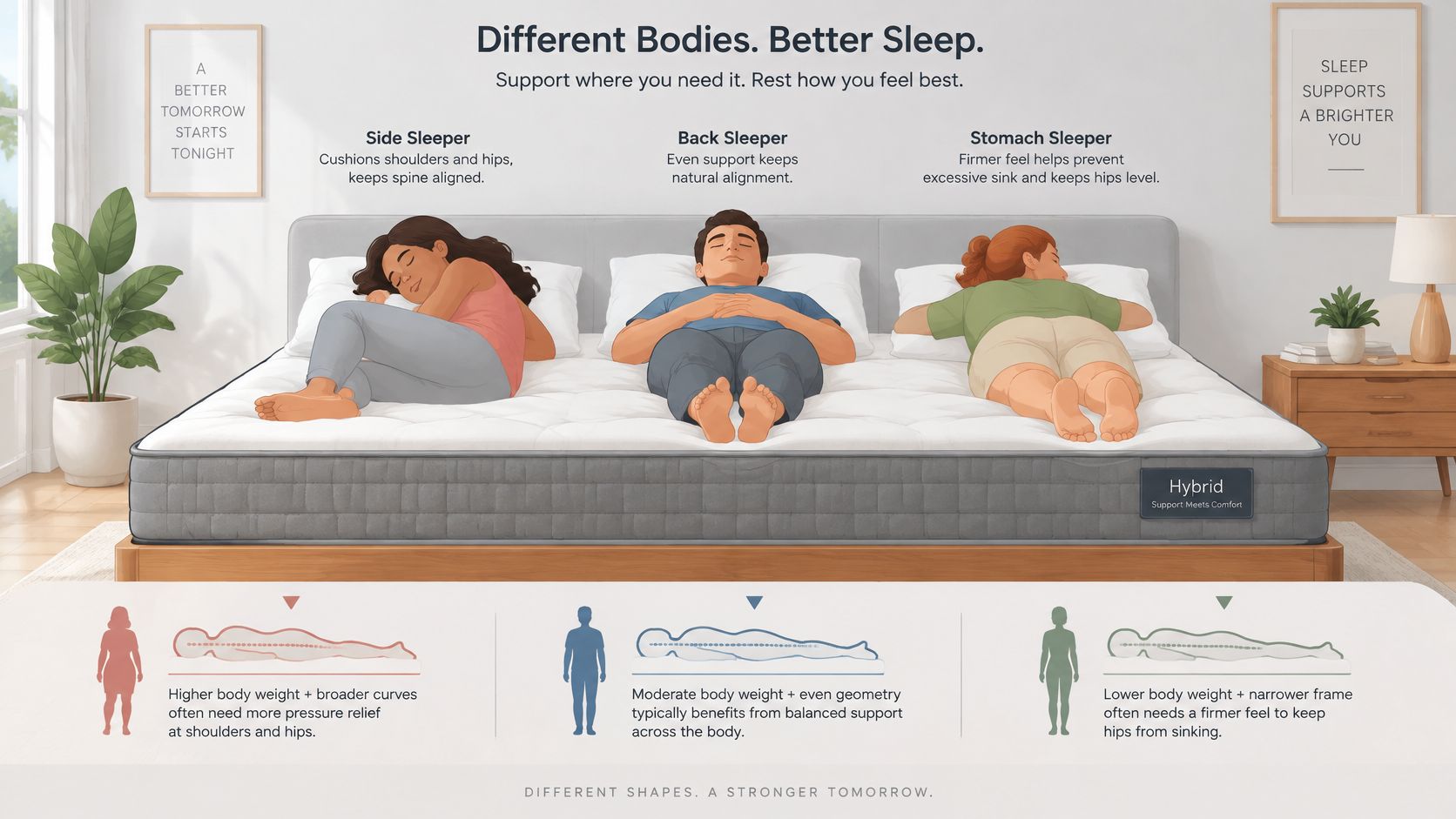
The Sleep Foundation's firm-mattress guidance lines up with that pattern. Firm builds tend to suit heavier side sleepers and back or stomach sleepers. Lighter sleepers, and many side sleepers, can meet too much shoulder and hip pressure on a firm surface. For them, Medium or Plush is often the kinder starting point.
Position changes the job
- Side sleeper: Shoulders and hips need give. A lighter side sleeper should feel cushion, not a hard stop. A heavier side sleeper still needs shoulder give, but the hip shouldn't crater.
- Back sleeper: The spine should stay neutral, with a small, even contact under the lower back rather than a hammock or a gap you could slide a fist through.
- Stomach sleeper: A firmer surface keeps the pelvis from dropping and arching the low back.
- Combination sleeper: A medium feel usually covers the turns without locking you into one pose.
Say one partner is a heavier back sleeper and the other is a lighter side sleeper. The firmer hybrid can feel supportive to the first and sore to the second. That's a fit problem, not a willpower problem. Our side-sleeper hybrid notes spell out the shoulder and hip checks in more detail. If you're still sorting which pose you hold, choosing how to sleep comfortably is a clear outside walkthrough of position and alignment.
| Sleeper Type | Suggested Firmness | What to Check |
|---|---|---|
| Side sleeper, lighter build | Medium to Plush | Shoulder and hip pressure |
| Side sleeper, heavier build | Medium Firm to Firm | Hip sink and shoulder give |
| Back sleeper | Medium Firm | Neutral spinal support |
| Stomach sleeper | Medium Firm to Firm | Pelvis stays level, no sinking |
| Combination sleeper | Medium | Balanced give across positions |
| Broad hips, any position | Medium Firm, firmer side of range | Pelvis doesn't sink below the rib cage |
Before you shop, note four things. Your body weight. Your usual position. Where you feel pressure after an hour in bed. How your partner's weight and position differ from yours. Zoning, coil gauge, foam density, and comfort-layer thickness can still change the outcome on two beds that share a firmness word.
Hybrid Benefits and What It Cannot Fix
| Mattress Type | Support | Pressure Relief | Airflow and Temperature |
|---|---|---|---|
| Innerspring | Strong, springy core | Limited at shoulders and hips | Good airflow through the coil unit |
| Memory foam | Contours closely to the body | Strong pressure relief | Can trap heat unless gel or open-cell foam is used |
| Latex | Responsive and buoyant | Good pressure distribution | Naturally breathable |
| Firm hybrid | Coil core with a firm foam or latex layer | Layered relief at shoulders and hips | Coils add airflow; foam density affects heat |
A firm hybrid pairs an innerspring core with a thinner, denser comfort layer. The coils circulate air and return shape quickly when you shift, while the top layer spreads weight around shoulders and hips. That construction changes how the surface responds under heavier hips or broad shoulders, which is why two beds labeled firm can still feel different.
Subjective comfort ratings describe how pleasant a bed feels in the moment. Tracked sleep outcomes measure minutes asleep, minutes in REM, and nighttime waking. A 10-week field study in the journal Sleep followed 39 healthy adults, 81% of them women, ages 25 to 67. After two weeks of adjustment and four weeks on one hybrid at home, researchers tracked more than 1,400 nights. Versus their original mattresses, participants spent 10 additional minutes in bed and gained 14 additional minutes of total sleep per night. REM rose by about 6 minutes. They also rated the hybrid as cooler and more comfortable. Those gains come from 39 people sleeping on one hybrid model, so they describe that group and that bed, not every firm hybrid on the floor.
A separate 10-week field study of adults who slept hot or woke at night found better ratings for coolness, comfort, support, and morning rest. Objective measures did not show a significant change in sleep duration or disruption. Room temperature, bedding, and foam density still shape heat buildup. A hybrid also does not treat insomnia, sleep apnea, or chronic pain. If waking happens most nights, or pain keeps cutting sleep short, talk with a clinician. For persistent insomnia, medication management for insomnia belongs with a care team, not a mattress tag. Keep a two-week log of bedtime, wake-ups, and morning rest so any new bed is judged against a real baseline.
Test Firmness in Our Showroom Before You Buy
A mattress tag gives you a word. Your shoulder and hip give you the rest. A lighter side sleeper and a heavier back sleeper can lie on the same firm hybrid and feel two different beds. Body weight, hip shape, and sleep position change how far you sink. Give the bed a few minutes in your real sleep position, after a long day, and let your body report back.
- Dress for sleep, and bring your pillow. Street clothes and a showroom pillow change shoulder height and how warm you feel. If you can, bring the pillow you use at home.
- Hold each position. Lie on your usual side for five minutes, then your back, then your stomach. The first 30 seconds mostly tell you about the cover. The next few minutes tell you about support.
- Slide a hand under the low back or waist. A large gap means the surface is too firm for that pose. No gap at all, with the pelvis dropped, means it is too soft.
- Use the hip-line check from above. Judge alignment the same way you did earlier.
- Ask to see the build. Have the team show comfort-layer thickness and the coil system on each model you like, along with the firmness label.
- Compare neighbors. Try two adjacent firmness levels on the same base before you decide. At Groen's Fine Furniture, comfort levels run Extra Firm, Firm, Medium, Plush, and Ultra Plush, and beds can be shopped by size, comfort, and type, including gel, memory foam, innerspring, and memory foam pillow top.
Five quiet minutes in your real sleep position tell you more than a bounce test at the foot of the bed.
Customers can call or text the furniture and mattress experts while they compare. Our mattress shopping tips cover what to bring and what to ask before you leave the house.
Visit our Dyer and Crown Point showrooms and test the feel yourself. We will help you leave with a firmness that matches your body on the bed and the support you feel under your shoulder and hip.
Custom Options and Special Financing
A firm hybrid sets the feel of the room, and the pieces around it can be ordered to match. Beds, nightstands, and storage can be made to order in the wood and finish you want, so the mattress you tested in the showroom has a frame and a footprint built around it. Solid wood Amish-built pieces sit alongside lines from Flexsteel, Bassett, Vaughan Bassett, and Serta, which means you can stop at a simple bed frame or carry the same finish through a full bedroom set. Select solid wood beds are made in the USA.
Frame height and support change how a firm hybrid feels. A low platform puts you closer to the floor when getting in and out, which matters when a thick hybrid already sits high. Slats need to be close enough together to keep the base flat. A foundation that flexes or sags lets a firm surface lose the support it was built to give, and the mattress gets blamed for a problem underneath it. An adjustable base changes the geometry again, raising the head and feet independently. The Beautyrest Advanced Motion Base adds whisper-quiet massage settings and USB ports for charging a phone overnight.
Size is part of the same decision. Split King, Split Queen, and Split California King let two sleepers share one mattress and still set separate positions on an adjustable base.
Financing fits in here too. Our mattress financing options page covers plans available subject to credit approval, and current promotions include up to $900 off select adjustable sets. Ask the team which offer applies to the bed and base you picked so the total is clear before you commit.
- Choose the frame or adjustable base that supports the mattress you tested, not one that softens it.
- Pick the size, including split options if two sleepers want separate positions.
- Price the mattress, base, and delivery together so nothing arrives that you did not plan for.
Delivery is available as a premium delivery service. Ask the team what it covers for your address and staircase, then let us help you match the bed, the base, and the budget in one visit.
Care Routine That Keeps Coils and Foam Supportive
Coils and foam don't wear the same way. Foam compresses where you lie. Coils fatigue where that load repeats. A simple routine spreads the wear and keeps moisture out of the spring unit.
| Task | How Often | Why It Matters |
|---|---|---|
| Rotate head to foot | Every 3 to 6 months | Spreads wear across coils and foam; skip if the maker marks it one-sided |
| Vacuum the surface | Every 2 to 3 months | Removes dust and debris from the cover and top layer |
| Spot clean stains | Within 24 hours | Stops moisture reaching the coil unit; use mild soap and a damp cloth |
| Use a breathable protector | Always | Guards against spills and allergens without trapping heat |
| Check for sag | Once a year | Dips near the hips signal comfort-layer compression; dips in the coils need a store visit |
| Review fit against your needs | Once a year | Confirms the firmness still supports your spine and pressure points |
Why these tasks, in this order
Rotation moves the heaviest zones off the same coils. Some hybrids are one-sided, so read the label before you flip anything. Head-to-foot is enough when the maker says not to turn it over.
Moisture is the quiet problem. Water that reaches the coil unit can rust springs and leave an odor. Spot-clean within a day, with mild soap and a barely damp cloth, then let the spot air dry. Skip soaking the cover.
A breathable protector blocks spills and dust mites without sealing heat against the foam. A waterproof shell that doesn't breathe can undo the airflow the coils were meant to give you.
The yearly sag check
Photograph the bare surface when the bed is new, from the foot and from the side. Once a year, compare. Dips near the hips usually mean the comfort layer has compressed. Rotation often eases a foam-only impression. A dip you can feel down into the coil unit is a different problem. Bring that photo to the Dyer or Crown Point showroom and let the team look with you. Our mattress care and cleaning guide lists safe cleaners and what to skip.
Also note whether your weight, position, or pain has changed. A firmness that fit five years ago may not match the body on the bed now.
Groen's Fine Furniture in Dyer and Crown Point helps Northwest Indiana families match a firm hybrid to body weight, hip shape, and sleep position, then build the rest of the room around it. Custom solid wood, white-glove delivery, and special financing, subject to credit approval, are part of that same visit. Come lie down on the firmness you're considering, and let Groen's Fine Furniture help you create a home you love.