Hybrid Mattress vs Foam: Which Sleeps Better in 2026?

It's 6:40 a.m. in a Dyer bedroom, and the same mattress is failing two people in two different ways. One partner rolls out stiff through the low back. The other spent the night shoving the covers off because the surface held heat. Both are about to ask the same question neighbors in Crown Point, St. John, Schererville, and Munster ask every week: in a hybrid mattress vs foam matchup, which one sleeps better?
The honest answer is that the label predicts less than the people in the bed. Body weight, usual sleep position, a partner's habits, and how warm you sleep decide more than the word on the hangtag. A helpful mattress guide starts there, with rest and how you feel at 7 a.m., not with a category that is supposed to win for every sleeper in Northwest Indiana.
What Really Separates a Hybrid From an All-Foam Mattress
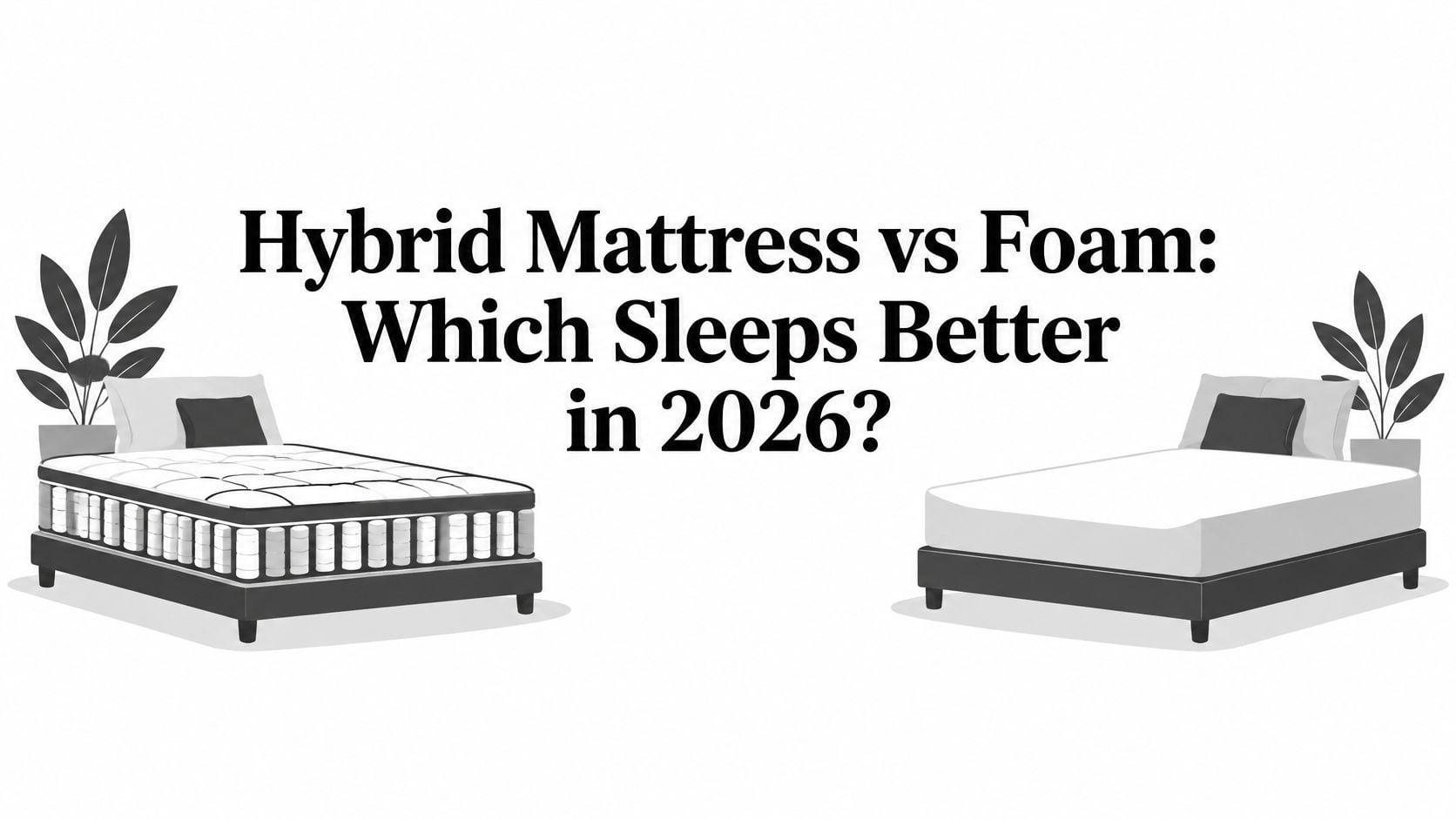
An all-foam mattress runs foam from the sleep surface down to the base, usually polyurethane, memory foam, or a gel memory foam blend. A hybrid places a comfort stack of foam, latex, or microcoils over a steel innerspring core, most often individually pocketed coils. Foam hugs the body and soaks up movement. Coils add bounce, a firmer edge, and open air space inside the core.
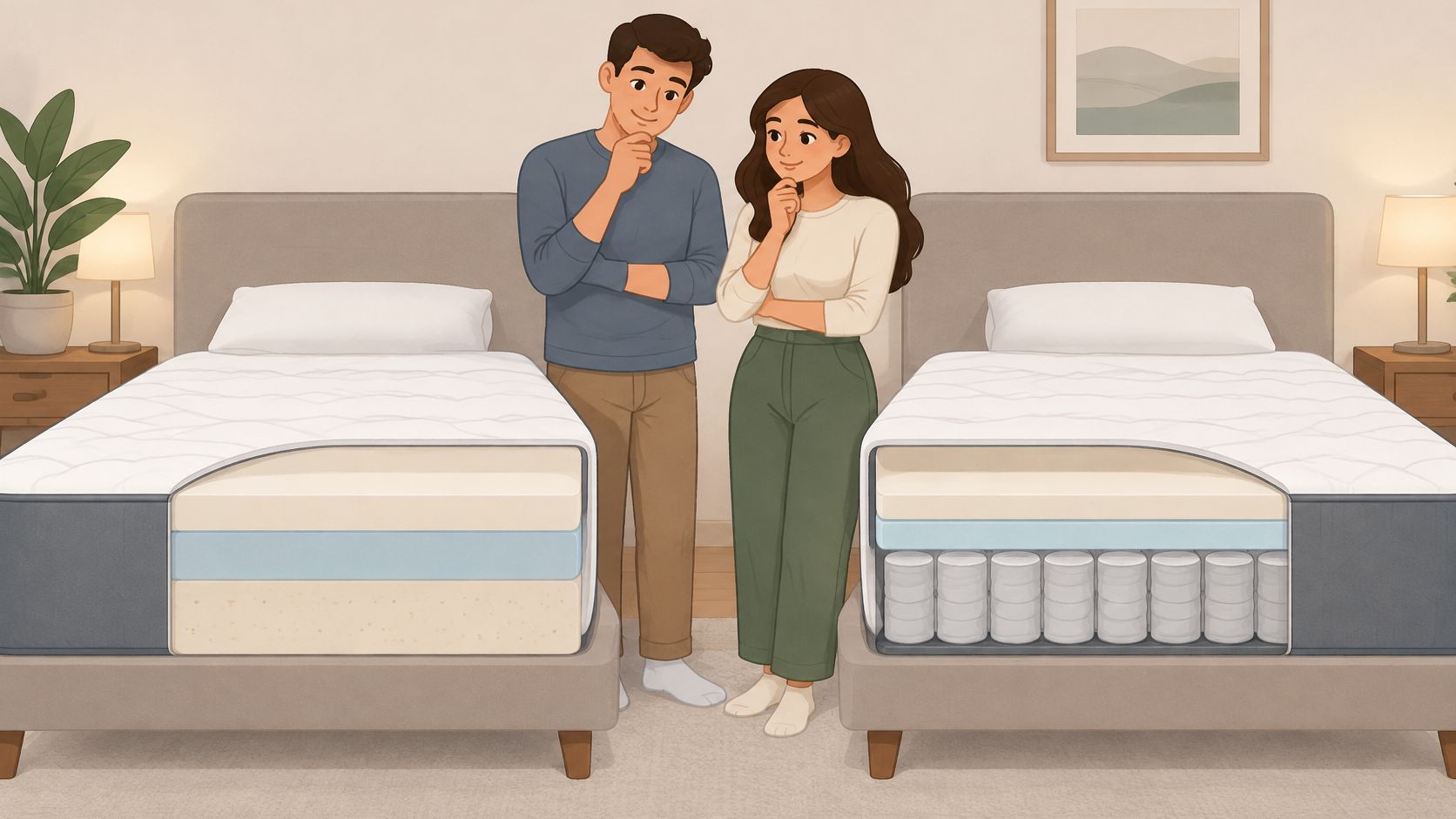
One label rarely wins for everyone in the same bed. Weight, sleep position, partner movement, and heat tolerance shape comfort more than the category name. A side sleeper who needs pressure relief and a back sleeper who needs lift can feel the same model in opposite ways.
Judge each bed on five checks:
- Support: Does it hold waist and hips in line?
- Durability: Which comfort layers will soften first?
- Temperature: Does it stay comfortable after hours of sleep?
- Motion isolation: Does turning or getting up travel across the bed?
- Price: What does that build cost over the years you will use it?
Groen's carries Beautyrest and Serta, plus Flexsteel, Bassett, Vaughan Bassett, and Amish solid wood. Call or text the furniture and mattress experts to check which hybrid and foam builds are on the floor in Dyer or Crown Point, then compare them in person. Bring three facts with you. Your body weight. Your usual sleep position. What your partner needs that you do not.
Hybrid and Foam Mattresses Compared Side by Side
| Feature | Hybrid | All-Foam |
|---|---|---|
| Support core | Steel or pocketed coil system under a foam or latex comfort layer | Solid polyfoam or memory foam base and comfort layers |
| Feel and bounce | Springy, with easy movement on and off the surface | Contouring hug with slower response |
| Edge support | Stronger perimeter from coils, less roll-off | Softer edges, sinks more when sitting on the side |
| Motion isolation | Good, but coils transmit more movement between partners | Excellent, foam absorbs movement well |
| Temperature | Better airflow through the coil core | Dense foam can trap heat unless it is ventilated or thin |
| Repositioning | Easier to shift and turn during the night | Harder to turn, more sink where you lie |
Read the row that matches the complaint, not the whole chart as a scorecard. A light sleeper next to a restless partner should weigh motion isolation first. A heavier sleeper who ends up on the edge should weigh edge support. Someone who wakes hot should weigh temperature even if the hug of foam feels wonderful for the first ten minutes.
Labels blur once you look at the build. A hybrid with a thick, slow foam top over coils can feel close to an all-foam bed. A dense all-foam mattress can sleep warmer than a hybrid with a thinner, more open comfort layer. On the floor, hybrids and foam models show up as Euro top, gel memory foam, hybrid, innerspring, memory foam, and pillow top, in comfort levels from Extra Firm to Ultra Plush, so construction and feel matter more than a single product line.
Practical rule: Mark the two or three rows that match this bedroom, then ignore the rest until those are satisfied.
How the core carries weight is the main split. All-foam designs rely on polyurethane or memory-foam layers, while hybrids combine foam comfort layers with a steel-coil support core, and the Sleep Foundation's guidance on mattresses that resist sag puts service life in that same frame: lower-quality all-foam can begin breaking down after about 2 to 3 years, while better-quality foam may stay serviceable about 7 to 8 years. Low-quality hybrids may last roughly 5 to 6 years, and stronger builds about 8 to 10 years. The same guidance notes that a 2025 lab comparison of polyurethane foams at 18 kg/m³ and 32 kg/m³ tied density and cell structure to firmness, compression resistance, and moisture transport. A hybrid is not automatically the longer-lasting bed.
The same “measure actual use, not the category” habit helps in other rooms. When a patio has to seat everyone without crowding, it pays to choose the right outdoor table size before you fall for a finish. Mark your rows, then move on.
How Support, Sleep Position and Body Type Decide Your Choice
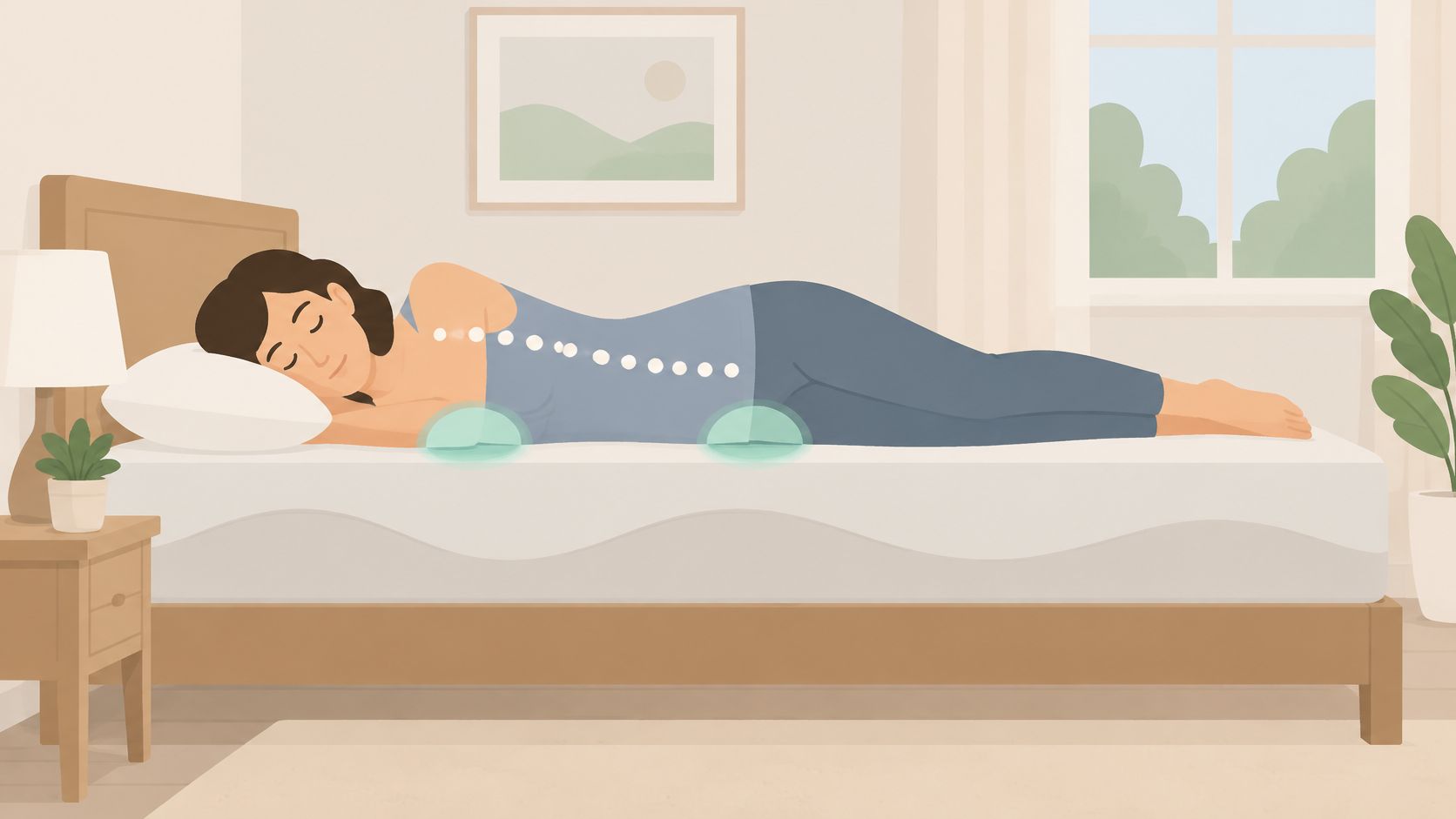
Effective firmness and zoning beat the hybrid or foam label. A peer-reviewed experimental study of side-sleep spinal alignment found a highly significant difference between soft and firm surfaces at p = 0.001, and its model of polyurethane foam and spiral springs showed that too much softness lets the pelvis drop and pulls the spine out of line in the frontal plane, as described in this biomedical engineering study of mattress surfaces.
A recent orthopedic literature review reached the same practical point from the clinic side: outcomes depend on material density, surface design, body weight, sleeping posture, and preference, and no material is superior for every sleeper. That review, published through the Journal of Orthopaedics and Traumatology, tied medium-firm support to better pressure distribution, improved sleep quality, less morning stiffness, and lower low-back-pain intensity. Foam and latex can spread pressure. Springs can make it easier to roll. For a plain walk-through of firmness names, the guide to choosing mattress firmness is a useful companion, and common myths about rest are laid out by the Pain and Sleep Therapy Center on sleep.
Side sleepers
Shoulders and hips need a pocket. The waist should not hang in a gap, and the pelvis should not dive. A lighter side sleeper often does well on all-foam or a softer hybrid because the comfort layers ease pressure without much body mass to overpower them. If the shoulder feels jammed and the low back aches by morning, the surface is too hard. If the hip sinks and the waist floats, it is too soft, coils or not.
Back and stomach sleepers
Back sleepers usually want a steady lumbar shelf, and medium-firm is the sensible first try. Stomach sleepers sink at the belly on a plush bed, which twists the neck and low back, so a firmer surface is the safer start. Harmony Lux Carbon models are offered in Extra Firm, Medium Pillow Top, and Plush, and Harmony Lux Diamond models in Medium and Ultra Plush Pillow Top, which is enough range to test the same family at two feels instead of guessing from a tag.
Heavier sleepers, hot sleepers, and couples
Coils earn their place when weight and the edge of the bed are the issue. Hybrid coils contribute to edge support and are commonly useful for sleepers weighing more than 230 pounds, according to the Sleep Foundation's mattress shopping guidance. The foam above those coils still cushions shoulders and hips. Hot sleepers should look at hybrids topped with latex, microcoils, or a latex-like polyfoam rather than a thick conventional memory foam cap.
Partners rarely match. A plush all-foam surface can relieve a lighter side sleeper and let a heavier partner sink too far. A firmer hybrid can add mobility and a stronger perimeter while feeling thin at the shoulders. Split firmness, or an adjustable base, is often the kinder answer than forcing one category on both people. The Beautyrest Advanced Motion Base adds whisper-quiet massage and USB ports, so each side can change angle without a second argument about pillows.
A medium-firm surface is a starting point, not a prescription. The same firmness number feels different at 140 pounds and at 240.
Older adults often notice the bounce first. Getting out of bed is easier when the core pushes back instead of holding the hips in a deep cradle.
Lie in your real position for ten minutes. Slide a hand under the waist and under the hip. A gap at the waist means too firm or poorly zoned. A deep hollow at the hip, with the spine twisted, means too soft for that body. Then switch places with your partner and do it again.
Durability and Expected Lifespan by Quality Tier
A 140 pound side sleeper and a 240 pound couple sharing one bed will wear the same model on different schedules. Build quality sets the ceiling, use sets the pace. That is why the label on the corner predicts less than weight, position, partner movement and heat tolerance.
| Mattress Type | Quality Tier | Typical Service Life | What Wears First |
|---|---|---|---|
| All-foam | Lower quality | 2-3 years | Foam comfort layers begin to break down |
| All-foam | Higher quality, higher density | 7-8 years | Comfort foam softens gradually |
| Hybrid | Lower quality | 5-6 years | Upper foam comfort layers lose resilience |
| Hybrid | Stronger coil and foam build | 8-10 years | Upper foam comfort layers, not always the coils |
Typical ranges shown. Stronger comfort materials and stronger support cores last longer in either category.
The coil unit is seldom the first part to quit. Upper foam loses resilience while springs still feel lively. A premium, high-density all-foam bed can therefore outlast a thinly built hybrid, and a strong hybrid can outlast a budget foam bed. Warranty length alone does not sort them. A long warranty with a strict sag rule can still leave you sleeping in a soft spot that does not qualify for replacement.
What a roller test measures
Choice runs a heavy, human-sized barrel roller for roughly 30,000 passes, meant to stand in for about 8 to 10 years of use, according to Choice's foam-versus-spring comparison, then checks height, firmness, sagging, damage, and whether the aged surface still supports a body. That comparison is clear that both foam and spring categories include strong and weak performers. In the set discussed, fewer foam models showed notable sagging, which still does not mean every all-foam mattress outlasts every hybrid.
Firmer structures generally show body impressions more slowly because each night compresses them less. A thicker, higher-density comfort system resists early softening better than a plush cap of light foam over coils or over a cheap base. Foundation matters too. I recommend checking the base before blaming the mattress, because a tired base can make a sound mattress look like it failed.
Shorter life. Lower quality foam softens fast at the shoulders and hips.
Longer life. Higher density foam and a stronger coil unit hold shape through more seasons of nightly compression.
If the bed already has a valley, timing is practical. Read the guidance on how often to replace a mattress to separate normal softening from a bed that is done.
Details worth asking for
Bring a short list into the showroom and write the answers next to the model name.
- Foam density and comfort-layer thickness: Ask what sits in the top few inches, not only the total height.
- Coil gauge or coil count: Use these only when the maker discloses them, and pair them with edge reinforcement.
- Loss-of-height rule: Ask what indentation the warranty treats as a defect.
- Cover and quilting: A thick pillow top can feel luxurious and still be the first layer to pack down.
Rotate when the maker allows it. Use a protector. Spills soak into the same comfort foam that usually softens first, so keeping that layer dry and clean protects the part most likely to age early.
Temperature Control and Cooling Claims Explained
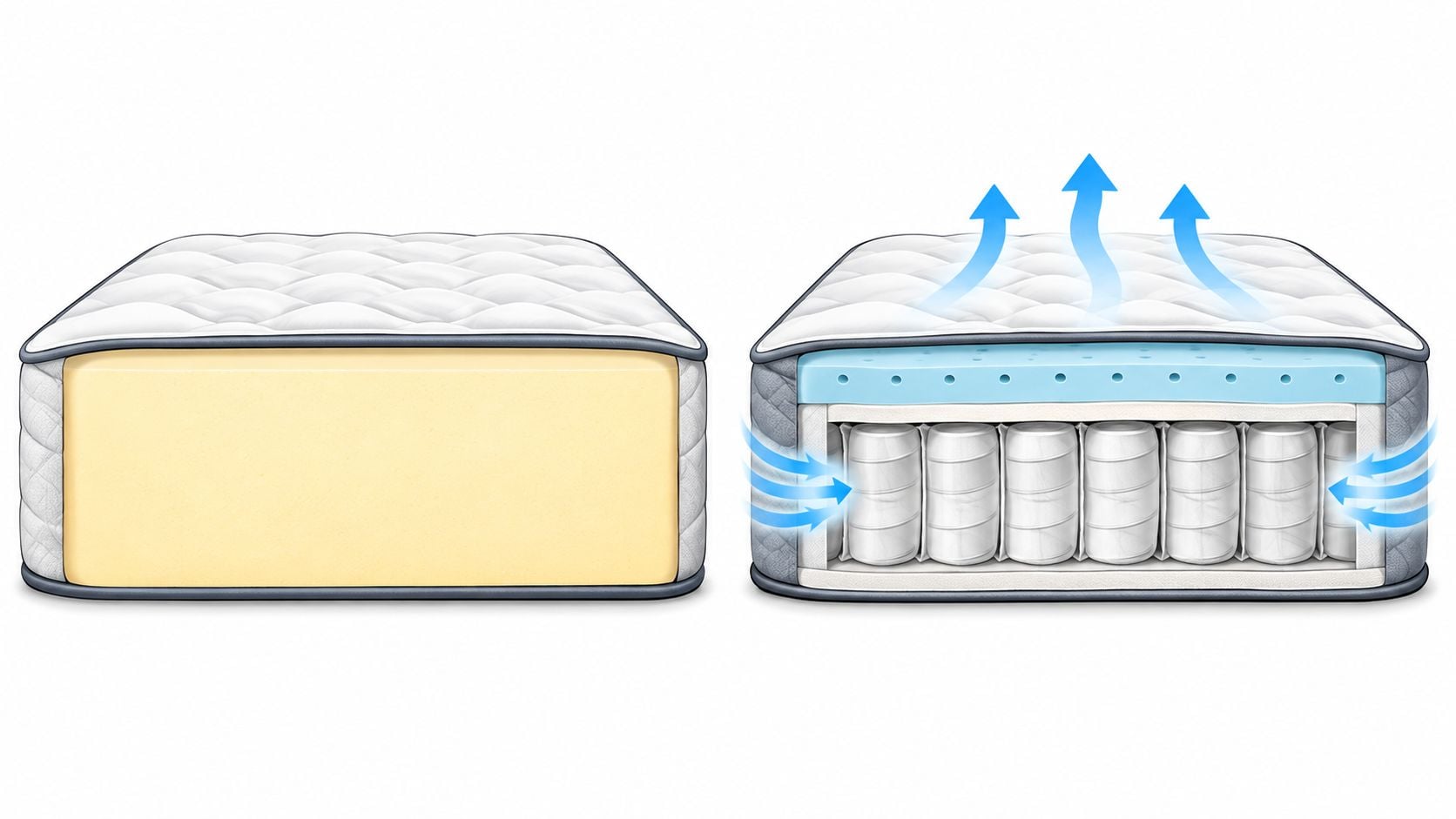
Heat is where marketing gets ahead of the build. Memory foam's dense structure can hold body heat. Open space around a hybrid's coils lets more air move through the support core. The Sleep Foundation's overview of mattress types reports that hybrids generally regulate temperature well because coils hold little heat, and that shoppers who want a cooler sleep usually favor latex, microcoils, or latex-like polyfoams instead of a thick conventional memory foam top.
What changed body temperature in the lab
A 2021 peer-reviewed comparison put a conventional low-thermal-capacity mattress made entirely of foam against a high-thermal-capacity design that used foam layers covered by a more conductive polyurethane. The higher-capacity design produced significant drops in core body temperature, back skin temperature, and mattress-surface temperature, and it increased N3, or deep, sleep. Related findings in that thermal-capacity sleep study linked a change of only 0.4°C with fewer nighttime awakenings and better subjective sleep quality.
That result does not crown every hybrid. Coil spacing, foam thickness, cover fabric, and airflow paths differ from model to model. A thick memory-foam comfort system on top of coils can still store heat. An all-foam bed with a thinner, open-cell comfort layer can be the better trade when pressure relief matters more than running cool. For sleepers who already know they overheat, the notes on the best mattress for hot sleepers keep the focus on build rather than a seasonal slogan.
What a cool cover does not fix
Gel, copper, graphite, and phase-change covers can change the first touch. They do not cancel bedroom temperature, heavy bedding, body mass, or a dense foam slab under the ticking. Northwest Indiana summers make that obvious: a cool first impression in an air-conditioned showroom can fade once two people and a duvet share the bed for hours.
Judge the bed after the surface has had time to warm, not during the first cool minute.
Lie in your normal position for twenty to thirty minutes. Notice heat at the low back and under the shoulders, air at the edge of the mattress, and whether turning wakes the person beside you. If heat builds and you cannot shift without a fight, a coil core with a thinner breathable top is the more honest match. If you stay comfortable and the pressure relief is the reason you sleep, foam can still be the right call.
Price Ranges and What Your Money Buys
| Mattress Type | Quality Tier | Main Cost Driver |
|---|---|---|
| All-foam | Entry level | Lower foam density and thinner layers |
| All-foam | Premium, high density | High-density foam and layer thickness |
| Hybrid | Entry level | Coil count and basic comfort layers |
| Hybrid | Premium | Coil design, comfort layers and edge reinforcement |
These drivers explain typical queen pricing in the market, not a quote. Size, brand, layer content, and retailer all move the number, so confirm current pricing in the showroom rather than treating any printed range as final. Honest pricing means you can see what the money buys: density and thickness on an all-foam bed, or coil design, comfort layers, and edge work on a hybrid.
Why hybrids often cost more at the same tier
A coil unit adds steel, assembly, and edge reinforcement that a foam core does not. At the entry end, that can mean a modest coil count and a thin comfort layer that feels fine on day one and softens early. At the premium end, you pay for pocketed coils, a thicker or higher-density top, and a reinforced perimeter that holds shape when you sit to put on shoes.
On all-foam models, the jump from entry to premium is mostly density and how much of that foam you get. Thin, light foam is the costly mistake, because it is the layer that breaks down first. Two households can pay the same amount and get different results. A heavier side sleeper who needs thick pressure relief wears out a thin comfort layer faster. A lighter back sleeper with the same bed may stay comfortable much longer. Heat tolerance and a partner who moves at night shift the math again.
Cost across the years you sleep
As Section 4 notes, better builds tend to stay serviceable longer, while low density comfort layers tend to break down sooner. Put that difference into yearly cost. A higher ticket that remains supportive for many seasons can cost less per year than a lower ticket that needs replacement much earlier. The cheaper bed can ask you to buy again while the better build is still doing its job. That is value, not a race to the smallest number on the tag.
Current mattress promotions include up to $900 off select adjustable sets. Pairing a mattress with a base changes the out-the-door figure, so ask what the set includes before you compare it with a mattress-only price.
Special financing as buying power
Special financing, subject to credit approval, spreads a well-built mattress across payments so the better construction can fit the budget instead of forcing a thin comfort layer. Ask the team to walk through mattress financing options and explain what term is available today. Then ask what the set price is after any current offer, and which layer you would give up if you stepped down a tier. A bed that still supports you in year six is the one that was worth financing.
Test Both Types in Our Showroom Before You Buy
The label hybrid or foam predicts less than body weight, sleep position, partner movement and heat tolerance. Two people in the same household often need different answers, so arrive with a short list and confirm it on real beds in Dyer or Crown Point.
- Pick one or two builds. Use the comparison rows and the sleeper profile. If motion wakes you, keep all-foam in the running. If edge support and easier exit matter, keep a hybrid in the running.
- Write the household facts. Body weight, usual position, and your partner's needs. Circle the two or three rows that matter most so a plush first impression does not erase them.
- Run both lie-down tests. Do the spinal alignment check and the warmth check from above, with your partner beside you, swapping sides. Bring the mattress shopping tips checklist with you.
- Ask for the build, not the adjective. Foam density, comfort-layer thickness, coil design, edge construction, warranty terms, and the maker's loss-of-height rule.
- Ask about current promotions and special financing. See the financing section for terms.
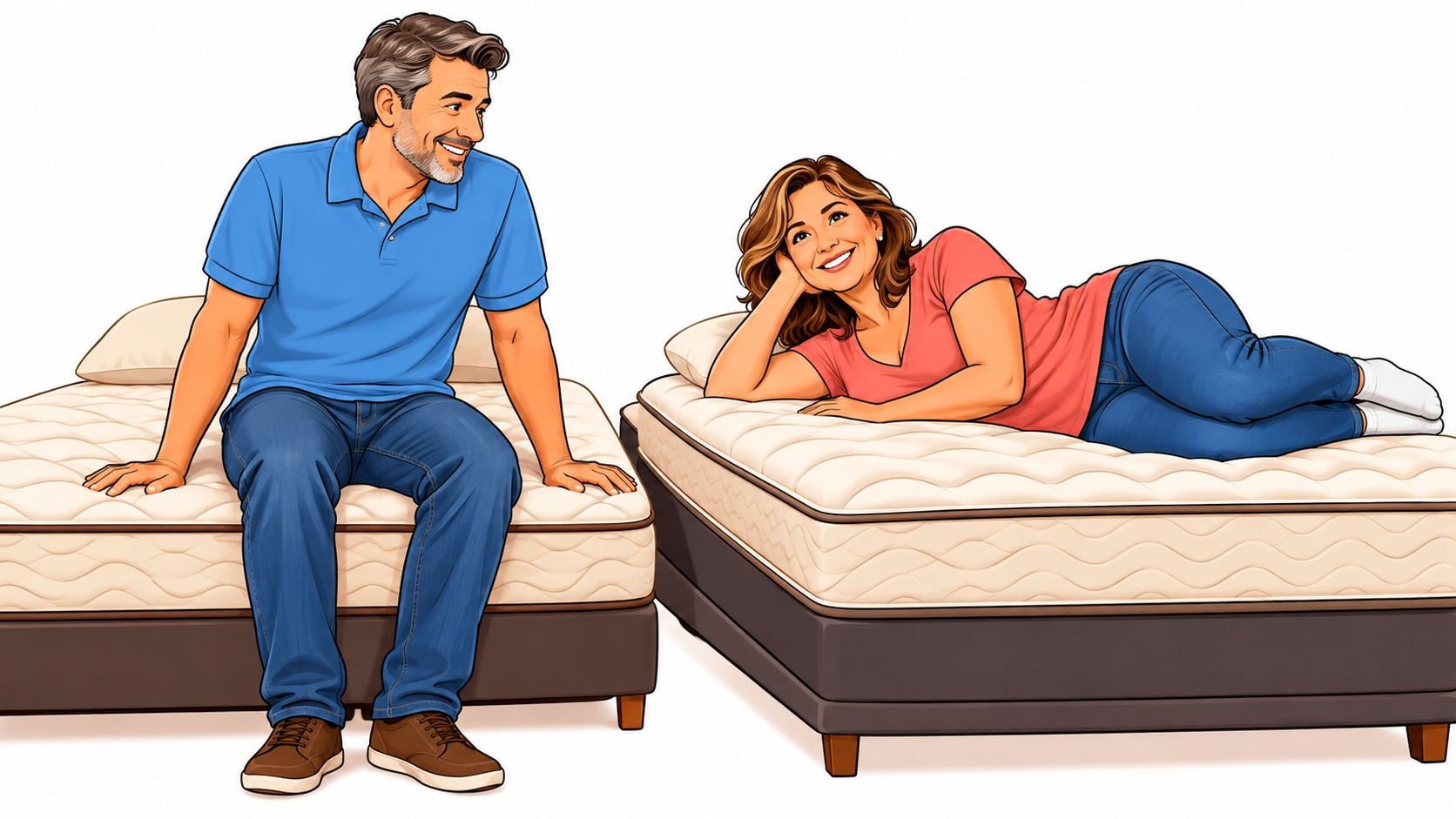
A short visit works best. Tell the team which rows you circled, which test showed a gap, and whether heat built up. Then ask about premium delivery if stairs or removal of an old mattress are part of the day. Call or text the furniture and mattress experts for a head start before you walk in.
The mattress should sit in a room you want to keep. Made-to-order solid wood, including the Artisan & Post Queen X Bed with its X headboard and footboard, lets you design the bed frame your way. Bespoke dining through Canadel, and Amish solid wood built to order, carry that same custom idea into the rest of the house.
This has been a family-owned, multigenerational showroom for Northwest Indiana since 1983, with 5-star service in Dyer and Crown Point.
Visit Groen's Fine Furniture in Dyer or Crown Point today to explore our custom options and ask about our special financing plans. Let our family help you create a home you love.